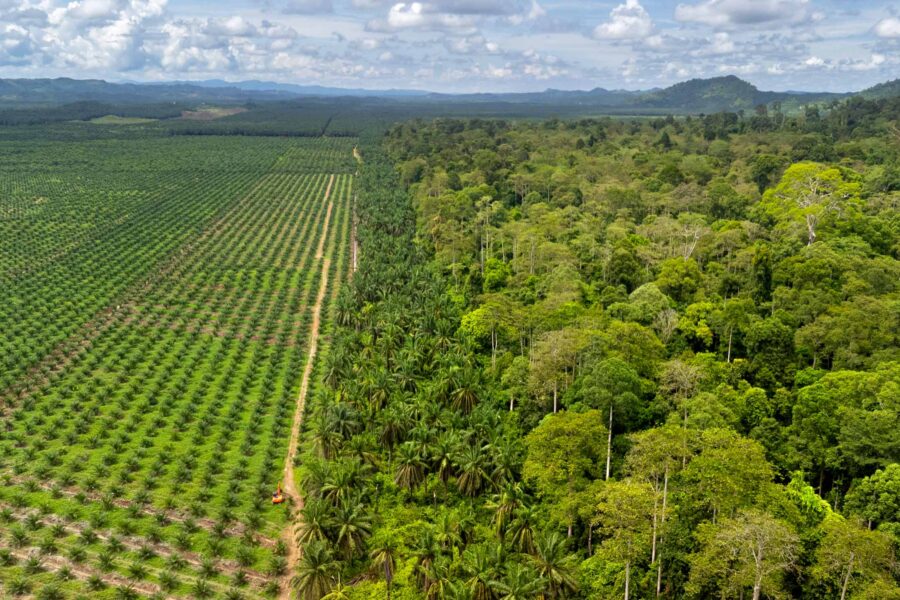
Achieving SDG 15 requires confronting the drivers of ecosystem loss directly: agricultural expansion that encroaches on forests and wetlands, unsustainable water use that dries out rivers and floodplains (SDG 6), and patterns of production and consumption that treat natural resources as inexhaustible (SDG 12). It also means recognizing that climate change and biodiversity loss are two faces of the same crisis, with rising temperatures accelerating habitat loss even as degraded ecosystems lose their capacity to absorb carbon (SDG 13).
Land degradation and biodiversity loss fall hardest on those least able to adapt — smallholder farmers, indigenous communities, and the rural poor whose livelihoods depend directly on healthy soils and intact ecosystems. Protecting life on land (SDG 15) is therefore inseparable from reducing poverty and inequality (SDG 1): where land degrades, poverty deepens, and where poverty deepens, pressure on land intensifies further.
Current progress
Progress on SDG 15 remains mixed, with governance frameworks strengthening even as species and ecosystems continue to decline. More than 48,600 species now face extinction risk, and the global extinction risk index continues to worsen. Forest loss has slowed — gross deforestation rates have declined over recent decades and over half of the world’s forests are now under management plans — yet forests continue to shrink overall, with a net 41 million hectares lost since 2015, as ongoing deforestation is only partly offset by forest expansion and regrowth.
Biodiversity governance is expanding rapidly: by 2025, 155 countries had established at least one national target aligned with the Kunming-Montreal Global Biodiversity Framework adopted in 2022 — though not yet a comprehensive set covering all 23 global targets — and 98 countries were implementing the System of Environmental-Economic Accounting, a 42 percent increase since 2017. Ratification of the Nagoya Protocol on access and benefit-sharing has also accelerated, reaching 142 countries plus the European Union by the end of 2025, more than double the 70 parties in 2015.
Invasive alien species remain a growing and costly threat: their estimated global economic impact has quadrupled each decade since 1970, reaching at least $423 billion in 2019, and while most countries have invasive-species legislation in key sectors, only around 26 percent have dedicated invasive-species laws. Protection of Key Biodiversity Areas has nearly doubled over the last 25 years, though many sites remain unidentified and potentially unprotected. The full picture of official indicators is tracked by the UN Statistics Division in its annual SDG progress report.
Key events and resources
The CBD’s Global Biodiversity Outlook (GBO) is the flagship periodic assessment of progress against internationally agreed biodiversity targets, complemented since 2026 by a new global progress report tracking implementation of the Kunming-Montreal Global Biodiversity Framework. Land and forest trends are tracked through the UNCCD’s Global Land Outlook and FAO’s Global Forest Resources Assessment, the definitive sources on desertification, land degradation neutrality, and forest extent.
The primary intergovernmental forum for biodiversity is the Conference of the Parties to the Convention on Biological Diversity (CBD COP), which meets roughly every two years; COP17, held in Yerevan, Armenia, from 19 to 31 October 2026, carried out the first global review of collective progress toward the Kunming-Montreal Global Biodiversity Framework’s 2030 targets. A report released ahead of the meeting found the world was not on track to meet any of the 23 targets; parties adopted the “Yerevan Pathway” to accelerate implementation but remained deadlocked on finance. The UNCCD COP, on a similar two-year cycle, convened COP17 in Ulaanbaatar, Mongolia, 17–28 August 2026. SDG 15 progress is also reviewed annually at the High-Level Political Forum (HLPF) each July in New York.