Science-based policymaking – bridging the gulf between promise and reality
We have built an intricate understanding of the dynamics between climate change, environmental systems, and resource use. We have also made huge strides in developing tools to analyze and model data. Why, then, are we not using this science to direct policy?
Global governance — Global
Author

Emi Minghui Gui
Adjunct Associate Professor, Monash University, Malaysia; Council Member, UN Council of Engineers for the Energy Transition (CEET)
A technology-integrated society today, powered by the internet, artificial intelligence (AI), and a global supply chain, has seen heavy reliance on science, technology, and innovation to address challenges in an increasingly depleting natural world. The elevated role of energy and its complex interaction with water and agrifood systems and the natural environment demand science-informed policymaking that deviates from the traditional linear policymaking process. This can assist in reconfiguring and transforming the way society organizes itself.
Science-based policymaking aims to improve policy development and societal outcomes by using robust scientific evidence rather than belief or ideology to inform decisions. It is particularly effective in supporting areas with longer-term societal impacts, such as health, education, environmental protection, social and community services, public infrastructure, and economic development. For example, acting on climate change is closely related to a clean, just, and sustainable transition across multiple systems, such as water, agrifood, health, and energy. Consequently, this has led to the establishment of science-based international conventions and national policy instruments across continents, such as the United Nations Framework Convention on Climate Change, the Global Biodiversity Framework, carbon trading systems, emission standards, clean air acts, and clean energy and net-zero targets.
To enable science-informed policies, we need targeted research supported by collective goals, common understanding, a collaborative approach, and the effective integration of science and policymaking to bridge science and action. Strengthening the connection between research and policymaking requires clearer communication of findings, stronger technical capacity among policymakers, and networks and infrastructure that help translate evidence into policy.
Despite its potential benefits, science-informed policymaking faces several obstacles, including:
- interconnected and evolving natural, physical, and virtual systems
- persistent institutional barriers
- an inadequate science-policy interface
- geographically uneven capabilities and political resistance
Fundamental challenge: interconnected and evolving systems
To meet the physiological needs of human society, complex interactions exist among critical systems such as water, energy, and agrifood. These call for coherent governance and integrated resource management strategies across interdependent systems at the local, national, regional, and global levels.
The challenges lie partly in the distinct characteristics of energy, agrifood, and water systems, their ecological, technological, and social footprints, and the fact that they are understood through different domains of scientific disciplines, and physical and social principles. Research and innovation capacities at the cross-system level are both difficult to develop and poorly supported within an institutional environment dominated by distinct disciplines.
At the policy level, these sectors are the responsibilities of different government departments and ministries, which in turn often engage specialist advisory bodies to address issues within sectoral boundaries. The capacity to produce cross-sectoral knowledge or decision-making at the meta-level is limited.
In addition, policymaking is an evolving process shaped by myriad interests and actors, and it can rarely be perfectly planned, even when supported by strategic foresight and appropriate data infrastructure. It is often driven by short-term political and societal pressures, whereas science typically operates on medium to long-term timescales shaped by funding mechanisms and institutional incentives. This mismatch creates major challenges for science-informed policymaking.
Institutional barriers
Science-informed policymaking also requires a strong transdisciplinary capacity for the co-production of knowledge. This should involve multiple stakeholders, including government, industry, business, academia, civil society, and indigenous communities. This can be challenging for many scientific institutions today, where impact-driven, practical knowledge creation across disciplines receives limited institutional support or recognition beyond traditional markers of academic success, such as publications and citations.
One result of these mismatched incentives is that, according to Overton, less than 6% of academic research gets referenced in policy documents. The most cited fields are in social sciences, such as economics and environmental science. Meanwhile, power dynamics foster technological advancement that can be translated into commercial value, often without sufficient understanding of, and oversight for, the inherent risks of these technologies. An unbalanced techno-optimism approach can leave governments and society ill-prepared to deal with any adverse long-term consequences of these technologies.
In addition, science-based policies may not serve the political agenda of countries’ leaders, especially when scientific evidence is not well aligned to their beliefs or political timelines. For example, in some developing countries, governments have subsidized fossil fuel-based electricity and provided free irrigation water to increase grain production, but these measures have led to resource overexploitation and have hindered crop diversification and long-term agricultural growth. However, robust scientific evidence demonstrates that energy-saving and water-smart agriculture can provide significant benefits to farmers and land resources for long-term resilience and efficiency.
Inadequate science–policy interaction
The research community can also lock itself out of opportunities to engage with policymakers on pressing societal challenges such as climate change, sustainable development, and natural resource depletion, often by speaking in its own jargon and setting research agendas shaped by competition with academic peers. Integrating different forms of knowledge and inputs from a wide range of stakeholders is complex and requires new skills to navigate ambiguity, opacity, and uncertainty. It also takes time to incorporate systems thinking, facilitation, negotiation, communication, and transdisciplinary collaboration into the traditional scientific process. In institutions that reward faster, more conventional academic outputs, this can be seen as a risk or a distraction from career progression.
As a result, knowledge brokers have emerged over the last decade as intermediaries between science and policy, and between science and impact, to support visioning, dialogue, exchange, and policy debates. Many NGOs and think tanks now play this role. However, sustaining transformation across multiple systems requires scientific institutions to build interdisciplinary and transdisciplinary capacity while balancing basic, strategic, and applied research with systemic scope and an intergenerational timescale.
Regional disparity and international cooperation
Regional disparities in scientific capability are evident. They inhibit science-informed policymaking and slow progress toward the Sustainable Development Goals, especially in low-income countries.
Ensuring the affordability, scalability, and equitable access of resources, knowledge, and technologies in developing regions remains challenging. It also requires significant technical and financial assistance, as well as capacity-building programs supported by national authorities and the international community.
Both North–South partnerships and South–South cooperation in knowledge sharing and transfer are critical to making progress in science, technology, and innovation more equitable and inclusive. They can also help promote cleaner infrastructure and more sustainable practices at both the local and global levels.
Building bridges between science and policy
To strengthen science-informed policymaking, science and the institutions that support it need to become more effective, reflexive, and inclusive. They must also enable two-way exchange between science and society in response to complex challenges that are multi-system, multi-stakeholder, and multidisciplinary. Better alignment among infrastructure, natural resources and ecosystems, communities, and society can help improve human–environment interactions. It can also deliver wider benefits for climate adaptation and mitigation, and for human and environmental health and wellbeing.
Improving the interface between research, policy, and implementation requires closer alignment in the pace, quality, and coherence of interactions among researchers, decision-makers, and implementers. This will depend on:
- institutionalizing the use of scientific evidence in policy formulation to support cross-sector and multilevel collaboration
- embedding the value of interdisciplinary, transdisciplinary, and integrated approaches within scientific institutions
- creating shared processes that improve communication between science and policy and help resolve disagreements
- aligning private and public efforts through governance arrangements that balance local and global interests
As the UN Secretary-General has argued, humanity must remain in control of technology, and AI governance must be shaped through shared evidence, guardrails, and inclusive international cooperation. Food, water, and other essential systems should be governed in ways that protect the public good. Science and policy, as stewards of the future, will remain central to building prosperous and resilient societies for generations to come.
Featured in:
UNGA 2026 edition: Looking for leadership
As the established global powers have retreated from development, no one has stepped up to fill their place: not the Global South, not the middle powers, not a loosely assembled BRICS. The agenda that has guided development since 2015 is losing the cohesion it once had, just as the political appetite for it fades.
Yet across this edition, practitioners keep building a coherent, evidence-based case for a fairer, safer, sustainable world. Their work supplies the thought leadership that politics has not – and it will provide the framework for success when real political will returns.
Authors include Adriana E. Abdenur, Bineta Diop, Richard Gowan, Phoebe Koundouri, Emi Minghui Gui, Chidi King, María Fernanda Espinosa Garcés, Tobias Schillings and Rachel Marcus.
Publication date: 15 September 2026

Related articles

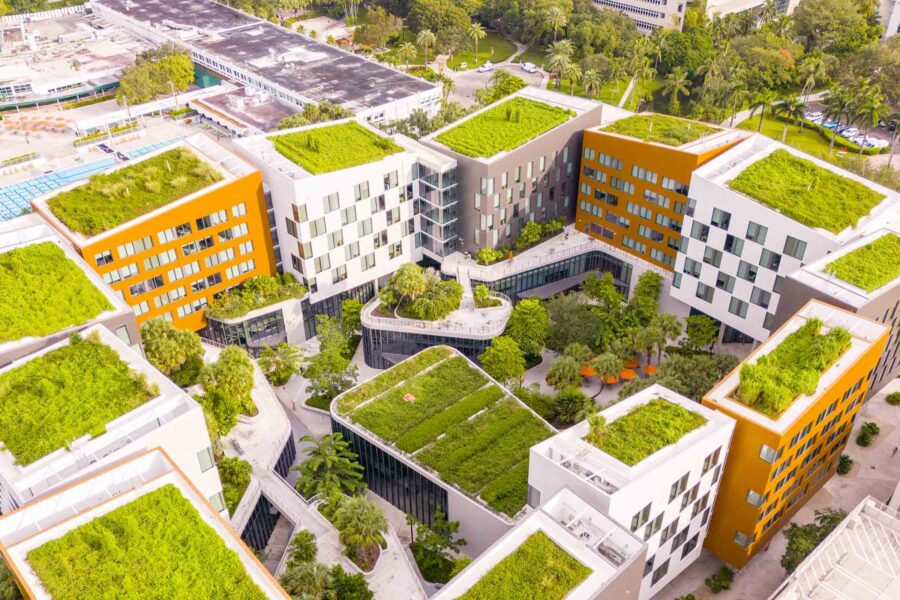
Valuing urban resilience
Cities face difficult choices about how to invest in resilience as climate
pressures intensify. Valuing health, ecosystems, social inclusion, and reliable services alongside financial costs can help them choose fairer, more effective ways to adapt to climate change