Redefining sustainable water management for a water-scarce world
Through innovation, foresight, and rigorous alignment with global standards, Dubai Electricity and Water Authority (DEWA) is pioneering a future-ready water management model that safeguards reliability, sustainability, and resilience, contributing meaningfully to the achievement of SDG 6
Cities — Middle East and Northern Africa
Water scarcity has emerged as one of the defining challenges of our time, shaping economic resilience, social stability, and the health of ecosystems worldwide. As climate change accelerates and population growth intensifies pressure on natural resources, water systems around the world are being tested, often beyond the limits for which they were originally designed.
The challenge is especially acute in arid and semi-arid regions, where limited natural freshwater availability must support fast-growing cities, industrial activity, and rising living standards. In these contexts, achieving water security is inseparable from economic competitiveness, social wellbeing, and long-term sustainability. Addressing this challenge requires a fundamental rethinking of how water is produced, managed, and protected. Traditional, linear models of supply and consumption are no longer sufficient. Instead, water systems must evolve into integrated, intelligent networks capable of optimizing resources in real time, anticipating risks, reducing losses, and safeguarding ecosystems while ensuring uninterrupted service.
UN Sustainable Development Goal (SDG) 6 reflects this shift by positioning water not merely as a basic service, but as a strategic enabler of sustainable development. Its focus on efficiency, governance, ecosystem protection, and universal access underscores the need for innovation, data-driven decision-making, and long-term planning aligned with global standards. Against this backdrop, cities operating under conditions of scarcity have become living laboratories for innovation, pioneering advanced technologies and resilience-building solutions that offer valuable lessons for a water-stressed world.
Dubai is one such example. Located in an arid environment and experiencing sustained economic and population growth, the emirate has placed water security at the heart of its sustainability agenda. Dubai recognizes that long-term prosperity depends on the responsible management of every drop.
Guided by forward-thinking leadership, DEWA has led the emirate’s transformation in sustainable water management. It has positioned water security as a strategic imperative that underpins resilience, sustainability, and economic growth.
Since the announcement of the Global Goals in 2015, DEWA has embedded the SDGs into its strategic framework, recognizing them not as abstract aspirations but as practical drivers of operational excellence and long-term resilience. SDG 6 is among DEWA’s highest-priority goals, reflecting the centrality of water to Dubai’s social and economic development.
Dubai’s strategic frameworks, including the UAE Water Security Strategy 2036, the Dubai Economic Agenda (D33), the Dubai 2040 Urban Master Plan, and the Demand Side Management Strategy 2050, further guide DEWA’s actions. Together, these strategies underscore the importance of resource efficiency, resilience, and innovation in securing water for future generations.
Digital transformation at the core
At the heart of DEWA’s approach is a holistic view of water management. Rather than treating production, transmission, and consumption as isolated functions, DEWA manages them as interconnected elements of a single system supported by advanced digital infrastructure. DEWA meets 100% of Dubai’s potable water demand with high reliability, supported by continuous investment designed to enhance efficiency and reduce environmental impact. These efforts are complemented by stringent water quality controls, ensuring that potable water supplied across Dubai complies fully with the latest World Health Organization (WHO) drinking water guidelines.
One of the most striking indicators of DEWA’s success is its performance in reducing water losses. In 2025, DEWA achieved water network losses of just 4.4%, among the lowest levels globally. This achievement reflects a sustained commitment to precision monitoring, predictive maintenance, and data-driven asset management.
Digital transformation is central to DEWA’s approach to sustainable water management. DEWA operates a smart grid supported by its advanced Supervisory Control and Data Acquisition (SCADA) Centre. This enables round-the-clock remote monitoring and control of water transmission and distribution networks spanning thousands of kilometers. This digital backbone integrates real-time hydraulic modeling, advanced analytics, and automated reporting. It allows engineers to quickly identify anomalies, manage pressure, and respond to incidents such as leaks or pipeline failures. Thousands of smart devices across the network provide continuous data streams, enhancing situational awareness and operational resilience.
Complementing SCADA is Hydronet, an artificial intelligence (AI) and deep learning platform that analyzes network behavior in real time to support predictive maintenance, optimize asset performance, and strengthen supply reliability. In parallel, DEWA Space-D is a satellite-enabled platform that monitors water infrastructure, identifies risks, and enables proactive maintenance in a rapidly evolving urban environment. DEWA also deploys advanced leak-detection technologies. These include smart ball inspections (where free-swimming sensors travel through pipelines to identify leaks), acoustic sensors, hydrophones, correlators, and helium gas detection, supported by pressure management and district-metered areas. These capabilities are unified through DEWA’s Smart Water Distribution Management System, enabling data-driven decision-making and continuous performance improvement across the network.

Engaging customers as partners
Sustainable water management depends not only on resilient infrastructure but also on informed and engaged customers. DEWA therefore places strong emphasis on digital services and behavioral programs that empower customers to actively support conservation.
DEWA’s High Water Usage Alert service instantly notifies customers of abnormal consumption, enabling early detection of internal leaks and system defects while delivering significant water, energy, and cost savings.
Complementing this, the My Sustainable Living Programme uses AI and behavioral science to help residential customers optimize their electricity and water use. Through personalized insights and peer comparisons, the program encourages sustainable habits and supports Dubai’s Demand Side Management Strategy, which targets a 50% reduction in electricity and water demand by 2050. In 2025, customers enrolled in the programs achieved total water savings of 606.2 million imperial gallons and total electricity savings of 120.6 GWh.
Building resilience through strategic storage
Beyond day-to-day efficiency, DEWA places strong emphasis on long-term water security and emergency preparedness. The Aquifer Storage and Recovery (ASR) project is a cornerstone of this effort. By storing surplus desalinated water in deep underground aquifers and retrieving it when required, ASR provides a resilient and cost-effective alternative to traditional storage methods. Once fully operational, the project will offer strategic reserves that meet Dubai’s emergency water needs, significantly enhancing resilience while delivering substantial economic and environmental benefits.
A global contribution
DEWA’s commitment to clean water extends beyond Dubai’s borders. DEWA supports the UAE Water Aid Foundation (Suqia), a non-profit organization that focuses on improving access to safe and sustainable water solutions in water-scarce communities worldwide, reinforcing the global reach of SDG 6. Suqia has positively impacted the lives of more than 14 million people across 37 countries.
As water challenges grow more complex, DEWA’s experience demonstrates the power of integration – linking technology, governance, customer engagement, and environmental responsibility into a cohesive model. By aligning the Global Goals with local action, DEWA is not only securing water for Dubai but also contributing valuable insights to the global dialogue on sustainable water management.
In doing so, DEWA affirms that water, when managed with purpose and foresight, can be a foundation for resilience, prosperity, and sustainable development for generations to come.
About the sponsor
DEWA is a Dubai government owned utility and is the sole provider of electricity and water in the Emirate of Dubai. DEWA’s core business is to operate and maintain the power stations, desalination plants, aquifers, and power and water distribution networks in Dubai.
Innovation is one of DEWA’s five core values and is a recurring theme in its strategy map. DEWA is recognised as a leading pioneer in its adoption of Fourth Industrial Revolution (4IR) practices and disruptive technologies.
For more information, visit: www.dewa.gov.ae
Featured in:
UNGA 2026 edition: Looking for leadership
As the established global powers have retreated from development, no one has stepped up to fill their place: not the Global South, not the middle powers, not a loosely assembled BRICS. The agenda that has guided development since 2015 is losing the cohesion it once had, just as the political appetite for it fades.
Yet across this edition, practitioners keep building a coherent, evidence-based case for a fairer, safer, sustainable world. Their work supplies the thought leadership that politics has not – and it will provide the framework for success when real political will returns.
Authors include Adriana E. Abdenur, Bineta Diop, Richard Gowan, Phoebe Koundouri, Emi Minghui Gui, Chidi King, María Fernanda Espinosa Garcés, Tobias Schillings and Rachel Marcus.
Publication date: 15 September 2026

Related articles
Valuing urban resilience
Cities face difficult choices about how to invest in resilience as climate
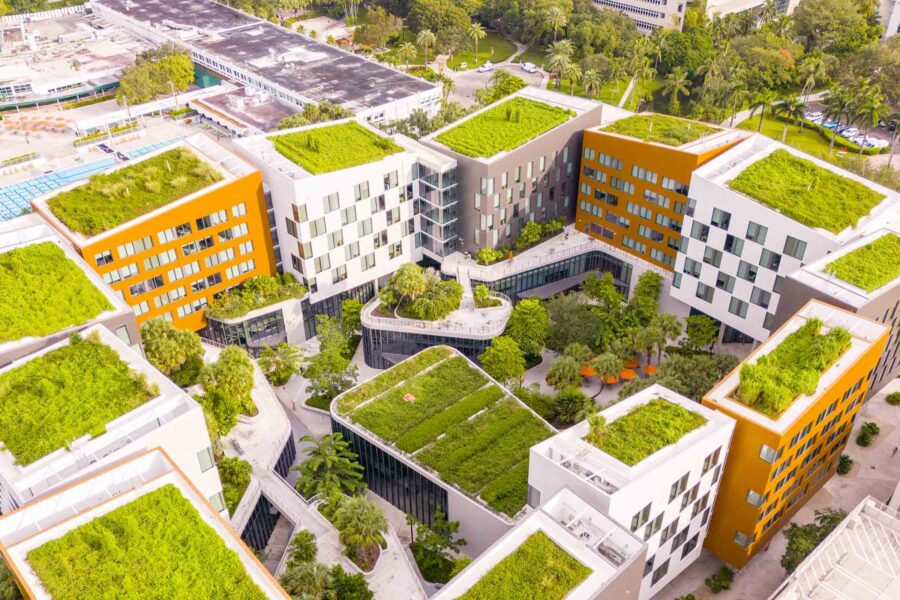
pressures intensify. Valuing health, ecosystems, social inclusion, and reliable services alongside financial costs can help them choose fairer, more effective ways to adapt to climate change