
Inequality is the defining challenge of our time
Inequality is undermining progress across the SDGs, distorting economies, politics, and societies alike. Tackling it will require structural economic transformation, political will, and stronger global coordination
Financing — Global
Author

Adriana E. Abdenur
Co-President, Global Fund for a New Economy; former Special Advisor on international affairs, Brazilian Presidency; member, Founding Committee of the International Panel on Inequality
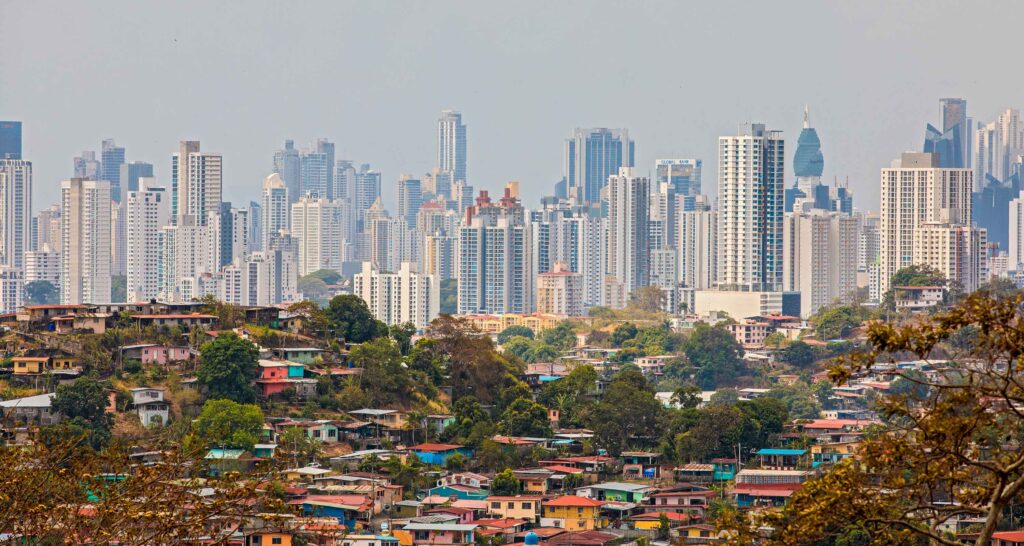
In 2025, under the presidency of South Africa, the G20 took a notable step by establishing an Extraordinary Committee on Inequality. Its mandate was clear: to assess the scale, drivers, and consequences of rising inequality, and to identify pathways for coordinated action. The committee’s report, presented at the Johannesburg Summit, leaves little room for ambiguity. Inequality is no longer a secondary concern or a byproduct of economic growth. It has reached the level of a systemic emergency, one that cuts across countries and generations, and is deeply shaped by political choices and power relations.
The report highlights stark trends. Wealth inequality has reached extraordinarily high levels, with the top 1% capturing around 40% of all new wealth generated globally since 2000, while the bottom half captured just 1%. Income inequality remains high within most countries and significant across countries. Disparities in access to opportunities, such as education, healthcare, and economic mobility, continue to pose major challenges. These dynamics are not only economic – they shape political power, erode institutional trust, and affect the capacity of societies to respond to crises ranging from financial shocks to climate change. They also intersect with longstanding inequalities across race, gender, and class, reinforcing patterns of exclusion.
This matters directly for Sustainable Development Goal (SDG) 10, which focuses on reduced inequalities. But the implications go far beyond a single goal. Inequality is a cross-cutting structural issue that influences progress across the entire SDG framework – from poverty reduction to health, education, gender equality, and climate action. Whether framed through the SDGs or broader national development strategies, inequality shapes the feasibility of achieving sustained and inclusive progress. Without addressing it, gains risk being partial, uneven, and ultimately reversible.
A structural shift in the global economy
At the heart of the inequality challenge is a deeper transformation in how economies generate and distribute value. Over recent decades, the balance between returns to capital and returns to labor has shifted markedly. Economic growth has increasingly rewarded ownership of financial assets, intellectual property, digital infrastructure and natural resources, while wages have stagnated or grown more slowly for large segments of the population.
This shift reflects broader changes in how the global economy is organized, particularly the increasing concentration of firms and the expansion of financialized models, in which economic activity is increasingly shaped by financial markets and returns. In many sectors, this has translated into greater control over markets and supply chains, as well as increased influence over regulatory environments, reinforcing existing inequalities. Increasing concentration has raised concerns not only about inequality, but also about its broader effects on innovation, democratic accountability, and the ability of smaller firms and workers to participate on fair terms in the economy.
The rise of artificial intelligence (AI) is likely to accelerate these dynamics. AI systems depend on large-scale data and significant computational resources – assets that are already concentrated among a small number of firms and countries. As AI becomes embedded across the economy, there is a risk that it will further increase the share of income accruing to capital while transforming labor markets. These impacts are unlikely to be evenly distributed, and may deepen existing inequalities along lines of income, geography, race, and gender. At the same time, AI raises fundamental questions about ownership and how the gains from productivity are distributed. For instance, recent evidence from Europe suggests that AI innovation may already be contributing to a declining labor share of income, with gains accruing disproportionately to capital owners and uneven effects across workers and regions.
Drivers and consequences
The drivers of inequality are complex and deeply interconnected, reflecting both longstanding structural factors and more recent economic transformations. Some of these dynamics are rooted in historical processes, including colonialism and its enduring legacies, which continue to shape patterns of wealth distribution and global economic hierarchies. Others are more contemporary, linked to technological change, increasing market concentration, and shifts in the balance of power between capital and labor – as well as weaknesses in global governance frameworks that have struggled to keep pace with the scale and transnational nature of economic power.
In many countries, labor market institutions have weakened over time, reducing workers’ bargaining power and contributing to a decoupling between productivity and wage growth. At the same time, tax systems have often become less progressive, with relatively lower effective taxation of capital income and wealth. At the international level, gaps in coordination have enabled profit shifting, tax avoidance, and regulatory arbitrage (exploiting differences between regulatory regimes), limiting governments’ ability to mobilize resources and address inequality. Together, these factors reinforce a pattern in which economic gains are unevenly distributed both within and across countries.
The consequences are equally far-reaching. High levels of inequality can dampen economic growth by limiting aggregate demand – overall spending in the economy – and reducing investment in human capital. While earlier economic orthodoxy often assumed that inequality was a necessary trade-off for growth – on the grounds that higher returns to capital would drive investment – more recent evidence challenges this view. As highlighted in the G20 report, excessive inequality can weaken the foundations of sustained growth by constraining consumption, limiting access to education and opportunity, and reducing the productive potential of large segments of the population. In this sense, inequality is not only a social concern but also an economic one, with consequences for long-term resilience.
Beyond its economic effects, inequality also creates broader systemic risks. Highly unequal systems tend to be more fragile – economically, socially, and politically – particularly in periods of rapid technological and environmental change. In contexts where large segments of the population face persistent exclusion, inequality can contribute to social unrest and increase the risk of conflict, especially when combined with weak institutions or economic shocks. For instance, the OECD 2025 States of Fragility report underscores inequality as part of the cycles driving conflict and stability. For this reason, concerns about inequality are increasingly being framed not only in terms of fairness, but also in terms of resilience and conflict prevention.
Inequality also erodes social cohesion and trust in institutions, contributing to political polarization and instability. When economic power becomes highly concentrated, it can translate into disproportionate political influence, shaping public debate, policy priorities, and the functioning of democratic processes. This can weaken institutional accountability and deepen perceptions of exclusion among large segments of the population. These dynamics are not only the result of structural trends, but also of political choices and competing interests. Efforts to reduce inequality often encounter resistance from actors who benefit from existing arrangements, making reform as much a question of power and political economy as of policy design. Recent political economy research argues that inequality often persists because powerful economic actors are able to shape policy processes and media narratives in ways that protect existing distributions of wealth and power.
Inequality also shapes environmental outcomes: unequal societies often face greater barriers to building consensus around climate action, while the costs of environmental degradation tend to fall disproportionately on those with the least capacity to absorb them. Recent studies suggest that perceptions of unfairness and unequal burdens can weaken public support for climate cooperation and generate backlash against climate policies, underscoring the close relationship between inequality and effective climate action. In this sense, inequality is not just one challenge among many – it is a force multiplier that exacerbates other crises and undermines the foundations of inclusive and democratic governance.
From national responses to global coordination
Addressing inequality requires a combination of policies operating at different levels. At the country level, governments can adopt policies that directly influence income and wealth distribution. These include progressive taxation, strengthened labor protections, expanded social protection systems, and investments in public services such as education, healthcare, transportation and housing. Green industrial policies can also play a role by shaping the direction of economic transformation and ensuring that new technologies contribute to inclusive growth.
It is also useful to distinguish between downstream and upstream approaches. Downstream policies – such as social transfers and safety nets – are essential for reducing deprivation and protecting livelihoods. In some contexts, they can also contribute to broader social and economic transformation, although on their own they may be insufficient to address the structural drivers of inequality. Upstream policies focus on the underlying structures that generate inequality, including corporate governance, competition policy, labor market institutions, and the rules governing digital and data-driven economies.
At the international level, some degree of coordination remains necessary. Many of the forces driving inequality – such as tax avoidance and the rules governing cross-border economic activity – extend beyond national borders, and purely domestic approaches are often insufficient in highly integrated global systems. In the absence of coordination, countries can face reduced policy autonomy, as tax bases erode and economic decisions are increasingly shaped by external pressures rather than domestic priorities.
The case for a permanent global platform
Despite growing recognition of the issue, existing governance structures have struggled to keep pace with the complexity and urgency of inequality. In this context, the G20 Extraordinary Committee on Inequality has proposed the establishment of an International Panel on Inequality (IPI) as a way to strengthen the global response.
The IPI would provide a permanent, independent platform to generate comparable data and analysis, helping countries make more informed decisions in a complex and rapidly changing global environment. Drawing on experts from multiple disciplines and regions, it would help fill critical data gaps and translate research into actionable insights. Importantly, the initiative already has the backing of a diverse group of countries, including South Africa, Brazil, Spain, and Norway – reflecting both Global South and Global North perspectives.
From recognition to action
The establishment of the committee – now transformed into the Founding Committee of the IPI – marks an important step. But recognition must be followed by sustained action. Achieving the SDGs – or broader national development objectives – requires structural change in how economies are organized and how value is distributed. Inequality sits at the center of this transformation.
This is particularly critical as the international community starts looking beyond 2030. The next phase of the global development agenda will need to grapple more directly with structural drivers of economic outcomes. Without this shift, progress will remain uneven and reversible. The rapid rise of AI and other transformative technologies reinforces this urgency, as they have the potential either to widen inequalities or to support more inclusive growth, depending on how they are governed. These dynamics must be front of mind for an incoming UN Secretary-General.
In a more fragmented world, progress will depend not only on new frameworks, but also on the ability to adapt existing institutions and policies – even without full global consensus. The question is no longer whether inequality matters. It is whether governments are willing to confront the structural forces that sustain it – and to do so in a context where global cooperation itself is under increasing strain.
Featured in:
UNGA 2026 edition: Looking for leadership
As the established global powers have retreated from development, no one has stepped up to fill their place: not the Global South, not the middle powers, not a loosely assembled BRICS. The agenda that has guided development since 2015 is losing the cohesion it once had, just as the political appetite for it fades.
Yet across this edition, practitioners keep building a coherent, evidence-based case for a fairer, safer, sustainable world. Their work supplies the thought leadership that politics has not – and it will provide the framework for success when real political will returns.
Authors include Adriana E. Abdenur, Bineta Diop, Richard Gowan, Phoebe Koundouri, Emi Minghui Gui, Chidi King, María Fernanda Espinosa Garcés, Tobias Schillings and Rachel Marcus.
Publication date: 15 September 2026
Related articles
Valuing urban resilience
Cities face difficult choices about how to invest in resilience as climate
pressures intensify. Valuing health, ecosystems, social inclusion, and reliable services alongside financial costs can help them choose fairer, more effective ways to adapt to climate change
A global digital commons for SDG delivery
The SDGs do not lack science, legitimacy, or vision – they lack an operating system. A global digital commons can help countries move from reporting progress to delivering transformation by bringing together open data, integrated modeling, stakeholder co-design, and sustainable finance