Icon for Clean water and sanitation

SDG 6: Clean water and sanitation

Ensure availability and sustainable management of water and sanitation for all

Achieving this goal requires far more than laying pipes. It means confronting the health consequences of unsafe water and poor sanitation, which drive preventable disease and child mortality (SDG 3), the gendered burden of water collection that keeps girls out of school and women out of the workforce (SDG 5), and the degradation of rivers, wetlands and aquifers that water systems ultimately depend on (SDG 15).

Water scarcity is increasingly a climate story, not just an infrastructure one. Rising temperatures are intensifying droughts and altering rainfall patterns in ways that strain both drinking-water supplies and the irrigation systems agriculture depends on. Building water systems resilient to this shifting climate (SDG 13) is now inseparable from delivering on SDG 6 itself.

Current progress

Progress on SDG 6 continues, but too slowly and too unevenly to meet the 2030 target. In 2024, 74 per cent of the global population used safely managed drinking water, up from 68 per cent in 2015; 58 per cent used safely managed sanitation, up from 48 per cent; and 80 per cent had access to basic hygiene facilities, up from 66 per cent. People in least developed countries remain two to three times more likely to lack these services than the global average.

Between 2015 and 2024, 961 million people gained access to safely managed drinking water, 1.2 billion gained safely managed sanitation, and 1.6 billion gained basic hygiene services — substantial gains that nonetheless leave large populations behind. Open defecation fell by 429 million people over the same period and is now nearly eliminated in urban areas.

On resource management, water-use efficiency rose to $21.5 of economic output per cubic metre of water used in 2023, up 24 per cent from $17.4 in 2015, though this improvement was driven mainly by economic growth rather than by reduced water withdrawals. Global water stress held at around 18 per cent in 2023, little changed from 2015, but this average masks acute pressure in Northern Africa and Western Asia and in Central and Southern Asia, where withdrawals exceed 75 per cent of available freshwater supply and roughly one in ten people worldwide live in countries classified as experiencing high or critical water stress — a country-level classification, not a measure of individual exposure. The full picture of official indicators is tracked by the UN Statistics Division in its annual SDG progress report.

Key events and resources

The primary tracking reports for SDG 6 are the WHO/UNICEF Joint Monitoring Programme (JMP) report, published roughly every two years and providing the headline global figures on drinking water, sanitation and hygiene coverage, and UN-Water’s ‘Progress on…’ series — including Progress on Water-Use Efficiency and Progress on Water Stress — which reports on the goal’s water-resources and ecosystem indicators.

The primary coordination mechanism is UN-Water, the UN’s inter-agency body for water and sanitation, which convenes member agencies, coordinates the regular indicator-specific ‘Progress on…’ reports, and has produced periodic SDG 6 synthesis reports in 2018, 2023 and 2026 (not an annual publication). Following the 2023 UN Water Conference — the first dedicated UN water conference in nearly half a century — a follow-up 2026 UN Water Conference, co-hosted by the United Arab Emirates and Senegal, is scheduled for 8–10 December 2026 in Abu Dhabi, with the primary purpose of accelerating SDG 6 implementation rather than principally reviewing the Water Action Decade (2018–2028). SDG 6 progress is also reviewed annually at the High-Level Political Forum (HLPF) each July in New York.

 

Key multilateral bodies

These organizations hold the lead mandates on water and sanitation coordination, monitoring and resource management under SDG 6.

Targets

Indicators

Target

6.1

By 2030, achieve universal and equitable access to safe and affordable drinking water for all

Indicators

6.1.1

Proportion of population using safely managed drinking water services 

Target

6.2

By 2030, achieve access to adequate and equitable sanitation and hygiene for all and end open defecation, paying special attention to the needs of women and girls and those in vulnerable situations

Indicators

6.2.1

Proportion of population using (a) safely managed sanitation services and (b) a hand-washing facility with soap and water 

Target

6.3

By 2030, improve water quality by reducing pollution, eliminating dumping and minimizing release of hazardous chemicals and materials, halving the proportion of untreated wastewater and substantially increasing recycling and safe reuse globally

Indicators

6.3.1

Proportion of domestic and industrial wastewater flows safely treated 

6.3.2

Proportion of bodies of water with good ambient water quality 

Target

6.4

By 2030, substantially increase water-use efficiency across all sectors and ensure sustainable withdrawals and supply of freshwater to address water scarcity and substantially reduce the number of people suffering from water scarcity

Indicators

6.4.1

Change in water-use efficiency over time 

6.4.2

Level of water stress: freshwater withdrawal as a proportion of available freshwater resources 

Target

6.5

By 2030, implement integrated water resources management at all levels, including through transboundary cooperation as appropriate

Indicators

6.5.1

Degree of integrated water resources management 

6.5.2

Proportion of transboundary basin area with an operational arrangement for water cooperation 

Target

6.6

By 2020, protect and restore water-related ecosystems, including mountains, forests, wetlands, rivers, aquifers and lakes

Indicators

6.6.1

Change in the extent of water-related ecosystems over time 

Target

6.a

By 2030, expand international cooperation and capacity-building support to developing countries in water- and sanitation-related activities and programmes, including water harvesting, desalination, water efficiency, wastewater treatment, recycling and reuse technologies

Indicators

6.a.1

Amount of water- and sanitation-related official development assistance that is part of a government-coordinated spending plan 

Target

6.b

Support and strengthen the participation of local communities in improving water and sanitation management

Indicators

6.b.1

Proportion of local administrative units with established and operational policies and procedures for participation of local communities in water and sanitation management 

  1. Improving health outcomes through access to water

    Health — Global

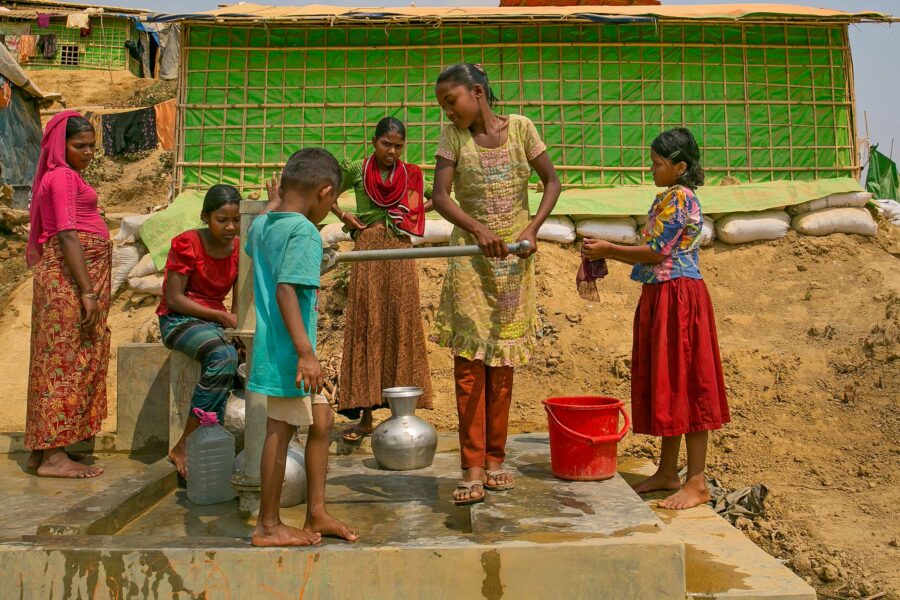
    At current progress rates, 1.6 billion people will lack safely managed drinking water by 2030. Ramping up financial and political investment in access to water, sanitation, and hygiene, particularly in the world’s poorest countries and in the face of climate change, is now essential for achieving the SDGs

  2. A warmer world: are we ready?

    Climate — Global

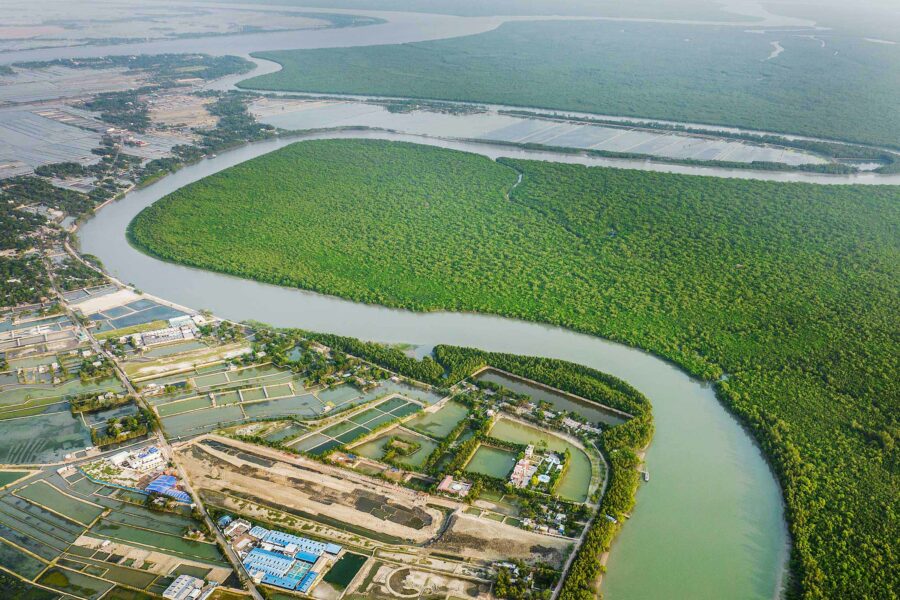
    Even the most optimistic predictions show a significantly warmer planet by 2100. Rather than focusing on quick adaptive fixes, as many current plans do, countries must pursue climate-resilient development strategies that address the systemic nature of the climate crisis

  3. Multipronged action on the SDGs

    Energy — Middle East and Northern Africa

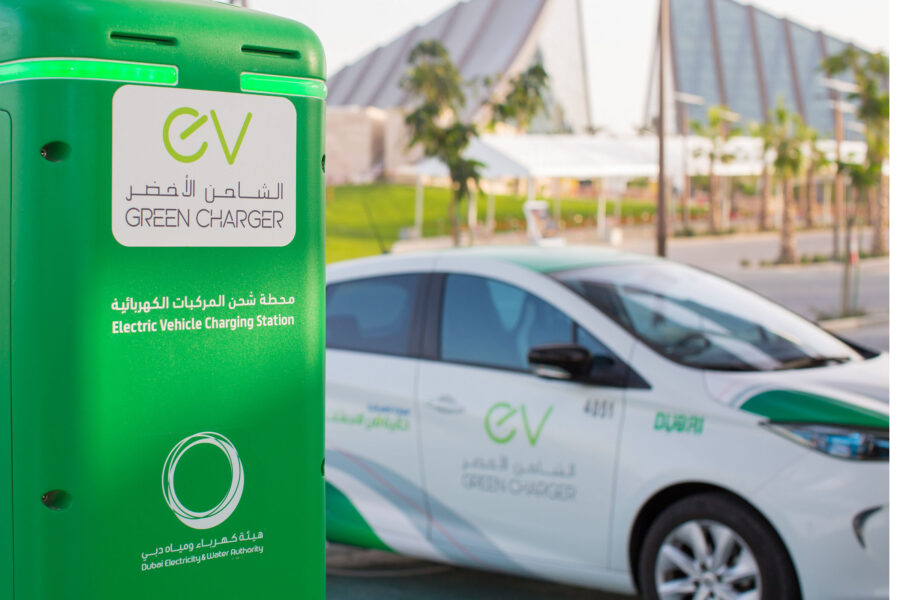
    Dubai Electricity and Water Authority (DEWA) is undertaking a combination of pioneering projects in the UAE’s Hatta region, which exemplify its holistic approach to the SDGs