
Global urban goals: who asked the planners?
SDG 11, the New Urban Agenda and the International Guidelines on Urban and Territorial Planning all rely on planners to put them into practice. Yet no one has conducted a representative survey of planners, asking whether these frameworks have changed their work, or whether the planning laws they work under even allow what the frameworks call for
Cities — Global
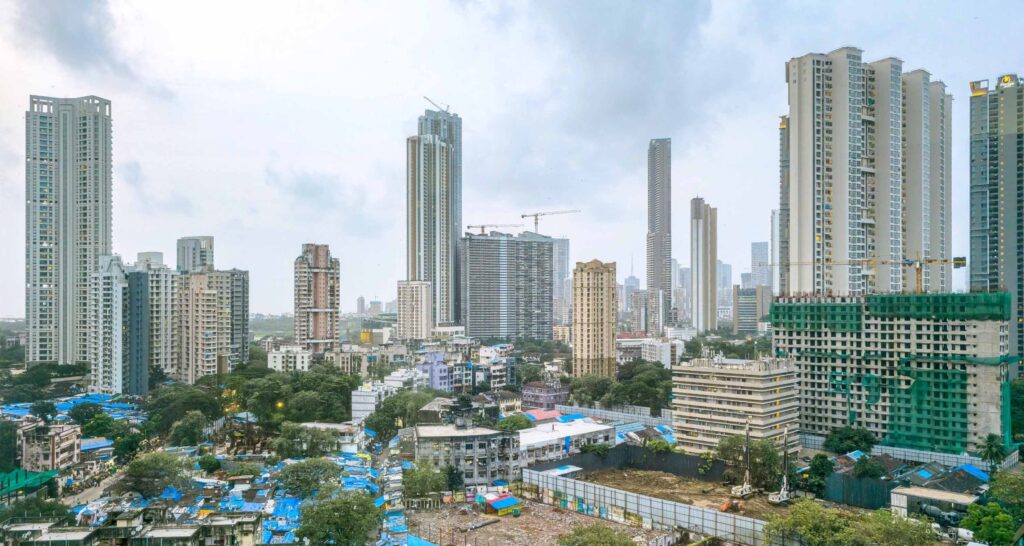

This year marks ten years since the New Urban Agenda (NUA) was adopted at Habitat III in Quito, and 11 years since Sustainable Development Goal 11 became the first standalone urban goal. Urban October has just closed, and World Cities Day (31 October) turned attention to local action for sustainable urbanization. Now, the planning profession has its own date: World Town Planning Day on 8 November. Together with the International Guidelines on Urban and Territorial Planning (IG-UTP, 2015) – the profession’s own instrument – the NUA and SDG 11 form the global framework for sustainable urban development. All three treat planning as the main way to put it into practice.
The NUA’s mid-term review has prompted plenty of reflection on whether these frameworks are still fit for purpose. Very little of that reflection has come from the people the frameworks depend on: practicing city, regional, and territorial planners. As a group of planners from several countries, we set out that case in Local Planners and Global Goals: Accepted but not Absorbed, prepared for the Cities Forum Mentorship Knowledge Series, and endorsed by the International Society of City and Regional Planners (ISOCARP). This article draws on it.
What do we know about planners’ experience?
Very little, and nearly all of it is institutional self-reporting.
The main monitoring tool, UN-Habitat’s Global Survey on Urban and Territorial Planning, is answered by Member States and partner organizations. It records what national administrations say about their planning systems – not what a city planner experiences when trying to apply the guidelines to a real decision. In its first reporting cycle, few countries responded, and findings were presented as good-practice examples rather than as distributions or comparisons. Countries with nothing to show had little reason to take part.
The most practitioner-facing tool, the self-assessment questionnaire in the IG-UTP Handbook, was designed for an authority’s own reflection. Its results are not collected or published. Professional institutes have produced advocacy, learning modules, and analyses of which local plans mention the SDGs. Their most rigorous member surveys addressed workforce and resourcing – arguably the most honest evidence on implementation available, yet silent on the frameworks themselves.
The debate on SDG Action mirrors that gap. Shipra Narang Suri’s recent article on the NUA at ten points out that the 2026 mid-term review is candid about implementation being slow and patchy, yet her discussion of stakeholders names local and regional governments, civil society, researchers, academia, young people, women, older people, and grassroots groups – but never planners. A 2021 article on greening the built environment notes that SDG 11 says almost nothing about buildings, urban design, and built form – only one of the 169 SDG targets touches materials. A study of urban water delivery concludes that “the gap is not ambition, but delivery capability under uncertainty.” Each piece identifies a different constraint. None measures the capacity of the professionals expected to resolve it.
The result: there is no representative survey of how practicing planners assess SDG 11, the NUA, or the IG-UTP – not in a single country, let alone comparatively. States report. Planners implement. Monitoring has been asking the wrong respondent.
Endorsed in principle, sidelined in practice
Asked informally, most planners endorse what the frameworks set out to achieve. Compact, inclusive, resilient, well-connected cities with participatory governance are close to the profession’s own ideals. If the question were simply whether planners support global urban goals, the answer would very likely be yes – more love than hate.
But acceptance is not absorption. Small case studies of Voluntary Local Reviews (cities’ own reports on SDG progress) and SDG localization keep finding the same patterns: existing plans mapped onto the goals after the fact, reporting carried by one motivated officer, and frameworks used more to lend legitimacy to funding bids than to set decision criteria. Contemporary planning theory would have predicted this: organizations adopt widely accepted norms ceremonially and keep them apart from daily practice. A framework nobody can disagree with tends to leave out the conflicts over land, rent, and displacement that real implementation would have to confront.
Planning regulations: the overlooked obstacle
One explanation receives less attention than any other, and it is the most concrete: the planning systems that planners actually work within.
Global frameworks encourage. Planning regulations empower. Across much of the world, that law was written for other purposes and other times. Colonial-era ordinances still set plot sizes and building standards that make informal housing illegal by definition. Zoning that separates uses, caps density, and mandates parking can rule out the compact, mixed-use development that SDG 11 calls for. And where a goal omits built form, the statute fills the silence. Twenty-year blueprint master plans assume a state that builds and a future that holds still. Many planning acts contain no power to capture land value, no metropolitan tier, and no climate duty.
A planner can cite SDG 11 in a report. A planner cannot refuse a permission on grounds the enabling act does not recognize. When the global framework and the national statute conflict, the statute wins, because it is the only one with legal force.
Seen this way, non-implementation is not planners refusing to comply. They are complying with the instrument that actually binds them. The failure lies in a design choice rather than in professional behavior: the frameworks are non-binding, which is partly why they could be adopted unanimously. No SDG 11 indicator asks whether a country’s legislation even permits the outcomes it measures.
Looking ahead: asking the planners
As 2030 approaches and debate on a post-2030 framework begins, we propose a simple corrective: ask planners directly, across countries and through their professional institutes. A useful survey would separate four things that current monitoring collapses:
- awareness of each framework
- use in actual decisions
- assessment of their usefulness
- attribution of any change in practice
It should also ask what no current instrument asks: does the statute you work under permit, require, ignore, or prohibit what the frameworks call for? Have you ever refused or conditioned a decision because of one of the frameworks?
We expect to find broad acceptance of the frameworks’ principles alongside very little statutory grip. If that holds, the lesson for whatever follows 2030 is clear. More goals and more indicators will not close the gap. Adaptive reform of the legal and institutional systems that planning runs on – without simply swapping one imported model for another – could.
The SDG Action articles cited here converge on one point, each from a different direction: delivery is the weak link. What is still missing is evidence on the people doing the delivering. Global goals will be delivered locally or not at all. On World Town Planning Day, it is the moment to start listening to the planners who must deliver them.
Related articles

Stop treating finance as the last step in adaptation
Too often, adaptation finance is treated as an exercise that begins only once a plan is finished. Building investment planning into resilience strategies from the start is key to turning plans on paper into bankable projects on the ground
In the Sahel, peace starts with water
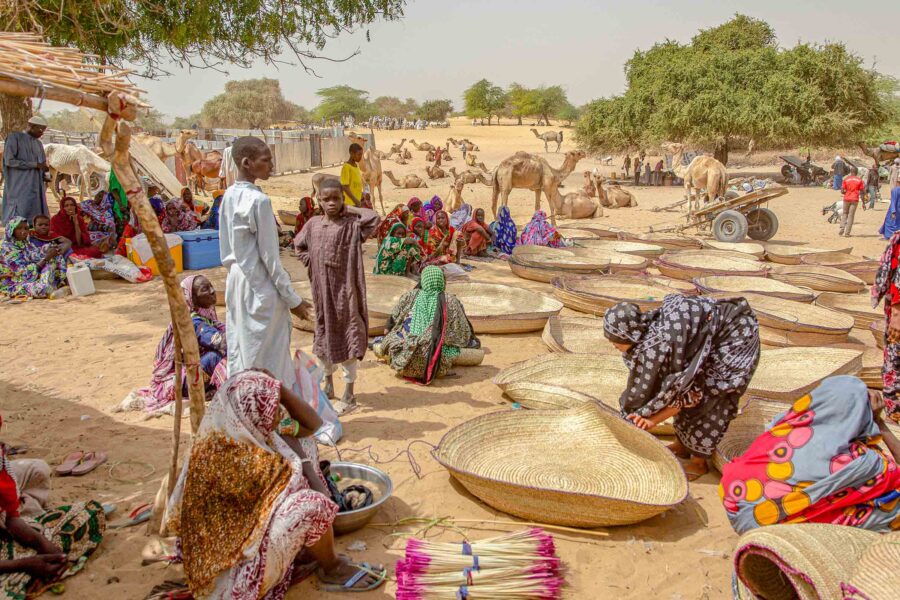
A shrinking Lake Chad and increasingly erratic rains are pushing herders and farmers in the Sahel into conflict over water and land. Lasting peace depends on securing indigenous land rights, strengthening cross-border cooperation, and putting climate finance directly in local hands
Paying before the flood: why adaptation finance must act on forecasts
We can now predict many climate hazards months in advance, yet international finance still flows mainly after the damage is done. Closing that gap means funding preparedness when credible forecasts warn of danger, not only recovery once disaster hits