
Stop treating finance as the last step in adaptation
Too often, adaptation finance is treated as an exercise that begins only once a plan is finished. Building investment planning into resilience strategies from the start is key to turning plans on paper into bankable projects on the ground
Climate — Europe, Global

Author

Phoebe Koundouri
Professor, Athens University of Economics and Business and University of Cambridge; Co-Chair, UN Global Sustainable Development Report 2027; Founder and Director, AE4RIA Research Centers
Climate adaptation is no longer simply a question of knowing what needs to be done. We increasingly understand the risks posed by heat, drought, floods, fires, sea-level rise, and ecosystem degradation. And we have a growing portfolio of technological, nature-based, and social solutions. The critical challenge is turning this knowledge into implementation at the necessary speed and scale – and financing it.
This is where much of my research and policy work over the last three decades has focused: connecting environmental and resource economics, systems science, stakeholder co-design, and sustainable finance to move from scientific evidence to implementable and financeable transformation pathways.
Designing finance into adaptation
At AE4RIA (the Alliance of Excellence for Research and Innovation on Aephoria) and the Sustainable Development Solutions Network (SDSN) Global Climate Hub, which I chair, we approach adaptation finance as an integral part of transformation design, not as a financing exercise that begins once an adaptation plan has been completed. Our work:
- integrates climate and environmental data with economic, social, and infrastructure evidence
- connects models across energy, water, land, food, biodiversity, transport, health, and the economy
- involves stakeholders in co-designing pathways that are environmentally effective, economically efficient, and socially just
The SDSN Global Climate Hub is hosted by institutions within AE4RIA and explicitly combines technical, financial, and policy solutions in developing climate-neutrality and resilience pathways (long-term, flexible plans for adapting to climate risks).
A particularly important application of this philosophy is Pathways2Resilience (P2R), under the EU Mission on Adaptation to Climate Change. The project is led by Climate KIC, while ReSEES.AE4RIA at the Athens University of Economics and Business leads the economics and finance work package. P2R supports 100 European regions and communities in developing transformative climate-resilience pathways, with EUR 21 million allocated directly to regions through its open calls. AE4RIA and the Athens University of Economics and Business have a leading role in the adaptation finance work, including the development and application of approaches that connect resilience pathways with investment planning.
Planning investment alongside adaptation
Central to this work is the adaptation investment cycle, illustrated below. The innovation is conceptually simple but fundamental: investment planning must develop alongside adaptation planning.
The adaptation investment cycle phases supporting the regional resilience Journey
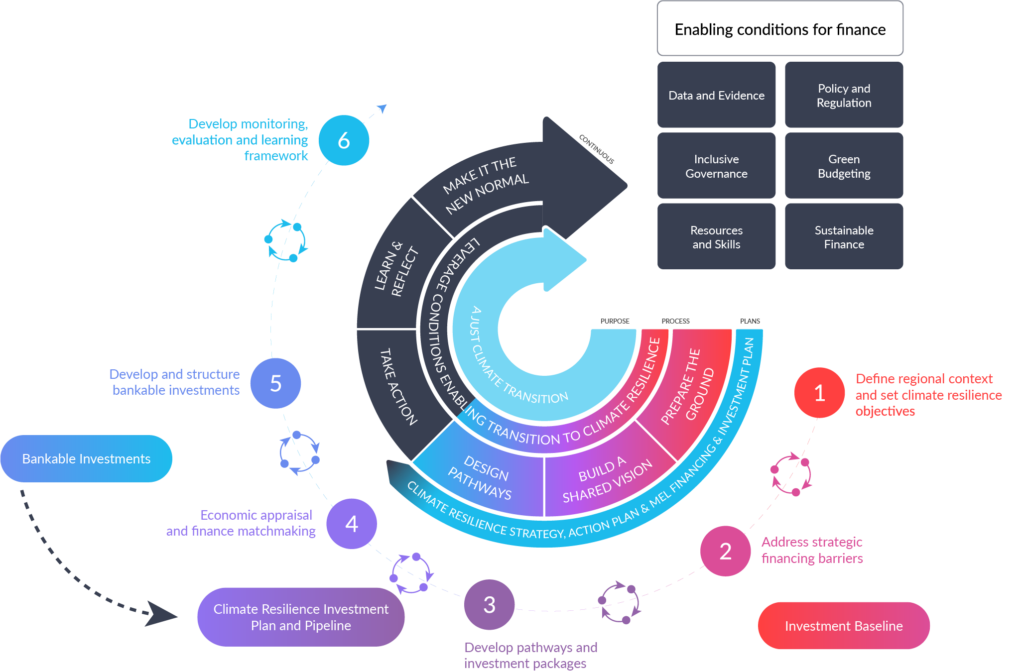
The cycle moves through six interconnected stages:
- Define the regional context and adaptation objectives, while establishing an investment baseline: what are the climate risks, existing assets, investment flows, institutional capacities, and priorities?
- Address strategic financing barriers: regulatory fragmentation, limited fiscal capacity, insufficient data, risk perceptions, weak incentives, or lack of investable project structures.
- Define the investment needs and financing strategies for alternative adaptation pathways: this should consider not only costs but also timing, uncertainty, distributional impacts, and potential sources of capital.
- Develop the climate resilience investment plan and project pipeline: translate strategies into concrete interventions with identified costs, responsibilities, financing structures, and implementation timelines.
- Match projects with appropriate sources of finance and develop bankable investments: this involves bringing regions, public financial institutions, commercial investors, and other capital providers together.
- Monitor, report, learn, and adapt: climate resilience is not a one-off investment decision. Risks, technologies, economic conditions, and societal preferences evolve, so investment pathways must evolve with them.
The framework is deliberately iterative. P2R describes it as a mechanism for moving from regional resilience ambitions to investment strategies, investment plans, and ultimately a pipeline of bankable projects.
Bankability is more than profitability
But bankability should not be confused with profitability alone. This is particularly important for adaptation.
Many of the benefits generated by adaptation appear as avoided future losses: reduced flood damage, lower mortality during heatwaves, greater water and food security, and avoided disruption to businesses and infrastructure. Others appear as improvements in natural capital, public health, biodiversity, productivity, social cohesion, and quality of life. Conventional financial appraisal frequently fails to capture these values.
Economic valuation is therefore critical. Our work at AE4RIA seeks to identify the multiple resilience dividends of adaptation and integrate them into decision-making. This allows public authorities to understand where public intervention is justified and enables financial institutions to better recognize the broader economic value and risk-reduction potential generated by adaptation investments.
From single instruments to financing portfolios
This also changes the financing question. There is no single instrument capable of financing adaptation. We need strategically designed financing portfolios that combine:
- public budgets and EU funds
- development and promotional banks
- grants for public-good components and project preparation
- guarantees and concessional capital to reduce risk
- blended-finance structures
- private debt and equity where viable revenue streams exist
- insurance and risk-transfer mechanisms
- innovative financial instruments tailored to particular regional circumstances
P2R has consequently developed catalogues covering dozens of adaptation finance sources and instruments, alongside European case studies, to support regions in constructing appropriate financing strategies.
Equally important are the enabling conditions surrounding finance:
- reliable data and evidence
- coherent policy and regulation
- inclusive governance
- green budgeting
- institutional capacity, resources, and skills
A technically excellent adaptation project will not become investable in an environment of regulatory uncertainty, fragmented governance, or inadequate project-development capacity.
From plans on paper to investments on the ground
The broader lesson from our work at AE4RIA, P2R, and the SDSN Global Climate Hub is therefore clear: we should stop treating finance as the last step of climate adaptation.
Finance must be designed into transformation pathways from the beginning.
The task is to move systematically from climate risk, to resilience pathways, to investment needs, to financing strategies, to project pipelines, to bankable implementation, while continuously monitoring outcomes and adjusting our choices as conditions change.
This is how climate adaptation moves from plans on paper to investments on the ground. It is how we can mobilize public and private capital not simply to repair the consequences of climate change, but to build resilient, inclusive, and sustainable economies for the future.

Related articles
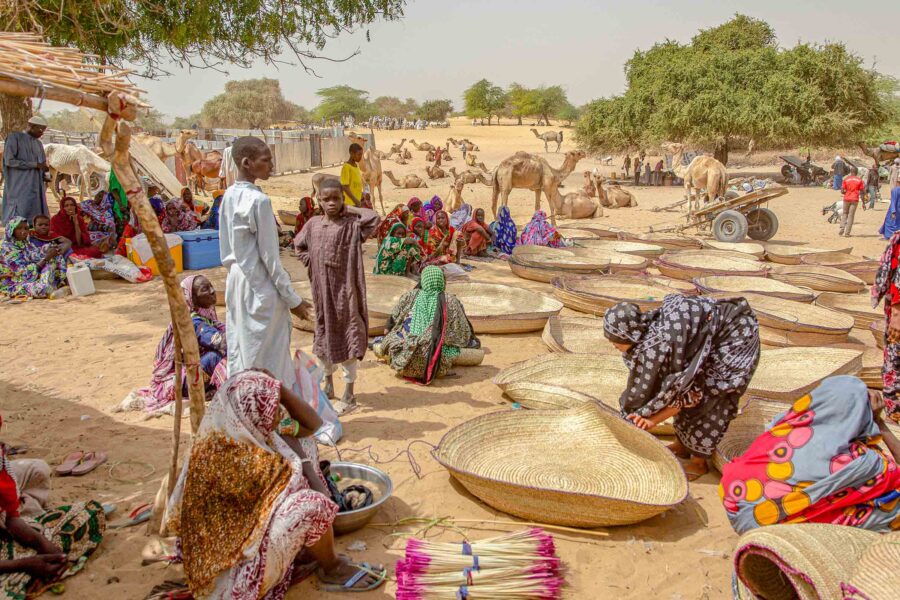
In the Sahel, peace starts with water
A shrinking Lake Chad and increasingly erratic rains are pushing herders and farmers in the Sahel into conflict over water and land. Lasting peace depends on securing indigenous land rights, strengthening cross-border cooperation, and putting climate finance directly in local hands

Global urban goals: who asked the planners?
SDG 11, the New Urban Agenda and the International Guidelines on Urban and Territorial Planning all rely on planners to put them into practice. Yet no one has conducted a representative survey of planners, asking whether these frameworks have changed their work, or whether the planning laws they work under even allow what the frameworks call for
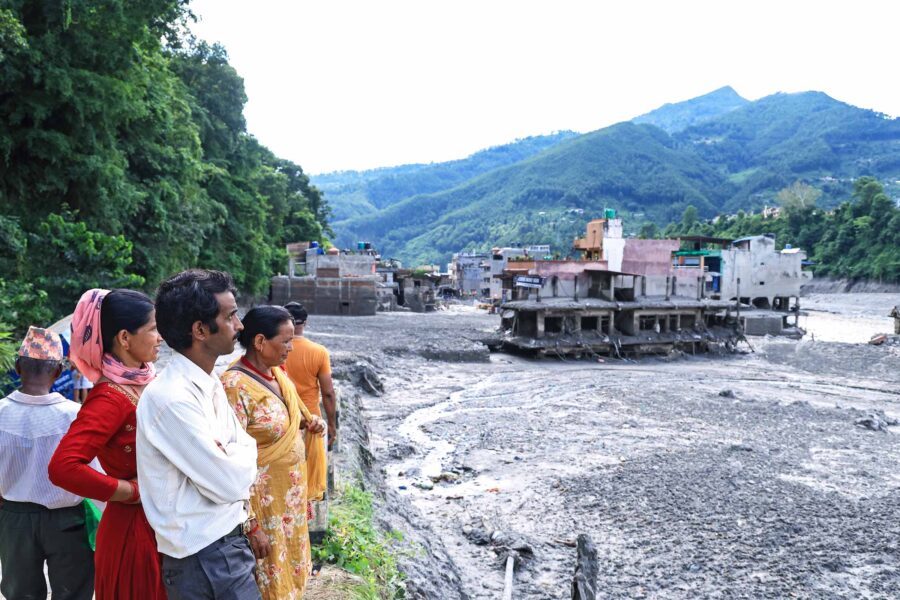
Paying before the flood: why adaptation finance must act on forecasts
We can now predict many climate hazards months in advance, yet international finance still flows mainly after the damage is done. Closing that gap means funding preparedness when credible forecasts warn of danger, not only recovery once disaster hits