
Paying before the flood: why adaptation finance must act on forecasts
We can now predict many climate hazards months in advance, yet international finance still flows mainly after the damage is done. Closing that gap means funding preparedness when credible forecasts warn of danger, not only recovery once disaster hits
Climate — Asia (Central, Eastern and Southern), Global
Author

Yusuke Taishi
Senior Technical Advisor on Climate Change Adaptation, United Nations Development Programme (UNDP)
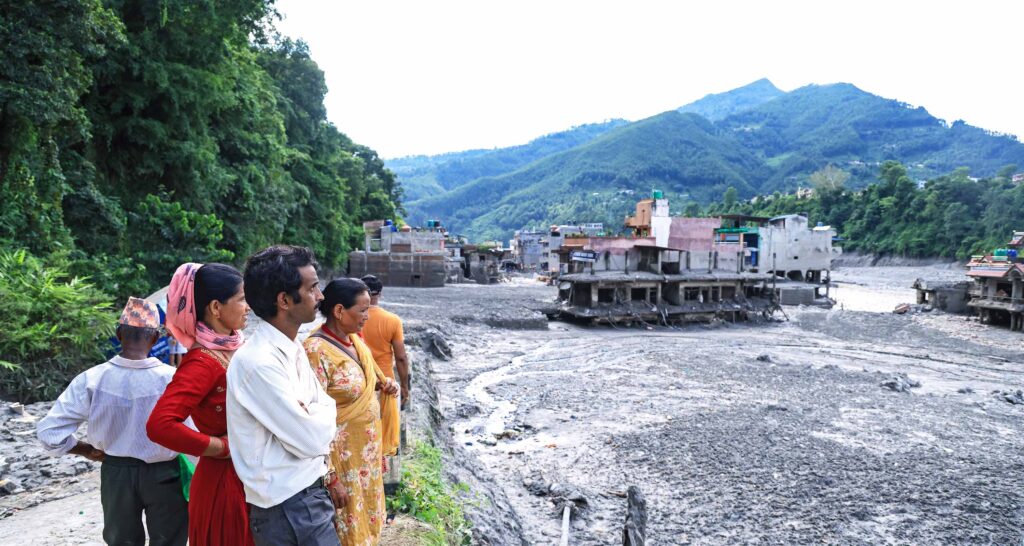
On 26 August 2026, a catastrophic flood swept through Nepal’s Himalayan valleys after an ice-and-rock avalanche near the border with China. Entire communities were engulfed by torrents of water, mud, and debris. According to a preliminary rapid assessment of the Nepal floods by the United Nations Development Programme (UNDP), the disaster affected 84,270 people across six districts, generating an estimated 2.2 million tonnes of debris and potentially causing USD 158.6 million in building damage alone. Strikingly, 76% of the population in affected municipalities lives in areas already facing above-average vulnerability, illustrating how climate-related disasters compound existing development challenges.
Another threat is building on a global scale. The World Meteorological Organization (WMO) warns that the current El Niño could be among the strongest on record, with tropical Pacific temperatures forecast to peak around December. Often dubbed a “Super El Niño,” it could shift rainfall patterns and heighten drought and flood risks in vulnerable regions.
These events illustrate both the urgency and the opportunity facing climate adaptation. While some disasters strike with little warning, others can be anticipated months ahead. Yet the gap between what we know about climate risks and what we actually do to address them remains dangerously wide.
A revolution in early warnings
Weather stations, satellites, and improved forecasting models have greatly expanded our ability to anticipate climate-related hazards. This progress is gaining further momentum through initiatives such as:
- UN Secretary-General António Guterres’s Early Warnings for All, which aims to protect everyone on Earth by the end of 2027
- a recently approved Green Climate Fund project led by UNDP to expand early warning systems in seven countries
- the Systematic Observations Financing Facility (SOFF), which strengthens weather and climate observation capabilities in developing countries
Progress has been substantial. According to the WMO’s 2025 Global Status of Multi-Hazard Early Warning Systemsreport, 119 countries now report having such systems, more than double the number in 2015. Investments continue to expand weather observation networks, strengthen forecasting, and improve the communication of warnings to vulnerable communities.
The economic case is compelling. The WMO, citing research by the Global Commission on Adaptation, estimates that every dollar invested in multi-hazard early warning systems can generate nine dollars in net economic benefits. Just 24 hours’ notice of an impending hazardous event can reduce potential damage by up to 30%. Better warnings can save lives, protect livelihoods, and reduce the subsequent costs of disaster response and recovery.
But an uncomfortable question emerges: what happens when countries receive increasingly reliable warnings but lack the financial resources to act on them?
Science looks ahead, finance looks back
The international community has invested significantly in improving our ability to forecast climate risks. Yet the international climate finance architecture has not evolved at the same pace.
Consider the implications of a strong El Niño. Seasonal forecasts can identify elevated risks of drought or unusually heavy rainfall several months in advance. This advance knowledge creates opportunities to adjust agricultural production, secure water supplies, strengthen critical infrastructure, prepare health systems, and expand social protection for vulnerable populations.
These interventions require financing, often well before the anticipated disruption materializes.
Yet conventional international adaptation finance typically operates through project preparation, technical assessments, institutional reviews, and approval procedures that can take years. These processes serve legitimate purposes: ensuring accountability, upholding environmental and social safeguards, and making effective use of public resources. But they are poorly suited to responding to a credible forecast of a major climate disruption expected within six months.
Emergency financing, meanwhile, is generally more responsive once disaster strikes. The result is a troubling disconnect: countries may know that serious threats are approaching but find it easier to mobilize substantial international resources to recover from damage than to prevent it.
This is not simply another argument about the adaptation financing gap. It is about whether our financing mechanisms are fit for the information age in which climate science now operates.
Loss and damage: a breakthrough, not the whole answer
The operationalization of the Fund for responding to Loss and Damage demonstrates that persistent demands from developing countries can lead to tangible institutional change. The fund represents an important recognition that vulnerable countries need dedicated financial support to address climate impacts that cannot be avoided through adaptation.
Nepal’s recent disaster is an immediate test of this new mechanism. Following the August floods, Nepal requested assistance from the fund, whose board convened an extraordinary meeting on 22 October to consider how it could support the country’s recovery efforts. This represents a potentially important step toward making international climate finance more responsive to countries facing devastating losses.
But the emergence of a mechanism to address losses raises another question: shouldn’t the international community demonstrate equal determination to finance action before foreseeable losses occur?
Loss and damage funding and anticipatory adaptation finance serve different, complementary purposes. We need both.
Finance the forecast, not just the aftermath
The way forward is to establish dedicated financing windows within existing international climate funds, enabling resources to be released in response to credible climate forecasts without compromising fiduciary standards.
Two changes would make this possible.
First, countries and financing institutions should agree in advance on priority preparedness measures, implementation arrangements, and eligibility criteria, drawing on existing anticipatory financing experience. The International Federation of Red Cross and Red Crescent Societies already operates mechanisms that automatically release pre-agreed resources when forecast thresholds are reached. This approach could be extended beyond short-term humanitarian interventions to larger-scale development-oriented preparedness through dedicated funding windows within existing climate finance institutions.
Second, financing institutions must become more comfortable with uncertainty. Seasonal forecasts indicate probabilities, not certainties. Some anticipated disasters will not materialize, and investments in preparedness may therefore appear unnecessary in hindsight. But this is the nature of managing risk. We do not regard insurance premiums as wasted simply because a disaster does not occur.
The objective should be to reduce expected losses and protect development gains, not to require every forecast-triggered investment to be justified by a subsequent catastrophe.
There are legitimate concerns about accountability, forecast reliability, and the risk of diverting scarce adaptation resources. These can be addressed through transparent scientific thresholds, independently evaluated results, and clearly defined limits on eligible spending.
The El Niño test
This El Niño will test more than our forecasting capabilities. It will test whether the international community can convert advance knowledge into timely protection for lives, livelihoods, and development gains. From food security and poverty reduction to health and resilient infrastructure, the Sustainable Development Goals depend on that shift.
The world has made remarkable progress in learning to see disasters coming. The next frontier of climate adaptation is ensuring that financing arrives before the damage does.

Related articles
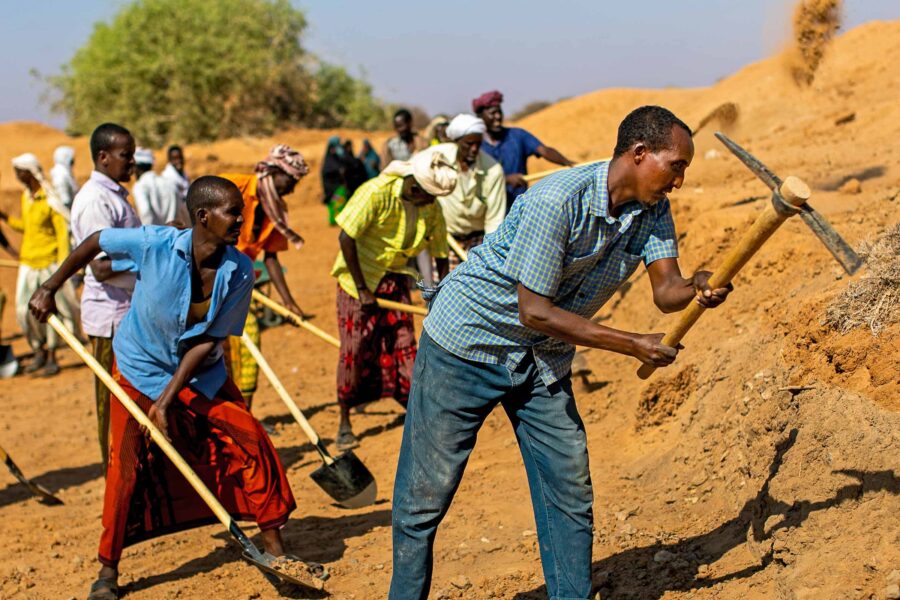
Stretched to snapping point: why global agrifood systems need resilience now
The war in Ukraine, the closure of the Strait of Hormuz, and El Niño are hitting global agrifood systems at once, just as the buffers that absorbed past shocks are running low. Preventing these disruptions from becoming food crises means tackling not only countries’ exposure to shocks but also the fragility that leaves them unable to respond

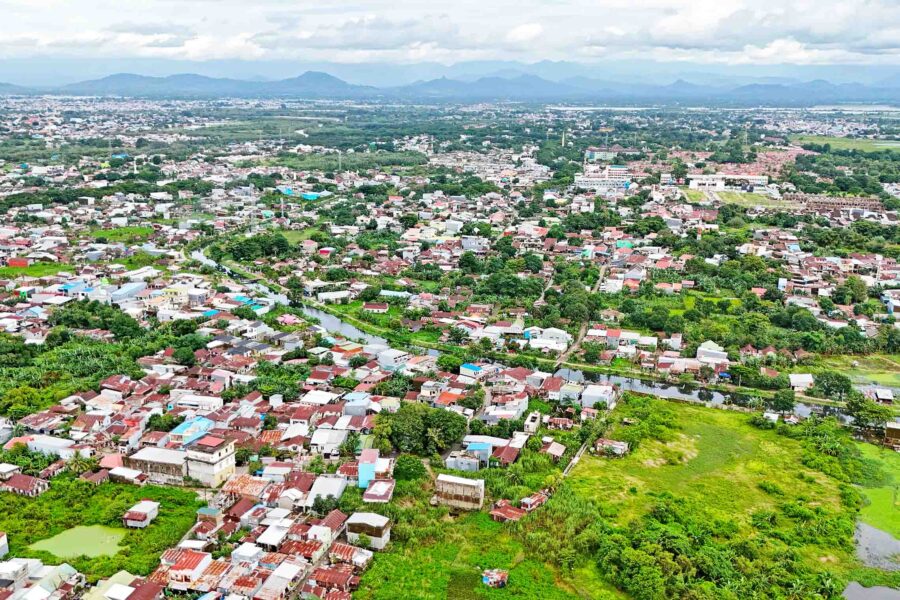
The New Urban Agenda at ten: still fit for purpose?
Ten years on, the New Urban Agenda has shaped national urban policies, but much-anticipated innovations in financing have yet to deliver at scale, and the stakeholders who helped create it have been sidelined. Its halfway point raises a bigger question about whether 20-year global frameworks still make sense in a world of fast-moving, overlapping crises