
The New Urban Agenda at ten: still fit for purpose?
Ten years on, the New Urban Agenda has shaped national urban policies, but much-anticipated innovations in financing have yet to deliver at scale, and the stakeholders who helped create it have been sidelined. Its halfway point raises a bigger question about whether 20-year global frameworks still make sense in a world of fast-moving, overlapping crises
Cities — Global
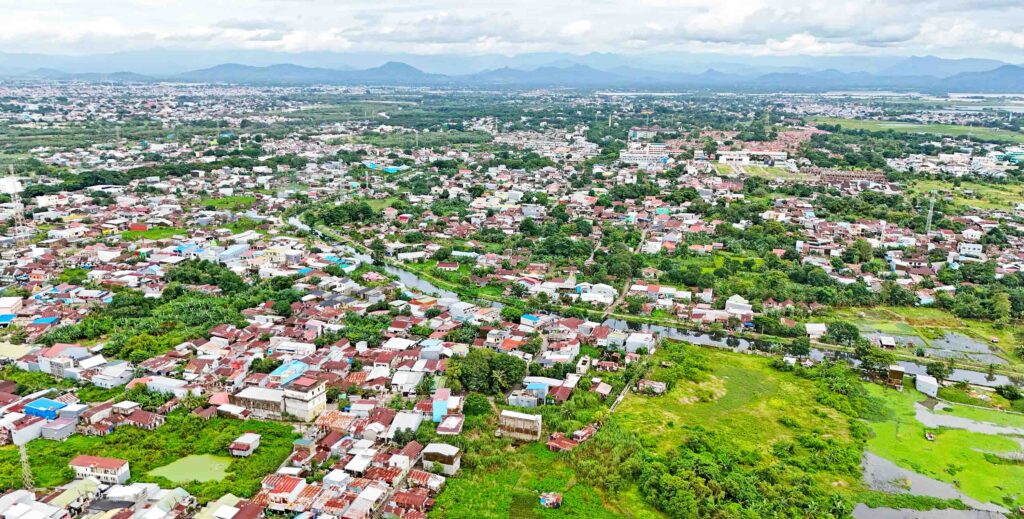

This year (2026) marks ten years since UN Member States unanimously adopted the New Urban Agenda (NUA) at the UN Conference on Housing and Sustainable Urban Development (Habitat III) in Quito. This mid-way point in the 20-year framework is a good moment to look back, and forward, especially as we approach the home stretch for the Sustainable Development Goals (SDGs), which the NUA was expected to buttress and implement.
For context, the NUA was negotiated among nations during 2014 and 2015, culminating in its adoption in 2016. Civil society participated extensively in its drafting, initially through the UN’s long-established Major Groups and Other Stakeholders mechanism, and then through a specific platform called the General Assembly of Partners. This platform brought together 16 constituencies of partners, representing over 58,000 organizations, institutions, and networks – and, indirectly, about one billion people.
Seen as an accelerator for the 2030 Agenda and the SDGs, the NUA and its accompanying Quito Implementation Plan focused on three transformative commitments for sustainable urban development:
- social inclusion and ending poverty
- inclusive urban prosperity
- environmentally sustainable and resilient urban development
These were to be realized through:
- development of enabling policy frameworks at the national, subnational, and local levels
- participatory planning and management of urban spatial development
- effective means of implementation, including financing, capacity-building, and data
How effective has the NUA been?
The latest report on the status of implementation of the NUA (2026), submitted by the UN Secretary-General to the Economic and Social Council, serves not only as a four-year progress update but also as a mid-way review. The report unsurprisingly reasserts that the NUA is still relevant globally, while acknowledging that implementation has been slow and patchy:
- poverty and inequality remain deeply entrenched in most countries
- economic growth continues to be uneven, especially in the aftermath of the COVID-19 pandemic
- urban areas continue to contribute to environmental degradation and climate change, while also bearing the brunt of climate-induced and other ecological disasters
The unequivocal success story of the first decade of NUA implementation is the widespread adoption of national and subnational urban policies. Since 2014, UN-Habitat, the Cities Alliance (a global partnership for reducing urban poverty), and the Organisation for Economic Co-operation and Development have supported more than 68 national and subnational governments in the preparation of urban policies. Other actors, such as GIZ, Germany’s international development agency, have also stepped in. As of 2024, around 160 countries had adopted or were developing urban policy frameworks or had embedded them within national development strategies, increasingly addressing climate resilience, regional inequalities, and economic transformation.
Significant challenges persist, however, in turning these policies into spatial frameworks and plans at the national, regional, and municipal levels. There seems to be neither the interest from international organizations and development partners nor the domestic political will to systematically translate policies into plans and budgets.
The NUA was envisioned as an accelerator for the realization of the SDGs, especially SDG 11 (sustainable cities and communities). Uneven progress in the implementation of the NUA, therefore, seems to have a direct bearing on the progress made against key SDG 11 indicators. UN-Habitat’s SDG 11 Global Report 2026: Housing at the Centre of Sustainable Cities and Communities shows progress against a few targets but regression on many critical indicators and targets. For example, as of 2024, more than three billion people are reported to be living in inadequate housing globally. Of these, 1.16 billion live in slums and informal settlements, a figure that has risen by 130 million since 2015 (indicator 11.1.1). Access to public spaces has also declined (indicator 11.7.1), and air pollution remains far above safe levels globally (indicator 11.6.2).
Where is the money?
Beyond policy gaps and governance weaknesses, financing constraints remain very real, even as investment needs in housing, infrastructure, and services grow. UN-Habitat’s World Cities Report 2026: The Global Housing Crisis – Pathways to Action estimates the global financing requirement for adequate and affordable housing at USD 3 to 4 trillion annually through 2030. This is in addition to significant funding needed to maintain and upgrade existing housing stock. According to another report, the World Bank’s Banking on Cities: Investing in Resilient and Low-Carbon Urbanization, the public capital costs of resilient and low-carbon urban investments in all low and middle-income countries are estimated at about USD 256 to 821 billion annually. These costs cover several sectors, such as transportation, buildings, water and wastewater, flood and heat protection, and solid waste management. Where is this money coming from? What should be financed by the public sector? What is the role of development banks, international and development financial institutions, and the private sector?
International organizations seem to be better at estimating needs than proposing game-changing ideas to raise this magnitude of resources. Innovations in financing remain restricted to a few pilot cases, rather than anything that can be implemented at scale. This is true of innovations in land-based financing (underpinned by land and property registration systems and progressive taxation arrangements), mobilization of private capital, blended finance, and private investments in housing and urban infrastructure.
Have stakeholders been left behind?
The Habitat III process was unique in its organized and extensive engagement with the widest possible range of stakeholders interested in sustainable urban development. Local and regional governments and their networks, as well as civil society stakeholders, researchers, and academia, were expected to play significant roles in the implementation, monitoring, and reporting of the NUA. Over the past ten years, however, stakeholder engagement in the multilateral arena has stagnated at best, regressed at worst. This is as much a result of the shrinking space for civic engagement globally as it is an outcome of the inability of the UN system to change its arcane processes and engage stakeholders creatively and meaningfully.
For example, instead of adopting the constituency-based stakeholder engagement platform of the General Assembly of Partners established for Habitat III, UN-Habitat has continued to work through disjointed mechanisms set up over several decades to engage young people, women, academia, and local governments. The role of the World Assembly of Local and Regional Governments, a review mechanism in paragraph 169 of the NUA, has systematically been diluted. Grassroots and women’s groups remain shut out of major policy discussions. Older people struggle to have their concerns heard, while efforts to engage young people rarely go beyond lip service.
This obviously goes beyond the NUA or UN-Habitat and reflects a wider challenge across the UN system. But it undoubtedly does a disservice to the unprecedented efforts and commitment demonstrated by thousands of stakeholder representatives in the development and adoption of the NUA, and other similarly negotiated global agreements. One could argue, in fact, that the slow progress in the implementation of the NUA and the realization of the SDGs, especially SDG 11, is itself a result of declining engagement with stakeholders. Over 2015 and 2016, these same stakeholders embraced and owned the NUA, and enthusiastically committed to driving its implementation over two decades.
Looking ahead: is 20 years too long to plan for?
Over the last decade, we seem to have entered a hyper-dynamic world. What were once 100-year events now recur every ten years, once-in-a-decade crises appear every year or two, and overlapping crises hit many parts of the world at once. In such an environment, is any 20-year agenda still fit for purpose, or is it a hindrance, preventing organizations from pivoting quickly as situations evolve? As the climate crisis deepens, conflicts escalate and spread across regions, inequality widens, and social polarization reaches unprecedented levels, we should ask the uncomfortable question: does the world still need a 20-year masterplan for sustainable urban development? Or, for that matter, a 15-year agenda with 17 goals, 169 targets, and 234 unique indicators, at least 60 of which are reported on only occasionally, with just four years to go until 2030? Are such agendas simply too expansive and fundamentally unworkable?
As we start to discuss the contours of a post-2030 development framework, we should perhaps go back to the drawing board and ask whether we need these extensive global blueprints at all. Known in development circles by the cities where they were agreed (Beijing, Paris, Sendai, Quito, Seville, and so on), they often overlap, yet are implemented over different timeframes and measured against different indicators. They have also been seen to fragment available resources into tiny, earmarked boxes, managed by a diverse collection of UN organizations, rather than supporting a joined-up effort behind a handful of interventions that might really change the lives of the most excluded, marginalized, and vulnerable.
If this is not what we want, then what should the post-2030 framework look like? If it is to be radically different, who will have the courage to build consensus around it? And what should go into it – or, perhaps more importantly, what should be left out? These are questions the international community can no longer afford to defer.
Related articles
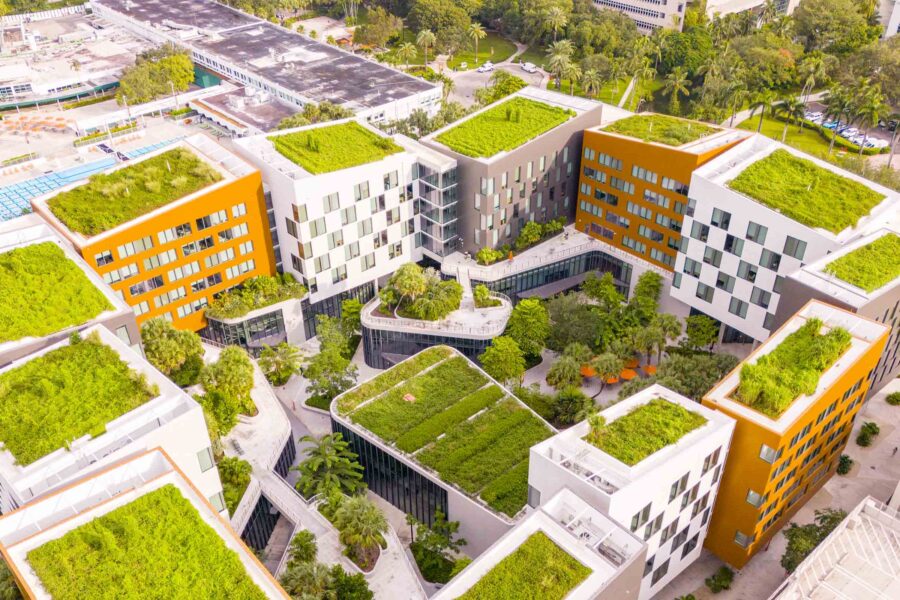
Valuing urban resilience
Cities face difficult choices about how to invest in resilience as climate
pressures intensify. Valuing health, ecosystems, social inclusion, and reliable services alongside financial costs can help them choose fairer, more effective ways to adapt to climate change
A global digital commons for SDG delivery
The SDGs do not lack science, legitimacy, or vision – they lack an operating system. A global digital commons can help countries move from reporting progress to delivering transformation by bringing together open data, integrated modeling, stakeholder co-design, and sustainable finance