
Building the infrastructure for peace
Peace deals may be negotiated by leaders, warring parties, and external powers. But to achieve lasting peace, formal agreements must be connected to peacebuilding from the grassroots up
Climate — Global, Sub-Saharan Africa
Author

Bineta Diop
Founder and Chair of the Board, Femmes Africa Solidarité; Co-Convener, African Women Leaders Network
In my work on peace and security across Africa, I have witnessed a recurring contradiction. Peace agreements are often signed, yet peace remains elusive for the communities they are meant to serve. Many agreements have been concluded without significantly reducing violence or creating sustainable pathways toward stability. Lasting peace requires more than formal political settlements. It depends on the active participation of women, young people, and community actors who strengthen social cohesion and sustain peace long after agreements have been signed.
This reality is reflected in the broader international approach to peace and security. While considerable attention and resources are devoted to peacekeeping, peacemaking, mediation, and stabilization efforts, far less investment is directed toward prevention, early warning systems, and the timely responses needed to address risks before they escalate into crises. Vast resources are mobilized to support ceasefires, military stabilization, and diplomatic engagement. Yet insufficient attention is given to strengthening the social systems, trusted institutions, and community-based structures that make peace sustainable. As a result, peace agreements may be celebrated internationally while many citizens continue to live in fear, face economic hardship, and have limited access to the services and opportunities necessary for recovery and resilience.
If we are serious about building sustainable peace, prevention must be a central pillar of our efforts. In my experience, conflict rarely erupts without warning. It often takes root in poverty, exclusion, inequality, unemployment, limited economic opportunities, and weak governance. Addressing these issues before they erupt into violence is not only a development imperative – it is among the most effective investments in peace.
This is why advancing the Sustainable Development Goals must be understood as a peacebuilding strategy. By placing people, particularly women and young people, at the center of development efforts, the SDGs help address many of the structural drivers of instability. Innovation and emerging technologies can expand economic opportunities, create jobs, strengthen livelihoods, and empower communities to become agents of development rather than victims of conflict. Prevention, development, and peace are not separate agendas – they are mutually reinforcing pathways toward sustainable stability.
Communities as architects of peace
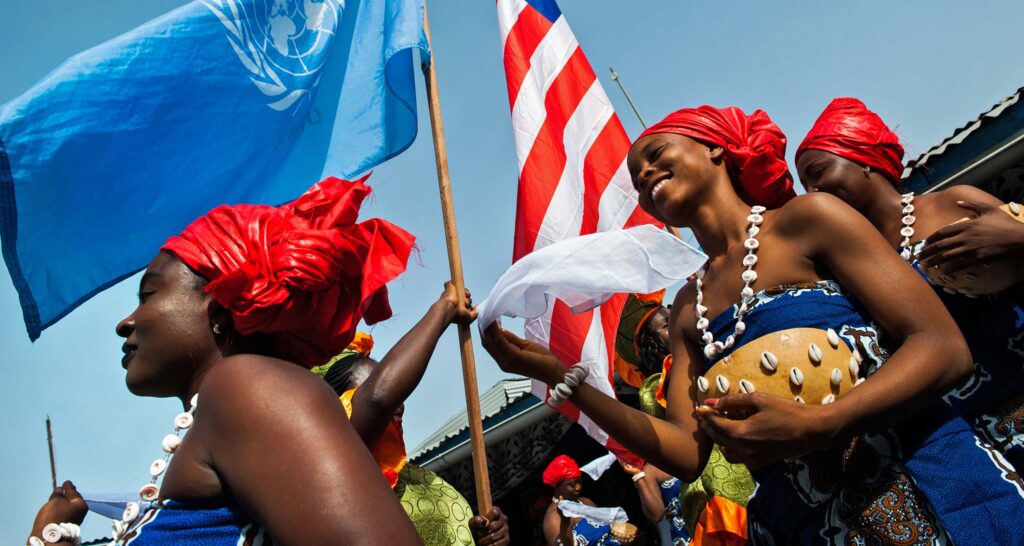
Community-centered dialogue and negotiation initiatives such as the Mano River Women’s Peace Network (MARWOPNET) demonstrate what this approach can achieve. Supported by Femmes Africa Solidarité, MARWOPNET mobilized women across Liberia, Sierra Leone, and Guinea and successfully persuaded the heads of state of the three countries to return to the negotiating table, helping prevent further escalation of violence. In recognition of its contribution to peace and human rights, MARWOPNET received the UN Prize for Human Rights in 2003 from Secretary-General Kofi Annan. That same year, the network became a signatory to the Liberian Comprehensive Peace Agreement. Its experience demonstrated a powerful lesson: communities are not simply beneficiaries of peace processes – they are often the architects of sustainable peace.
Yet for decades, peace negotiations have largely operated through formal diplomatic channels involving heads of state, armed groups, political elites, and international mediators. These processes are essential. Guns must be silenced and political agreements remain necessary. But they are not sufficient on their own. Women rebuilding trust within communities, young people resisting recruitment into violence, faith and traditional leaders mediating local tensions, and civil society actors monitoring early warning signs must also help shape the peace they are expected to sustain.
This lesson was clearly demonstrated during the Burundi peace process. When Nelson Mandela assumed responsibility for mediating the Arusha negotiations, he first met with Burundian women leaders. He recognized that they possessed a deep understanding of the conflict’s root causes and held significant influence within their communities. Their contributions were reflected in the Arusha Peace and Reconciliation Agreement, including provisions relating to women’s participation, rights, and post-conflict recovery. Their engagement reinforced a simple but powerful truth: when women help shape peace agreements, they help make peace more sustainable.
Making mediation more inclusive and accountable
The effectiveness of any peace process is closely linked to the quality, credibility, and accountability of its mediators. There is a growing need for more transparent and inclusive mediator selection processes, accompanied by mechanisms that monitor both negotiations and the implementation of peace agreements. Diverse mediation teams should become the norm, with women playing a central role in peace processes. Despite their proven contributions to conflict prevention, negotiation, and reconciliation, women remain significantly underrepresented in formal mediation efforts.
Recognizing this gap, the African Women Leaders Network (AWLN) was established to advance women’s leadership in governance, peace, security, and development. AWLN is founded on a simple premise: sustainable peace requires the meaningful participation of women at all levels of decision-making. Women are not merely beneficiaries of peace – they are agents of peace. Evidence consistently shows that peace agreements are more durable when women are meaningfully involved in their negotiation and implementation. According to UN Women, peace processes are 35% more likely to last 15 years when women participate in negotiations.
Investing in the systems that sustain peace
Political settlements must therefore be accompanied by investments in the institutions and community-based infrastructures that sustain peace. This includes supporting civil society organizations, women-led networks, local peacebuilders, and community initiatives. Together, these investments strengthen social cohesion, promote dialogue, and address grievances before they escalate into conflict. If women remain underrepresented in peace negotiations because of a perceived shortage of qualified candidates, then the solution is not exclusion – it is investment. Investing in women’s leadership, mediation skills, and participation is essential, as is investing in the institutions and social structures that sustain peace.
The deepening connections between climate, peace, and security further highlight the importance of investing in resilience. Across Africa, climate adaptation, sustainable livelihoods, and responsible natural resource management can reduce vulnerabilities, strengthen communities, and contribute to long-lasting stability. Climate action is therefore not only an environmental imperative – it is also a powerful instrument for conflict prevention and sustainable development.
This vision aligns closely with both the SDGs and the aspirations of the African Union’s Agenda 2063. Neither framework can be achieved without peace – and peace cannot be sustained without development, human rights, and inclusive governance. Together, they provide a roadmap for addressing the interconnected challenges of inequality, insecurity, exclusion, and environmental vulnerability.
My experience has taught me that peace, human rights, and development are inseparable. Too often, these agendas are pursued through separate institutions, funding streams, and policy frameworks, even though they are deeply interconnected. Sustainable peace requires an integrated approach that places human dignity at its center. When communities are empowered, rights protected, institutions trusted, and opportunities expanded, peace becomes more than the absence of violence. It becomes the foundation for resilience, stability, shared prosperity, and hope for future generations.
Featured in:
UNGA 2026 edition: Looking for leadership
As the established global powers have retreated from development, no one has stepped up to fill their place: not the Global South, not the middle powers, not a loosely assembled BRICS. The agenda that has guided development since 2015 is losing the cohesion it once had, just as the political appetite for it fades.
Yet across this edition, practitioners keep building a coherent, evidence-based case for a fairer, safer, sustainable world. Their work supplies the thought leadership that politics has not – and it will provide the framework for success when real political will returns.
Authors include Adriana E. Abdenur, Bineta Diop, Richard Gowan, Phoebe Koundouri, Emi Minghui Gui, Chidi King, María Fernanda Espinosa Garcés, Tobias Schillings and Rachel Marcus.
Publication date: 15 September 2026
Related articles
Valuing urban resilience
Cities face difficult choices about how to invest in resilience as climate
pressures intensify. Valuing health, ecosystems, social inclusion, and reliable services alongside financial costs can help them choose fairer, more effective ways to adapt to climate change
A global digital commons for SDG delivery
The SDGs do not lack science, legitimacy, or vision – they lack an operating system. A global digital commons can help countries move from reporting progress to delivering transformation by bringing together open data, integrated modeling, stakeholder co-design, and sustainable finance