
Why markets alone cannot solve the affordable housing crisis
Across much of the Global South, formal housing markets fail to reach the people most in need of affordable homes. Recognizing incremental, community-driven housing systems is essential for achieving inclusive, climate-resilient cities
Cities — Global
Author

Sheela Patel
Founder and Director, Society for the Promotion of Area Resource Centres (SPARC); Chair, Roof Over Our Heads (ROOH)
Over the past three decades, market-led approaches have come to dominate urban development policy. Governments have shifted from direct provision toward enabling private sector participation, emphasizing efficiency, scalability, and innovation.
In housing, this has translated into mortgage-based finance systems, public–private partnerships, and large-scale housing production. These approaches assume that, with the right incentives, markets can deliver affordable housing at scale.
However, this assumption is increasingly misaligned with reality. In many cities across the Global South, a substantial share of the population lives in informal settlements and remains excluded from formal housing markets.
The global affordable housing crisis is not simply a failure of supply. It reflects a deeper mismatch between formal policy frameworks and the lived realities of low-income urban residents. Addressing it requires looking beyond markets, recognizing informality as a functioning system of provision, and integrating climate resilience into housing and infrastructure policy.
The limits of market-led housing delivery
Market-based housing strategies depend on stable incomes, formal land tenure, and access to finance. These conditions are absent for large segments of urban populations.
Low-income households often rely on informal employment, resulting in irregular and undocumented income streams. Land tenure is insecure or unrecognized, and access to mortgage finance is limited or nonexistent.
For developers and financial institutions, these conditions create high risk. As a result, housing supply at affordable price points is limited, even where subsidies exist. Market-led approaches therefore tend to serve middle-income groups more effectively than the urban poor.
This creates a persistent gap between housing demand and formal supply, contributing to the continued expansion of informal settlements.
Informality as a system of provision
Informality is often framed as a problem to be solved. However, it functions as the primary system through which the majority access housing.
Self-built housing is typically incremental. Households construct and improve dwellings over time, adapting to changing needs and financial capacities. This process allows for flexibility and affordability.
Financing mechanisms are similarly adaptive. Savings groups, informal lending networks, and remittances provide capital outside formal financial systems. Social organization plays a central role in enabling these processes.
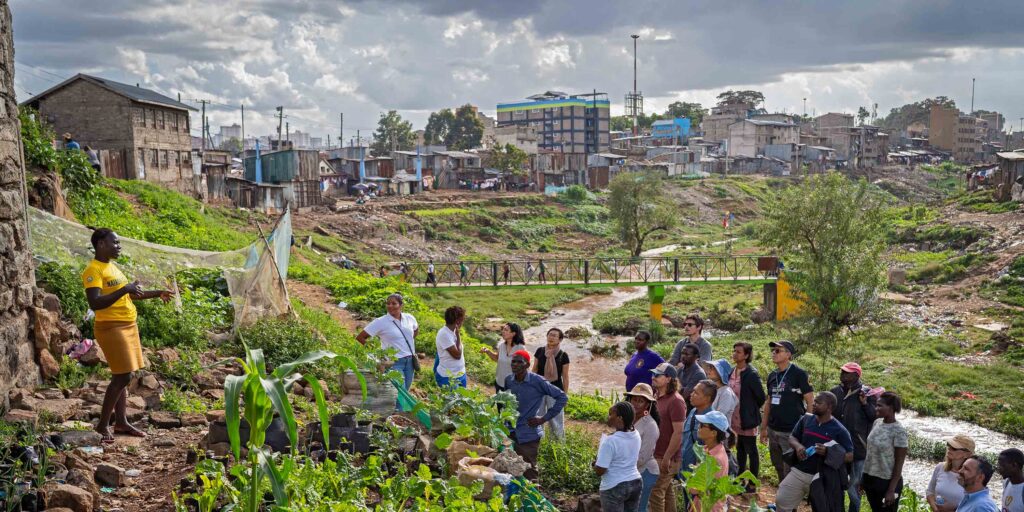
In cities such as Mumbai, community-based organizations have demonstrated the effectiveness of these systems through collective savings, settlement mapping, and negotiated engagement with authorities.
Rather than representing failure, informality reflects a parallel system that compensates for the limitations of formal markets.
Climate change and urban vulnerability
Climate change is intensifying the vulnerabilities associated with informal urbanization.
Informal settlements are often located in high-risk areas, including floodplains and heat-prone zones. As climate impacts increase, these risks become more severe.
Flooding damages housing and disrupts livelihoods, while extreme heat affects health and productivity. Market-based responses, such as climate-resilient housing or insurance, remain largely inaccessible to low-income households.
At the same time, communities are already adapting. They modify structures, improve drainage, and develop localized coping strategies. However, these efforts are under-resourced and lack institutional support.
This highlights a disconnect between where vulnerability is concentrated and where investment is directed.
Fragmentation of climate and development policy
A major barrier to effective action is the separation of climate and development agendas within policy frameworks.
Housing and infrastructure are typically treated as development issues, while climate mitigation and adaptation are addressed separately. This leads to fragmented investments and reduced impact.
For example, housing projects may not account for climate risks, while climate initiatives may not address underlying housing conditions.
Integrating climate considerations into development planning is essential for ensuring long-term resilience and effectiveness.
Implications for the SDGs
These challenges cut across several Sustainable Development Goals:
- SDG 11 (sustainable cities and communities) requires inclusive and affordable housing solutions that reach informal populations
- SDG 13 (climate action) demands targeted adaptation efforts in vulnerable communities
- SDG 1 (no poverty) and SDG 10 (reduced inequalities) are directly affected by exclusion from formal systems
Yet current measurement frameworks tend to prioritize formal delivery – new housing units, infrastructure provision, and financial flows – while overlooking the scale and impact of incremental, self-financed improvements made by low-income households.
Reframing policy
Addressing these issues requires a shift from market-centric approaches to system-based strategies:
- First, informal systems must be recognized and supported through flexible regulatory frameworks.
- Second, in-situ upgrading should be prioritized over relocation, preserving livelihoods and social networks.
- Third, financial systems must adapt to incremental investment patterns through small-scale lending and support for savings groups.
- Fourth, climate considerations must be integrated into all housing and infrastructure investments.
- Finally, community participation must be institutionalized, recognizing residents as active agents in development.
Conclusion
Market-led development strategies have not delivered for most urban residents, reflecting a structural mismatch between policy assumptions and lived realities.
At the same time, the dominant form of housing production across much of the Global South is not delivered by the state or market, but built by people. Low-income households continuously invest in upgrading, repairing, retrofitting, and expanding their homes. These incremental processes represent a vast, ongoing flow of investment that sustains and improves the largest share of urban housing stock.
However, this reality remains largely invisible within global development frameworks. Metrics used to track progress – particularly within the SDGs – tend to capture formal outputs while overlooking distributed, household-level investments. As a result, the contributions of poor communities are systematically undervalued.
This invisibility has consequences. What is not measured is rarely prioritized. Policies and finance continue to favor formal, large-scale delivery mechanisms, even when they reach fewer people and are less aligned with lived realities.
Recognizing and measuring incremental, community-driven investment is therefore not simply a technical issue – it is a political and strategic imperative. These practices represent not only survival strategies but also the foundation of urban resilience. In a context of increasing climate risk, the adaptability, flexibility, and continuity of incremental housing systems offer critical lessons.
Reframing development to include these systems requires a shift in perspective: from viewing informality as a deficit to recognizing it as a dynamic and productive domain. It also requires rethinking how success is defined and measured.
Achieving inclusive and climate-resilient urban futures will depend on aligning policy, finance, and metrics with the realities of how most people build and sustain their lives. Without this shift, development frameworks risk continuing to overlook the very systems that hold the greatest potential for transformative impact.
Featured in:
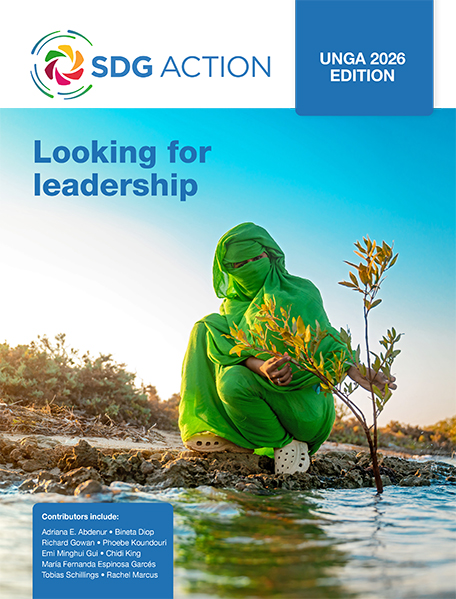
UNGA 2026 edition: Looking for leadership
As the established global powers have retreated from development, no one has stepped up to fill their place: not the Global South, not the middle powers, not a loosely assembled BRICS. The agenda that has guided development since 2015 is losing the cohesion it once had, just as the political appetite for it fades.
Yet across this edition, practitioners keep building a coherent, evidence-based case for a fairer, safer, sustainable world. Their work supplies the thought leadership that politics has not – and it will provide the framework for success when real political will returns.
Authors include Adriana E. Abdenur, Bineta Diop, Richard Gowan, Phoebe Koundouri, Emi Minghui Gui, Chidi King, María Fernanda Espinosa Garcés, Tobias Schillings and Rachel Marcus.
Publication date: 15 September 2026
Related articles
Valuing urban resilience
Cities face difficult choices about how to invest in resilience as climate
pressures intensify. Valuing health, ecosystems, social inclusion, and reliable services alongside financial costs can help them choose fairer, more effective ways to adapt to climate change


A global digital commons for SDG delivery
The SDGs do not lack science, legitimacy, or vision – they lack an operating system. A global digital commons can help countries move from reporting progress to delivering transformation by bringing together open data, integrated modeling, stakeholder co-design, and sustainable finance