Weaning the world off fossil fuels
Energy — Middle East and Northern Africa, Sub-Saharan Africa
What is holding up progress on the transition to carbon neutrality, and what must we do to speed it up?

Ensure access to affordable, reliable, sustainable and modern energy for all
Achieving this goal requires far more than adding generation capacity. It means extending grids and off-grid solutions to the hundreds of millions still living without power, and replacing polluting cooking fuels with clean alternatives that protect respiratory health (SDG 3) and free up time disproportionately spent by women and girls collecting fuel (SDG 5). It also means decarbonising the energy system fast enough to keep global climate goals within reach (SDG 13), even as demand for energy keeps rising.
The starkest feature of SDG 7 is not a lack of ambition but a lack of finance where it is needed most. Developing economies are now expanding renewable energy capacity faster than wealthier ones, yet the access gap remains stubbornly concentrated in the world’s poorest region. Closing it will depend less on new technology than on directing investment and technical cooperation toward sub-Saharan Africa (SDG 17), where the electrification gains of the past decade have started to stall.
Progress on SDG 7 is advancing on some fronts while stalling on others. Global electricity access reached 92 per cent of the population in 2024, essentially unchanged from 2023, leaving 655 million people without power — 86 per cent of them in sub-Saharan Africa. The pace of electrification has slowed sharply: annual gains have roughly halved since 2020, to 0.35 percentage points a year, compared with 0.70 percentage points a year across 2010–2020.
Access to clean cooking fuels and technologies has fared better, reaching 75 per cent of the global population in 2024, an 11 percentage point rise since 2015, though sub-Saharan Africa lags far behind at just 22 per cent. Renewable energy accounted for 18 per cent of global final energy consumption in 2023; the electricity sector is comfortably ahead, with renewables’ share exceeding 30 per cent, but progress in heating and transport — the two largest energy end-uses — remains weak. Energy efficiency is also falling short: global energy intensity improved by just 1.5 per cent in 2023, well below the pace needed to meet the 2030 Agenda’s target of doubling the rate of efficiency improvement.
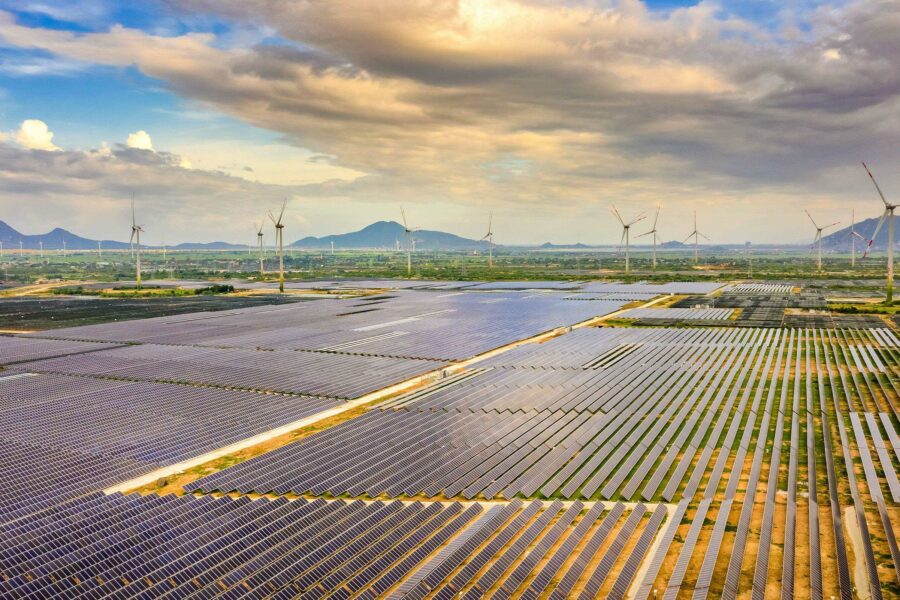
There are encouraging signs on deployment: developing countries achieved a 13 per cent compound annual growth rate in installed renewable energy capacity over the past five years, outpacing the 8 per cent recorded in developed countries. The full picture of official indicators is tracked by the UN Statistics Division in its annual SDG progress report.
The primary annual reference for tracking SDG 7 is Tracking SDG 7: The Energy Progress Report, jointly produced by the International Energy Agency (IEA), the International Renewable Energy Agency (IRENA), the UN Statistics Division, the World Bank and the World Health Organization (WHO). The 2026 edition sets out the latest official data on electricity access, clean cooking, renewables and energy efficiency ahead of that year’s HLPF review.
The primary intergovernmental coordination mechanism is UN-Energy, established by the UN System Chief Executives Board for Coordination in 2004 and co-chaired by UNDP and the UN Secretary-General’s Special Representative for Sustainable Energy for All, which coordinates system-wide follow-up to the 2021 High-Level Dialogue on Energy and its voluntary Energy Compacts. The IRENA Assembly, the agency’s principal decision-making forum, convenes each January in Abu Dhabi — the sixteenth session‘s formal Assembly met on 11–12 January 2026, preceded by preparatory events on 10 January. SDG 7 progress is also reviewed annually at the High-Level Political Forum (HLPF) each July in New York.
These organisations hold the lead mandates on energy data, renewable capacity and system-wide coordination under SDG 7.






By 2030, ensure universal access to affordable, reliable and modern energy services
Proportion of population with access to electricity
Proportion of population with primary reliance on clean fuels and technology
By 2030, increase substantially the share of renewable energy in the global energy mix
Renewable energy share in the total final energy consumption
By 2030, double the global rate of improvement in energy efficiency
Energy intensity measured in terms of primary energy and GDP
By 2030, enhance international cooperation to facilitate access to clean energy research and technology, including renewable energy, energy efficiency and advanced and cleaner fossil-fuel technology, and promote investment in energy infrastructure and clean energy technology
International financial flows to developing countries in support of clean energy research and development and renewable energy production, including in hybrid systems
By 2030, expand infrastructure and upgrade technology for supplying modern and sustainable energy services for all in developing countries, in particular least developed countries, small island developing States and landlocked developing countries, in accordance with their respective programmes of support
Installed renewable energy-generating capacity in developing countries (in watts per capita)
Energy — Middle East and Northern Africa, Sub-Saharan Africa
What is holding up progress on the transition to carbon neutrality, and what must we do to speed it up?
Energy — Global
This Decade of Action demands a decisive shift from polluting to renewable energy. We need robust political, economic, and technological levers and deeper sectoral collaboration if we’re to bring clean power to all
Climate — Global
With the impacts of climate change ramping up, building resilience, particularly in developing countries and small island states, is now critical and urgent. We must convert our knowledge of climate solutions into priority actions now to achieve rapid and sustainable transformations
Cities — Global
While regulations for new buildings are improving sustainability, the vast majority of existing properties predate these rules. How can we ‘fix’ older buildings?
Extractive and land resources — Global
How can we ensure that a healthy extractives industry delivers on the SDGs?
Climate — Global
Technologies like wind power and photovoltaic solar have advanced from expensive, subsidized, niche technology to wide-scale, commercially competitive solutions. We must learn from this rapid innovation to speed up the next generation of technologies
Energy — Global
What kind of energy storage do we need to fight climate change with renewables?