
Enabling migration as adaptation
As the climate warms, more people will be forced or will want to move, both within and between countries. How do we ensure that migration is supported, equitable, and beneficial for migrants and for sending and receiving communities?
Migrants and refugees — Global
Authors

Julia Blocher
Project Lead, Potsdam Institute for Climate Impacts Research (PIK)

Kira Vinke
Head, Center for Climate and Foreign Policy, German Council on Foreign Relations (DGAP)
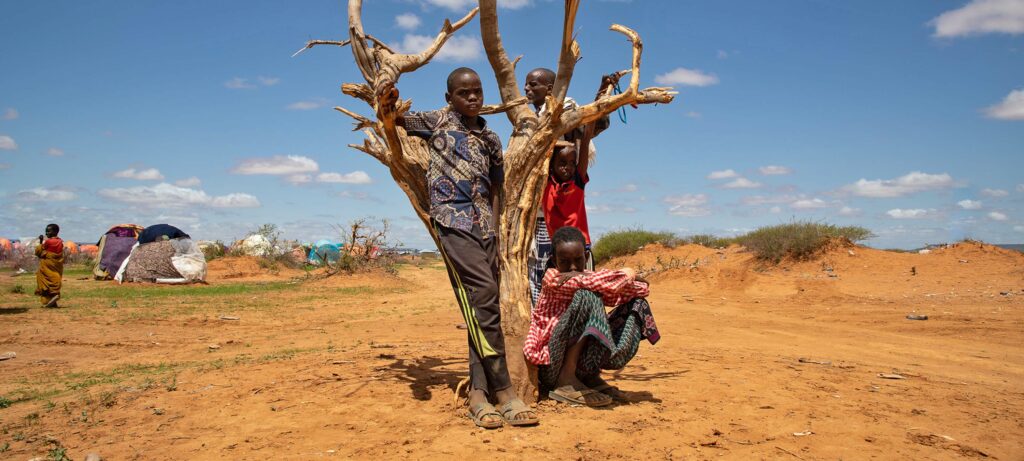
Climate change changes lives. It uproots families and shatters livelihoods. Managing the multidimensional impacts of extreme events requires new layers of resilience. The ability to migrate in anticipation of a shock can increase the capacities of exposed populations. But without adequate policy responses, climate extremes will result in forced displacement rather than proactive, adaptive migration or managed retreat.
In 2021 alone, the Internal Displacement Monitoring Centre recorded 23.7 million displacements due to disasters worldwide. These disasters included sudden-onset events like flooding and storms, not all of which were linked to climate change. While no numbers are available for people moving in anticipation of such events or due to slow-onset events, it is believed that this represents a large and growing population.
It is generally accepted that the people forcibly displaced by sudden-onset natural hazards are not improving their adaptive capacities by moving, but are removing themselves spatially from potentially deadly risks. While research around the world has shown that displaced people often return in the aftermath of crises, in many fragile contexts – such as in Afghanistan, DRC, and Papua New Guinea – displacement becomes protracted.
Predicting the number of people who will be forced to leave their homes in the future due to disasters and climate impacts is difficult, as multiple factors are involved in migration decision-making behavior. The second Groundswell report from the World Bank published in 2021 provides different scenarios for climate change-related population distribution change across six regions:
- East Asia and the Pacific
- Eastern Europe and Central Asia
- Latin America
- North Africa
- South Asia
- sub-Saharan Africa
The projected number of internal climate migrants in these regions ranges between 44 million (at the low end of the more climate-friendly scenario) and 216 million people (at the high end of the pessimistic reference scenario).
The emergence of migration as adaptation
The concept of migration as adaptation to climate change was crystalized over a decade ago in academic and policy debates, heralded by the landmark Foresight report on migration and global environmental change published by the UK government in 2011. Prior debates on climate change-related population movements often assumed migration is a “last resort” option for impoverished and vulnerable peoples in climate-prone areas. The focus had therefore been on developing policy solutions that sought to build ecological resilience and reduce migration pressures.
The framing of “migration as adaptation” exposed the reality that migration decision-making is often proactive and organized in anticipation of unfavorable environmental conditions. Through financial contributions and so-called social remittances, migrants enhance their individual, households’, and communities’ capacities to cope with impending ecological damages. While some previous migration research focused on individuals as the unit of analysis, this line of thinking considered the effects of migration on origin and destination communities more holistically, without losing the notion of migrant agency that is core to the discourse.
Adaptation for whom?
The sometimes-saccharine framing of migration as a positive force for transformational societal change eventually gave way to understandings of the highly inequitable opportunities for migration, as well as the limits to local communities’ ability to adapt to rapidly evolving climate destabilization. Importantly, research on migration in general tends to demonstrate that the most vulnerable and socially disadvantaged members of communities are least able to migrate. At the global level, opportunities for migration across borders are largely based on the natural lottery of nationality and social status. Moreover, numerous factors intersect to disadvantage certain members within households and communities: people who are poor, less educated, differently abled, or elderly, and women, are often left behind in the literal sense.
Many agree that migration only holds potential for adaptation for specific groups of people and under specific circumstances. Studies from West Africa and South Asia, for instance, have promoted an understanding of immobility as the counterpart to mobility. Those left behind lament the local “brain drain” and even “ghost villages” (as they are known in India and China).
Migration outcomes, meanwhile, vary widely. Adverse effects like poverty spirals and new dependencies in places of arrival can trap people in their destination. Without adequate financial resources, education, or training, and lacking social and legal protection, migrants may be unable to return. They may even experience debt bondage in ill-regulated labor markets.
Limits to adaptation
More recent work on migration as adaption has also evolved with the known and growing severity of climate change. Even lower levels of warming will have devastating effects on certain communities, for which even the most positive outcomes of temporary migration have only remedial effects. Over longer time horizons, migration can also fail to secure people’s livelihoods and result in maladaptive outcomes for migrants and their families.
For some communities, particularly those in low-lying atolls, there may be no sustainable option but to move away from the hazardous environment. Yet, most people prefer to stay where they are, known as sedentary bias. New research, such as the European Commission-funded HABITABLE project, seeks to go beyond previous understandings of habitability, which primarily consider ecological and biophysical limits to human habitation. Instead, scholars are now taking a systemic approach and including a greater consideration of psycho-social, political, and cultural concepts of habitability. For example, in crisis areas, some community members are often found to stay put to protect their tenured land, and may only leave once health services and education are no longer functional.
Bifurcated identities in the Pacific islands
While culture and practices in low-lying Pacific island states have historically included retreating from coastal zones following extreme environmental events, current cases of significant out-migration and community relocations exist outside of “normal” migratory patterns.
Communities’ ancestral lands are less favorable for human habitation due to extreme weather events and the gradual loss of habitable and arable land (as in the case of land subsidence, sea level rise, coastal erosion, saltwater intrusion, and frequent or recurrent meteorological hazards). Beyond these ecological changes, important social and cultural factors leave exposed communities and specific vulnerable groups with fewer capacities to cope in place. “Modern” risk reduction measures have supplanted these communities’ traditional strategies of risk-sharing with trading and kinship partners who are now located across artificial international borders.
Paradoxically, labor out-migration of some community members accelerates this loss by wearing down the shared cultural fabric. This deep deprivation – linked to the emissions of industrialized countries – should also be seen in the context of the colonial legacy and the aftermath of the Pacific War which continues to mark culture, governance, and economies in many island states to this day.
Research in Papua New Guinea and Fiji found that climate impacts can result in the creation of bifurcated, altered, or hybrid identities: the loss of shared social and cultural identities, spaces, and meanings. This evolution affects the perceived habitability of a place and the ability of the community to successfully adapt in a new location.
Migration as risk diversification in East Africa
In East Africa, studies have shown that migration and mobility more broadly can help households diversify income risks. Pastoralists, for example, may engage in temporary labor migration to support their household in rural areas. However, new research from PIK finds that repeated exposure to shocks over time is associated with an increased probability of out-migration in Tanzania, especially for rural and agricultural households. As climate change impacts become more frequent and severe, household adaptive capacities are diminished to the point that sending a household member to migrate is one of the few options left.
Future policy options
The key to address these heterogeneous challenges is a multitude of approaches and flexibility in their implementation. While the effectiveness of adaptation options is dependent on rigorous and imminent mitigation, we introduce five main steps to boost resilience, so that migration can become an adequate adaptation option.
- National governments can improve legal pathways for international migration of people at different skill levels, as per objectives laid out in the Global Compact for Safe, Orderly and Regular Migration (2018). Concrete ways forward could include additional quotas and capacity for the issuance of humanitarian visas for climate-displaced people or a climate passport for people whose homeland has become uninhabitable. Such measures could be tied to the reaching of certain warming levels, such as the 1.5°C limit, which could be crossed within the next 10 years.
- Governments, non-governmental organizations, and partners can strengthen work to build adaptive capacities in local areas to support origin areas and people who are unable or unwilling to migrate. Nature-based solutions like farmer-managed natural regeneration (FMNR), a community-led reforestation technique, can stabilize agricultural livelihoods and improve soils. Insurance schemes for smallholder farmers and forecast-based financing may prevent forced displacement after weather-induced crop yield losses.
- Governments and partners can better integrate climate migration and displacement into urban planning. Fostering polycentric instead of monocentric urbanization, which goes hand in hand with the growth of megacities, may improve the capacities of cities to adequately respond to incoming groups of migrants. Labor market development and investments into medium-sized regional centers could reduce pressures on capital cities with large informal settlements.
- Vocational trainings suitable to the urban labor market should be created that benefit both new arrivals and long-term settlers in impoverished urban areas. Pre-departure trainings can help migration choices and provide information on basic legal rights of migrants.
- Research funds should be directed towards finding solutions to enable migration that could be effective adaptation, taking more systemic approaches. Interdisciplinary approaches and more research from institutions in most vulnerable countries are needed.

Related articles
Stop treating finance as the last step in adaptation
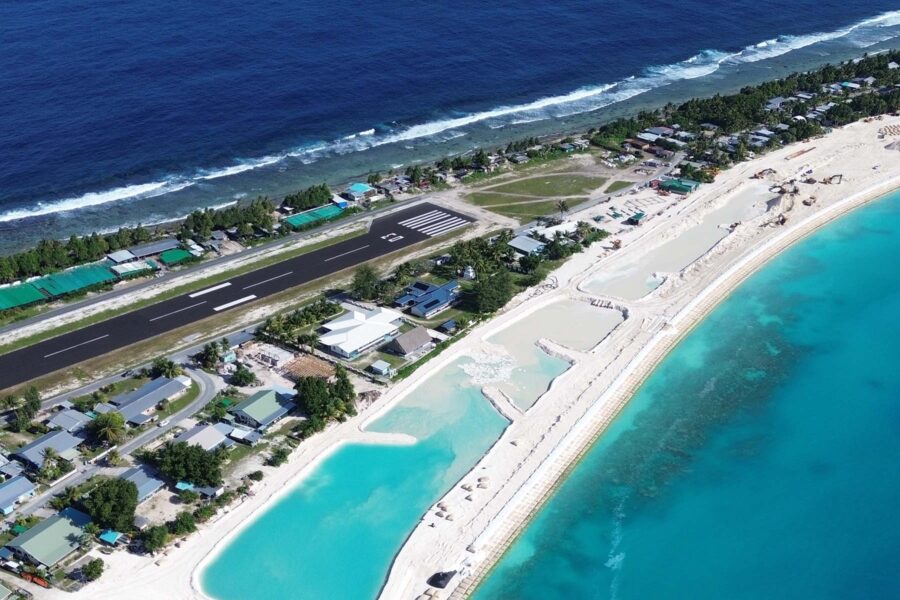
Too often, adaptation finance is treated as an exercise that begins only once a plan is finished. Building investment planning into resilience strategies from the start is key to turning plans on paper into bankable projects on the ground
In the Sahel, peace starts with water
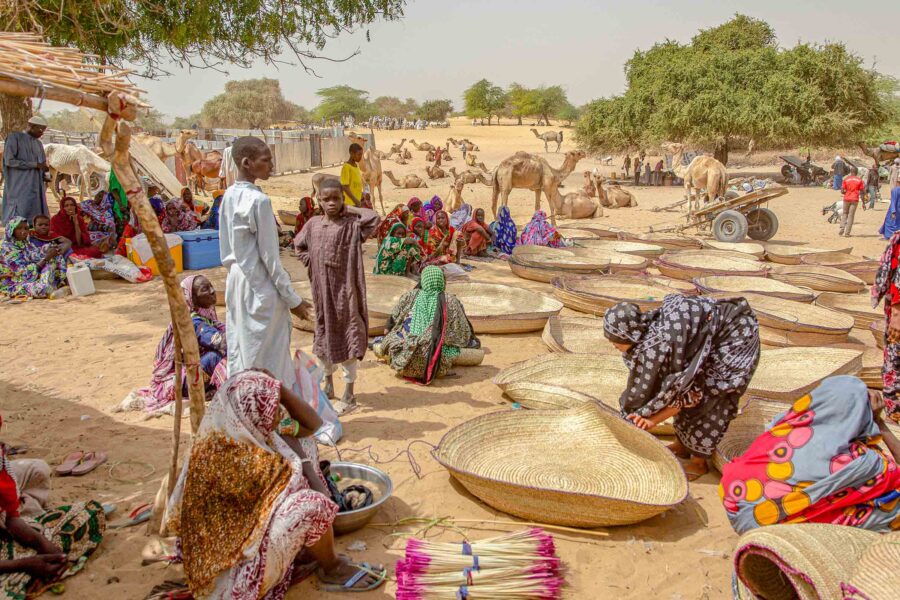
A shrinking Lake Chad and increasingly erratic rains are pushing herders and farmers in the Sahel into conflict over water and land. Lasting peace depends on securing indigenous land rights, strengthening cross-border cooperation, and putting climate finance directly in local hands
Global urban goals: who asked the planners?
SDG 11, the New Urban Agenda and the International Guidelines on Urban and Territorial Planning all rely on planners to put them into practice. Yet no one has conducted a representative survey of planners, asking whether these frameworks have changed their work, or whether the planning laws they work under even allow what the frameworks call for