
Creating an Asian green economy
A green economy offers Asia greater resilience, new opportunities for growth, and a way to restore its depleted natural systems. Realizing it will require patient finance, closer public–private collaboration, and a firm focus on fairness
Climate — Asia (Central, Eastern and Southern), Pacific and South-eastern Asia

Authors

Emi Minghui Gui
Adjunct Associate Professor, Monash University, Malaysia; Council Member, UN Council of Engineers for the Energy Transition (CEET)

Sook Yee Tai
Chair, NO.17 Foundation
A green economy is a low-carbon, resource-efficient, and socially inclusive economic model that turns environmental protection and nature-based solutions into opportunities for sustainable growth. It aims to minimize disruption to natural systems and to shrink the economy’s footprint on land, water, minerals, and biodiversity. Instead of fossil fuels, it draws on renewable and sustainably managed resources, such as sun, wind, water, geothermal energy, forests, and oceans. It also promotes responsible consumption, reuse of resources, minimal waste, and valuing nature beyond its monetary worth.
Moving from a fossil-fuel-based economy to a greener, healthier, and more successful one will bring long-term benefits, supporting high living standards, sustainable growth, and greater equity, including fairness between generations. For instance, during the 2026 disruption to oil supplies in the Middle East, countries that had moved faster to renewable energy were better shielded from fuel shortages and high prices, and their economies and societies were less disrupted.
Green economic strategies can also make a country’s economy and society more resilient, so that it can adapt more readily to short-term shocks, such as financial crises, natural disasters, or pandemics, and to longer-term pressures, such as climate change and social change. This requires a diversified industrial base, resilient supply chains, an adaptable workforce, robust public infrastructure, sound public finances, and sustainable resource management. But while resilience protects what already exists, regeneration rebuilds the natural base on which the economy ultimately rests. This more demanding ambition is what Asia’s ecological condition now requires.
Lessons in fostering a green economy can be drawn from around the world. In the Pacific islands, for example, innovative nature-based solution strategies and community wellbeing frameworks have been found to:
- strengthen ecosystem-based adaptation (using nature to help communities adapt to climate change)
- increase the benefits ecosystem provide, through systems such as urban forestry, farming, and marine aquaculture
- create new ecosystems through living sea walls, green roofs, and green buildings
- raise awareness of sustainable practices through education
Another study, on green industrial transition in Bangladesh, identified sustainable supply chains, green taxes, environmental sustainability, green technology, and green climate finance as key pillars of a green economy.
Leveraging finance and innovation for a green economy
Green finance is no longer seen as coming with a “greenium” (paying a premium for lower returns). Analyses of the performance of green assets frequently find that green portfolios match or outperform conventional ones on risk-adjusted returns. This is because they offer better long-term protection against risks such as tougher climate regulation, carbon taxes, or stranded fossil-fuel assets (those that lose their value before the end of their working life).
Innovation in technology, finance, and social policy is also essential to lower transaction costs and attract institutional investment quickly and at scale. Green finance tools, such as concessional (below-market-rate) or blended finance (combining public and private money), risk-sharing structures, trade openness, green taxation, and technological incentives, can be made more effective by harmonized green taxonomies (common definitions of what counts as green) and disclosure standards. Stronger independent monitoring, reporting, and verification through digital twins (virtual models of physical systems), blockchain, or AI can also help.
Regulations such as California’s SB 253, which requires large companies to disclose their greenhouse gas emissions, and the EU’s Carbon Border Adjustment Mechanism, which puts a carbon price on carbon-intensive imports, can boost global green finance flows and encourage businesses to go green. These rules in turn demand better data. Turning them into economic and environmental gains will require the public and private sectors to work together on transparent methods and shared standards.
Savvy entrepreneurs can respond quickly to these changes, helping businesses identify where cutting emissions also improves material efficiency, costs, and resilience, and developing tools that improve data quality and manage uncertainty. There are also opportunities for aggregation facilities, which bundle locally rooted ventures or small and medium-sized enterprises into investable portfolios and link them to regional or global value chains. Integration facilities, meanwhile, can bring together financial reporting standards, climate and nature-related disclosures, and natural and social capital accounting, so that one set of data and measurements can serve investors, regulators, and communities at once.
Meanwhile, we must not lose sight of an important question: who will the green economy serve? A workable design for a green economy must respect ecological limits while meeting development needs, supporting the Sustainable Development Goals (SDGs) on decent work and economic growth (SDG 8), sustainable cities and communities (SDG 11), and responsible consumption and production (SDG 12).
Strengthening collaboration between the private and public sectors
A vibrant and prosperous green economy cannot be built, or last, without effective collaboration between the private and public sectors. Infrastructure becomes possible when long-range public planning meets long-term private ownership. But such collaboration faces several challenges.
First, even when the need for and benefits of a green economy are fully recognized, political leaders cannot simply switch the economy from brown (fossil-fuel based) to green without tackling legacy issues or path dependency – that is, the way past choices lock in existing industries and infrastructure. This has been evident in coal-dependent developing countries and regions, where a just transition away from coal has been difficult and slow, even with strong international technical and financial support.
Second, the public goods a green economy depends on, such as restored landscapes, power grids, skills, and trust, take generations to mature, often far longer than commercial investment timelines.
Third, traditional measures of gross domestic product (GDP) count activities such as deforestation or overfishing as growth, despite their long-term damage to nature and society.
Nature-based solutions show the second challenge clearly. They are held back not by a lack of feasibility or capital, but by a mismatch in timescales: most commercial capital is structured to exit long before a mangrove belt, watershed, or soil system can recover. According to the UN Environment Programme’s State of Finance for Nature 2026 report, only about one dollar in 9.4 flowing into nature-based solutions globally in 2023 came from private sources, and in Asia the share is smaller still. Locally rooted projects fall into the gap between what banks will lend and what institutional investors consider large enough to invest in.
Even so, nature-based solutions can transform business models when they are built into decisions on where transmission lines run, where solar, wind, and hydro projects are sited, and how coastal and upland water catchments are managed.
Here, public–private partnerships, or partnerships that also involve philanthropy, can be critical in taking the first risk on projects that are not yet able to attract commercial lending, when policy is incomplete, ways of measuring impact are unsettled, and only some partners are on board. This first step will generate valuable insights and improve conditions for future partnerships. It will also help to shape policy, set priorities, and coordinate the work of organizations across sectors such as environmental protection, resource management, renewable energy, agriculture, water, education, and healthcare.
Focusing on societal and intergenerational equity
The transition to a global green economy is essential if the world is to tackle the devastating impact of climate change and improve societal resilience and sustainable development outcomes. However, without deliberately integrating equitable and people-centered dimensions, economic transformation fueled by optimism about green technology alone risks losing sight of the public good and societal needs, while widening the gap between rich and poor. Beyond national borders, a hard question must be answered: if universal access to green technology and finance cannot be achieved, will green economies become the privilege of some nations and social groups, while creating new poverty traps for others?
A fair and equitable green economic model should manage the wider impacts of this transformation on society, at both national and global levels, including:
- how costs and benefits are shared across society, through taxation and public spending
- job creation in green industries and businesses
- meaningful public participation in developing integrated, accountable, and resilient governance and institutions
For individual businesses, moving early into the green economy can bring competitive advantage, public recognition, international reputation, and influence. Sectorial strategies can create incentives for businesses to manage product life cycles effectively to reduce costs and emissions, make their supply chains sustainable and green, and adopt natural capital accounting, which recognizes the value of environmental assets beyond short-term financial performance.
Looking forward, only fair and equitable green economic development can improve prosperity and wellbeing for all, strengthen intergenerational equity and justice, enhance environmental safeguards, and boost investment in nature restoration. As UN Secretary-General António Guterres has warned, the global economy must be radically transformed and move beyond GDP. There is no doubt: the green economy will lead the global economy of the 21st century. The future is in our hands.
Related articles
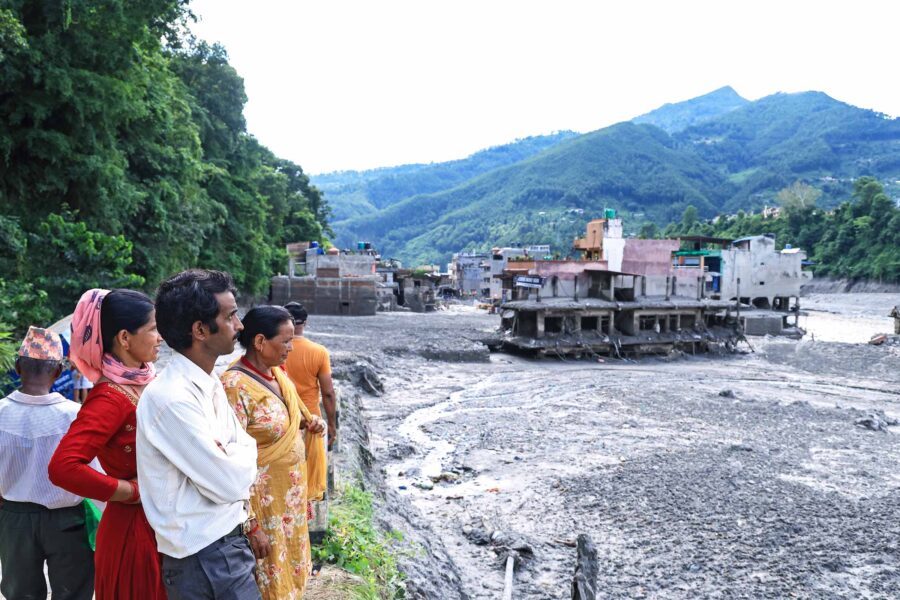
Paying before the flood: why adaptation finance must act on forecasts
We can now predict many climate hazards months in advance, yet international finance still flows mainly after the damage is done. Closing that gap means funding preparedness when credible forecasts warn of danger, not only recovery once disaster hits
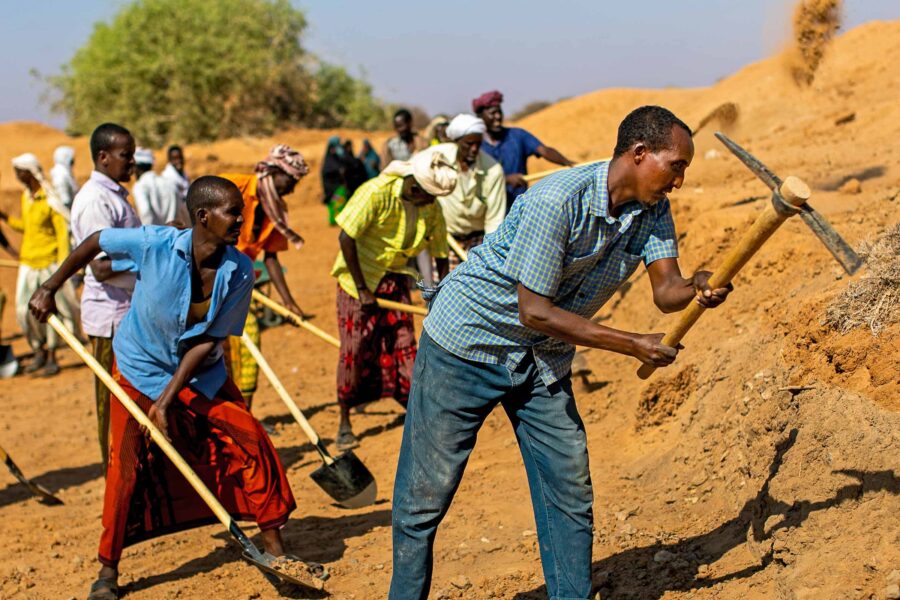
Stretched to snapping point: why global agrifood systems need resilience now
The war in Ukraine, the closure of the Strait of Hormuz, and El Niño are hitting global agrifood systems at once, just as the buffers that absorbed past shocks are running low. Preventing these disruptions from becoming food crises means tackling not only countries’ exposure to shocks but also the fragility that leaves them unable to respond
The New Urban Agenda at ten: still fit for purpose?
Ten years on, the New Urban Agenda has shaped national urban policies, but much-anticipated innovations in financing have yet to deliver at scale, and the stakeholders who helped create it have been sidelined. Its halfway point raises a bigger question about whether 20-year global frameworks still make sense in a world of fast-moving, overlapping crises