
Investing to avert a sanitation crisis
Demographics and climate change are combining to create an impending sanitation crisis in many poorer regions of the world. Averting it means investing now in safe, climate-resilient sanitation as a foundation for health, dignity, and prosperity
Health — Global
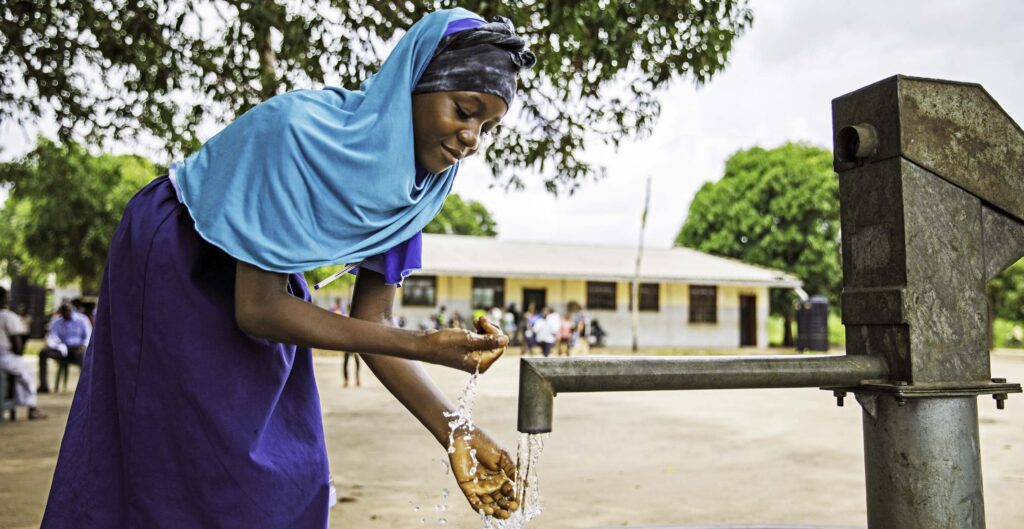

With less than four years to go on the Sustainable Development Goals, the latest SDGs Report shows that SDG 6 on clean water and sanitation is significantly off track. Sanitation and wastewater treatment – measured by SDG Indicators 6.2.1 and 6.3.1 – are seriously lagging. At current rates of progress, it will be almost another 40 years before everyone has access to safe, dignified sanitation services that protect human health and the environment. And that’s assuming the accelerating trends of climate change, conflict, and economic shocks do not slow or undo historical levels of progress.
Since 2015, 1.2 billion people have gained access to safely managed sanitation services, with global coverage increasing from 48% to 58%. The number of people practicing open defecation fell by 429 million, and the practice has now been almost eliminated in urban areas – an impressive and hard-fought milestone dating back to the momentum generated by the International Year of Sanitation in 2008 and the explicit recognition of sanitation as a human right in 2010.
However, 3.4 billion people still lacked safely managed sanitation services in 2024. In addition, almost half of domestic wastewater globally continues to be discharged untreated or inadequately treated. Rates of progress would need to increase six-fold to reach SDG Target 6.2, as measured by Indicator 6.2.1 – an increasingly distant prospect in the face of declining international cooperation in general, and for water, sanitation, and hygiene (WASH) specifically, alongside national budgets stretched by cost-of-living crises, conflict, and climate change.
Proof that rapid progress is possible
Yet history shows it can be done: WHO and UNICEF have documented evidence on what works from successful sanitation programs. Many countries have made rapid progress, improving lives, human health, the environment, and economies – all within a generation. In each case, the common success factor has been strong political leadership to set policy, plan, mobilize investment, regulate services, galvanize widespread participation, and continuously learn and adapt toward achieving safe sanitation for all.
For example, in the 1960s and 1970s, Singapore, Thailand, South Korea, and Malaysia produced rapid and remarkable results to deliver total sanitation coverage. When they began national sanitation planning, per capita income levels in the East Asian countries studied were comparable to those of many sub-Saharan African countries today.
Since 2015, several countries have shown that rapid progress is possible. India and Nepal, for example, have created mass movements to eliminate the undignified and dangerous practice of open defecation. Cambodia and Ethiopia have cut open defecation by more than 80% and 50%, respectively. Over the same period, 30 countries have increased coverage of at least basic sanitation by at least 10 percentage points, including six – Nepal, Cambodia, India, Sudan, Timor-Leste, and Lao PDR – that achieved gains of at least 20 percentage points. For safely managed sanitation, 24 countries increased coverage by at least 10 percentage points, with Georgia, Albania, the occupied Palestinian territory, Egypt, and India recording gains of 20 percentage points or more.
The cost of inaction – and the return on investment
Access to sanitation is a human right, and safely managed sanitation is also a public good providing benefits across society in improved health as well as economic and social development. Safely managed sanitation should be recognized as an essential public service, foundational to a healthy population and a prosperous society. As such, failure to make progress on sanitation has knock-on effects across many other SDG areas, particularly SDG 3 on health. Impacts include:
- illness and diseases such as typhoid and cholera, which can kill within days if not treated
- diarrhea, which can lead to poor nutrition and stunting in children
- neglected tropical diseases
- reduced dignity, safety, and gender equality for women, people with disabilities, and sanitation workers in particular
- increased costs, including healthcare, lost income, forgone educational opportunities, and costs resulting from environmental pollution
These consequences accrue predominantly to the poorest and most marginalized. But failure on sanitation also has global consequences: lack of sanitation is a major global driver of antimicrobial resistance, which threatens to make even simple infections deadly for all.
As a result, the world is missing out on the many benefits of safe sanitation. Although universal access is often seen as prohibitively expensive, sanitation delivers a high return on investment: prevention is always better than cure. Historical analysis from 2018 shows that investment in sanitation generates at least 5 dollars in health, social, and economic benefits for every dollar invested.
So what would it cost? UN-Water’s Global Analysis and Assessment of Sanitation and Drinking Water (GLAAS) 2025 report puts the scale of need in perspective: across 70 responding countries, the annual cost of implementing national WASH plans and strategies is estimated at more than USD 69 billion, with sanitation accounting for around USD 20 billion across the 58 countries that provided sanitation estimates. That may sound like a lot, but consider that the global handbag market was estimated at USD 86 billion in 2025. Funding is still falling far short: only 15% of countries reporting on urban sanitation, and 9% of those reporting on rural sanitation, said they had sufficient funding from all sources to meet these basic, life-saving targets. A separate World Bank analysis of the SDG water and sanitation financing gap estimates that countries would need to roughly triple annual spending on water supply and sanitation relative to current levels – and by much more in low-income regions and fragile contexts.
Climate finance can help close the gap
While governments are responsible for WASH services – and, together with their citizens, bear most of the cost – global climate finance presents a new and growing opportunity to accelerate progress as traditional sources of official development assistance dwindle. Increasing evidence, assembled by the Climate Resilient Sanitation Coalition, is demonstrating both the need to adapt sanitation systems to more frequent floods, droughts, and extreme weather, and how to do so.
Recent evidence also shows methane emissions from sanitation are far greater than previously assumed: emissions from sewered systems are estimated to account for 7% and other sanitation systems for another 5% of global methane emissions. As a result, more countries are including sanitation in national adaptation plans and nationally determined contributions. The Green Climate Fund has released guidance for developing sanitation projects, while the new Global Goal on Adaptation includes a dedicated target on climate resilient water and sanitation. In addition, energy, water, and nutrient recovery from safe use of wastewater and sludge has untapped potential to reduce emissions and increase resilience in other sectors, particularly agriculture.
The sanitation crisis is not inevitable. However, averting it will require urgent political commitment and sustained investment. The world already has the knowledge, technologies, and evidence needed to accelerate progress, and many countries have demonstrated that transformative change is possible within a generation.
As the deadline for the SDGs approaches, sanitation must be recognized not as a cost but as a strategic investment in public health, economic prosperity, climate resilience, and human dignity. The choice facing governments, development partners, and financial institutions is clear: continue underinvesting and bear the escalating costs of inaction, or seize the opportunity to deliver safe, climate-resilient sanitation for all.
Featured in:
UNGA 2026 edition: Looking for leadership
As the established global powers have retreated from development, no one has stepped up to fill their place: not the Global South, not the middle powers, not a loosely assembled BRICS. The agenda that has guided development since 2015 is losing the cohesion it once had, just as the political appetite for it fades.
Yet across this edition, practitioners keep building a coherent, evidence-based case for a fairer, safer, sustainable world. Their work supplies the thought leadership that politics has not – and it will provide the framework for success when real political will returns.
Authors include Adriana E. Abdenur, Bineta Diop, Richard Gowan, Phoebe Koundouri, Emi Minghui Gui, Chidi King, María Fernanda Espinosa Garcés, Tobias Schillings and Rachel Marcus.
Publication date: 15 September 2026
Related articles
Stop treating finance as the last step in adaptation
Too often, adaptation finance is treated as an exercise that begins only once a plan is finished. Building investment planning into resilience strategies from the start is key to turning plans on paper into bankable projects on the ground
In the Sahel, peace starts with water
A shrinking Lake Chad and increasingly erratic rains are pushing herders and farmers in the Sahel into conflict over water and land. Lasting peace depends on securing indigenous land rights, strengthening cross-border cooperation, and putting climate finance directly in local hands
Global urban goals: who asked the planners?
SDG 11, the New Urban Agenda and the International Guidelines on Urban and Territorial Planning all rely on planners to put them into practice. Yet no one has conducted a representative survey of planners, asking whether these frameworks have changed their work, or whether the planning laws they work under even allow what the frameworks call for