
Why climate risk belongs in economic management
More frequent extreme weather events, as well as gradual changes to the global climate, are increasingly harming people and economies. Integrating climate risk into economic management can help unlock the finance needed to build resilience and protect progress towards the SDGs
Climate — Global
Authors

Kate Levick
Associate Director - Finance & Resilience, E3G

Stephanie Segal
Senior Associate, E3G

Claire Peraldi Decitre
Researcher, E3G

Salvatore Serravalle
Program Leader, E3G

Faith Hammond
Senior Policy Advisor, E3G
As outlined in E3G’s recent briefing paper, Climate change as a macroeconomic risk multiplier, climate change creates six vectors of economic risk:
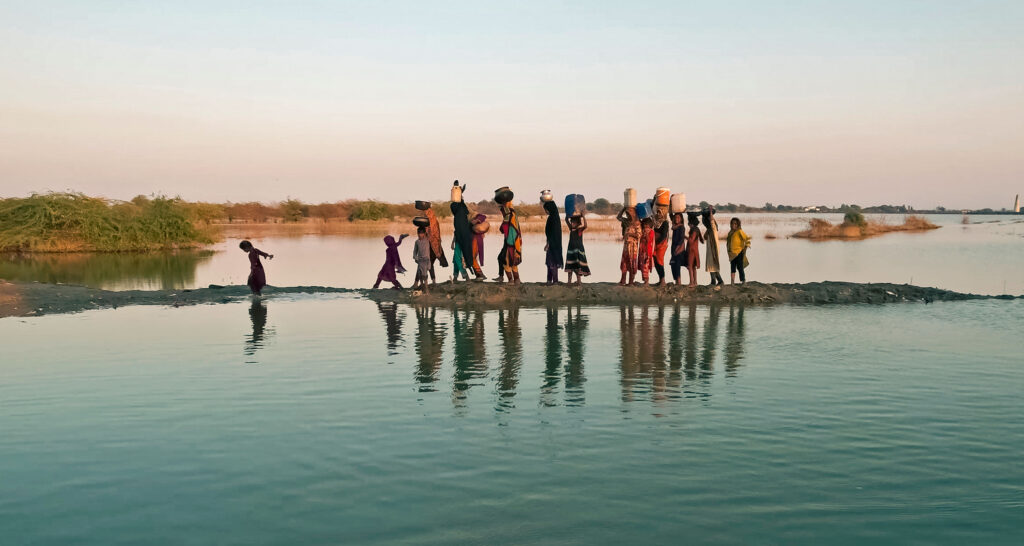
- Debt sustainability: floods in Pakistan in 2010, 2022, and 2025, and Hurricane Fiona in 2022 in the Dominican Republic showed how natural catastrophes can trigger or increase sovereign debt vulnerabilities. The Latin American and eurozone debt crises of the 1980s and 2010s showed how national debt crises and potential defaults can trigger regional macroeconomic instability.
- Trade and supply chains: worsening extreme weather events and climate-related environmental stressors are likely to further destabilize supply chains and trade, turning critical local shocks into global crises. In 2021, operational challenges to semiconductor production in drought-hit Taiwan revealed that a localized supply chain shock can have deep trade impacts in an interconnected global economy.
- Energy markets: economies that are heavily reliant on fossil fuels are creating spillover risks for climate-vulnerable countries through their impact on the global climate. Conflict and associated damage to refineries in the Middle East, together with blockades in the Strait of Hormuz, have demonstrated in 2026 that reliance on fossil energy commodities is a significant macroeconomic risk both for countries that import and export fossil fuels.
- Food markets, inflation, and monetary policy: shocks to agricultural production cause inflation and instability, threatening growth and creating challenges for monetary policy and social cohesion. With climate change and climate impacts weakening agricultural yields, more acute and/or persistent inflation with lower supply will make both short-term price stability and long-term monetary policy formulation more difficult.
- Financial stability: the 2008 global financial crisis revealed that an asset price crash coupled with the interconnectedness of opaque financial systems can have devastating systemic macroeconomic and financial implications. Today, growing climate-induced physical losses and transition risks are threatening asset classes and insurance markets. Given the speed of information flows and suddenness of climate shocks, a climate-induced financial crisis is not unlikely.
- Labor and productivity: the COVID-19 pandemic demonstrated that human health is intimately linked to productivity and growth. With climate change driving more extreme and frequent flooding, millions in densely populated Southeast Asian regions are at risk of vector-borne disease outbreaks, putting regional growth in jeopardy.
The climate finance gap remains stark
While climate impacts are felt by countries around the world, the risks and impacts are particularly severe for vulnerable low-income countries. Investment in climate and economic resilience is badly needed in these economies.
Yet, according to the Climate Policy Initiative’s 2025 spotlight report on climate finance for emerging markets and developing economies (EMDEs), in 2023 only USD 45 billion of climate finance (including funds mobilized domestically) went to least developed countries. In the same year, the comparable figure for China alone was USD 685 billion. The UN Environment Programme estimates in its Adaptation Gap Report 2025 that adaptation finance flows to developing countries need to increase by a factor of 12 to 14.
In 2024, parties to the UN Paris Agreement agreed at COP29 in Azerbaijan to scale up climate finance to developing countries to USD 300 billion per year in international public finance by 2035, and USD 1.3 trillion in finance from all sources. Yet the financial system struggles to prioritize these investments. Geopolitical tensions, economic fragmentation, and volatility are significantly impacting the availability of public finance and investment conditions for private finance. This reinforces structural vulnerabilities that result in net capital outflows from EMDEs to high-income countries.
There is no single solution to these challenges, but many levers can be scaled and deployed to create change. The interconnected nature of risks warrants a comprehensive approach that tackles mitigation, transition, adaptation, and resilience.
Risk-sharing mechanisms can unlock investment
One area receiving increasing focus is risk-based finance mechanisms, which often involve elements of public–private partnership. The insurance protection gap is widening worldwide, leaving both advanced and vulnerable countries exposed to climate-related risks. However, a range of steps can be taken to improve the situation. In 2026, the T7 (the official engagement group of the G7) made recommendations to the G7 on enhancing insurability against natural disasters, which were reflected in the G7 Finance Ministers’ and Central Bank Governors’ communiqué of 19 May 2026. The recommendations focused on:
- scaling the use of financial protection tools against natural disasters
- promoting fairer burden-sharing between the insurance industry and public authorities
- highlighting the role of preventive action to reduce risks
- mobilizing financial resources for countries most vulnerable to climate change
For example, the T7 recommended that the G7 could drive the creation by willing countries of a coordination platform to align several existing international initiatives that seek to build solidarity and resilience by pooling funds to counter exposure to climate risks. Such initiatives include the Global Shield and regional risk pools such as African Risk Capacity and the Caribbean Catastrophe Risk Insurance Facility (CCRIF). A new platform could support initiatives to address a broader set of risks, including slow-onset risks such as persistent drought, and could improve the access of the most vulnerable countries to risk transfer solutions, such as catastrophe bonds.
Better risk assessment can lower the cost of capital
Another area for action relates to the regulatory regime that governs how the financial system assesses climate risk and resilience. Central banks and financial supervisors agree norms for financial risk management, which cascade through the global economy by shaping the decisions of banks and insurance firms. Risk assessments made by credit rating agencies also play an important role in setting norms.
However, imperfect implementation can unintentionally constrain climate finance by making investment in developing countries more expensive. For example, risk assessments may not fully take into account the role that development finance institutions play in reducing investment risk in developing countries when they are involved in providing climate finance to the poorest countries. This can result in a costly mismatch between the regulated, “official” level of risk and the actual level of risk for investment in EMDEs. Various steps can be taken to ensure that financial supervisory agencies apply rules in a way that avoids these pitfalls, freeing up capital.
Recent publications from the Global Emerging Markets Risk Database (a joint initiative of public development finance institutions) show that when development finance institutions back loans to EMDEs, capital recovery rates exceed most global benchmarks, and that default rates on these loans are equivalent to those of many firms in advanced economies. Default rates are also much lower than is typically assumed when these institutions support loans to private sector firms in low-income countries. Granular historical data is increasingly being used by financial market actors in their risk assessments. Used at scale, this evidence can help bring down the cost of investing in developing-economy resilience, enabling an increase in climate finance flows.
Integrating climate into economic management
Finance ministries around the world are aware of the economic challenges posed by climate change and are actively working on solutions. The Coalition of Finance Ministers for Climate Action, co-chaired by Uganda and Croatia and with a membership of 103 countries, agreed a comprehensive work plan earlier this year. The plan aims to systematically integrate climate change into countries’ economic management, including through closer work with central banks and regulators from around the world.
The need for such a comprehensive approach to integrating climate into economic management has never been more urgent. Concerted efforts offer an important opportunity to support and enable the achievement of every Sustainable Development Goal.
Featured in:

UNGA 2026 edition: Looking for leadership
As the established global powers have retreated from development, no one has stepped up to fill their place: not the Global South, not the middle powers, not a loosely assembled BRICS. The agenda that has guided development since 2015 is losing the cohesion it once had, just as the political appetite for it fades.
Yet across this edition, practitioners keep building a coherent, evidence-based case for a fairer, safer, sustainable world. Their work supplies the thought leadership that politics has not – and it will provide the framework for success when real political will returns.
Authors include Adriana E. Abdenur, Bineta Diop, Richard Gowan, Phoebe Koundouri, Emi Minghui Gui, Chidi King, María Fernanda Espinosa Garcés, Tobias Schillings and Rachel Marcus.
Publication date: 15 September 2026

Related articles
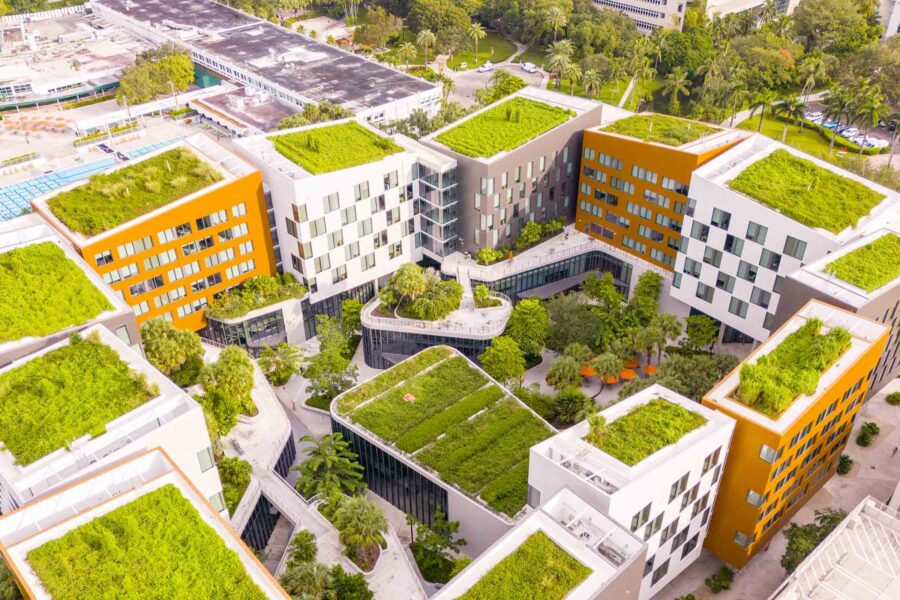
Valuing urban resilience
Cities face difficult choices about how to invest in resilience as climate
pressures intensify. Valuing health, ecosystems, social inclusion, and reliable services alongside financial costs can help them choose fairer, more effective ways to adapt to climate change
A global digital commons for SDG delivery
The SDGs do not lack science, legitimacy, or vision – they lack an operating system. A global digital commons can help countries move from reporting progress to delivering transformation by bringing together open data, integrated modeling, stakeholder co-design, and sustainable finance