Ending poverty requires more than raising incomes. It depends on decent work that pays a living wage (SDG 8), social protection systems that catch people when shocks hit, and a narrowing of the inequalities that concentrate deprivation among particular groups and places (SDG 10) — inequalities that also shape who gets access to health care and education in the first place (SDG 3).
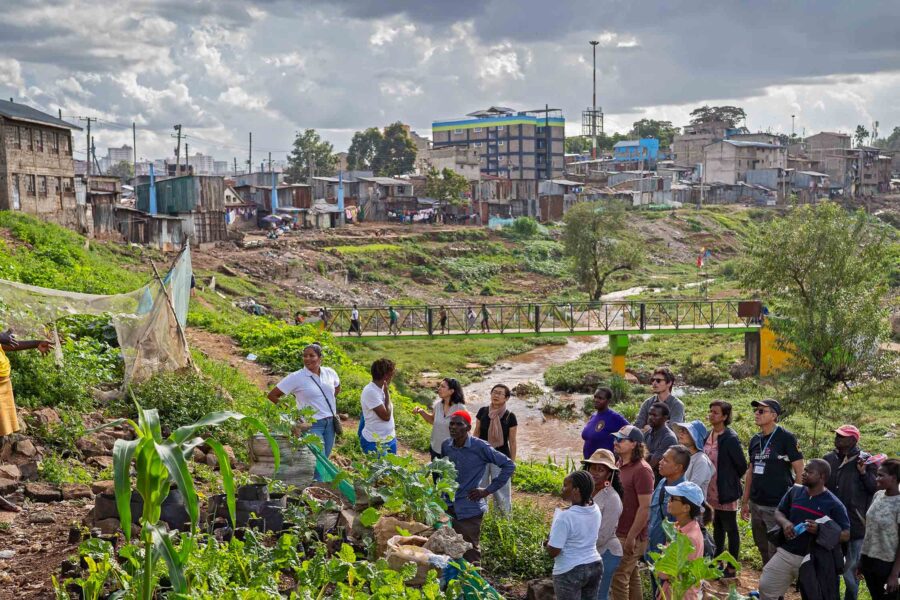
Poverty today is increasingly a geography of fragility. An overwhelming and growing share of the world’s extreme poor live in countries affected by conflict, weak institutions or climate shocks, not simply low national income. Ending poverty (SDG 1) is therefore bound tightly to building the peaceful, capable institutions that can sustain progress (SDG 16).
Current progress
Progress on SDG 1 remains far off track. In 2026, an estimated 826 million people — 10 per cent of the world’s population — live in extreme poverty on less than $3.00 a day (2021 PPP), a decline of only 3 percentage points since 2015. Extreme poverty is projected to fall only to around 9 per cent by 2030, with four in five of the remaining poor concentrated in sub-Saharan Africa or in fragile and conflict-affected countries. Sub-Saharan Africa, where extreme poverty rose 2 percentage points during the COVID-19 pandemic and only returned to pre-pandemic levels in 2025, now accounts for 71 per cent of the world’s extreme poor.
Social protection coverage has improved: 52.4 per cent of the global population received at least one benefit in 2023, up from 42.8 per cent in 2015 and, for the first time, covering more than half of humanity — yet 3.8 billion people remain unprotected, and coverage ranges from 79.6 per cent among older persons to just 16.7 per cent among the unemployed. Working poverty has also eased, with 7.9 per cent of employed people (284 million workers) living in extreme poverty in 2025, down from 11 per cent in 2015.
Financing has moved the wrong way, however: official development assistance grants targeting poverty reduction fell 8.7 per cent between 2023 and 2024, erasing a decade of progress and returning aid levels to where they stood in 2015. The full picture of official indicators is tracked by the UN Statistics Division in its annual SDG progress report.
Key events and resources
The primary tracking reports for SDG 1 are the World Bank’s Poverty, Prosperity and Planet Report, which produces the headline global extreme-poverty estimates, and the ILO’s World Social Protection Report, published every two to three years, which tracks coverage gaps by scheme, group and region. The current World Social Protection Report 2024–26 documents the wide gap between coverage for older persons and for the unemployed.
The primary intergovernmental forum is the Commission for Social Development (CSocD), which meets each February in New York. CSocD64, held 2–10 February 2026, served as the first global follow-up milestone after the Second World Summit for Social Development, held in Doha in November 2025, where governments renewed commitments on poverty eradication, universal social protection floors and decent work. SDG 1 progress is also reviewed annually at the High-Level Political Forum (HLPF) each July in New York.