Our current state of economic development has been built on burning carbon. To achieve the SDGs, or even just retain what we have, that link needs to be broken – ‘decoupled’. The decoupling process has started but will need to be total

Take urgent action to combat climate change and its impacts
Strengthen resilience and adaptive capacity to climate-related hazards and natural disasters in all countries
Number of deaths, missing persons and directly affected persons attributed to disasters per 100,000 population
Number of countries that adopt and implement national disaster risk reduction strategies in line with the Sendai Framework for Disaster Risk Reduction 2015–2030
Proportion of local governments that adopt and implement local disaster risk reduction strategies in line with national disaster risk reduction strategies
Integrate climate change measures into national policies, strategies and planning
Number of countries with nationally determined contributions, long-term strategies, national adaptation plans and adaptation communications, as reported to the secretariat of the United Nations Framework Convention on Climate Change
Total greenhouse gas emissions per year
Improve education, awareness-raising and human and institutional capacity on climate change mitigation, adaptation, impact reduction and early warning
Extent to which (i) global citizenship education and (ii) education for sustainable development are mainstreamed in (a) national education policies; (b) curricula; (c) teacher education; and (d) student assessment
Implement the commitment undertaken by developed-country parties to the United Nations Framework Convention on Climate Change to a goal of mobilizing jointly $100 billion annually by 2020 from all sources to address the needs of developing countries in the context of meaningful mitigation actions and transparency on implementation and fully operationalize the Green Climate Fund through its capitalization as soon as possible
Amounts provided and mobilized in United States dollars per year in relation to the continued existing collective mobilization goal of the $100 billion commitment through to 2025
Promote mechanisms for raising capacity for effective climate change-related planning and management in least developed countries and small island developing States, including focusing on women, youth and local and marginalized communities
Number of least developed countries and small island developing States with nationally determined contributions, long-term strategies, national adaptation plans and adaptation communications, as reported to the secretariat of the United Nations Framework Convention on Climate Change
Our current state of economic development has been built on burning carbon. To achieve the SDGs, or even just retain what we have, that link needs to be broken – ‘decoupled’. The decoupling process has started but will need to be total
Energy — Global
Conversations on energy transition tend to focus on renewable generation or the end-user. However, too often, the complex systems that are required to connect the two are neglected. Relying on ‘the market’ to develop solutions risks being too slow and inequitable. Governments need to get their heads round the radical changes that must be made to create resilient, sustainable energy networks – it is down to governments to drive the energy transition forward
Environment — Global
All 1.5°C global warming scenarios call for carbon removal. Natural systems provide the most readily available mechanisms, so how can these be boosted to the levels required?
Biodiversity — Global
In 2022 we should aspire to a Paris-style agreement on restoring biodiversity. Ambition alone, articulated in several published pledges, is not enough: governments must now commit to a strengthened Global Biodiversity Framework that compels them to take meaningful action
Environment — Global
Plastic waste is at crisis point, causing untold harm to wildlife and poisoning food chains. A new plastics treaty could help turn the tide and avoid irreversible damage to species and ecosystems – countries must take bold action now
Ocean — Global
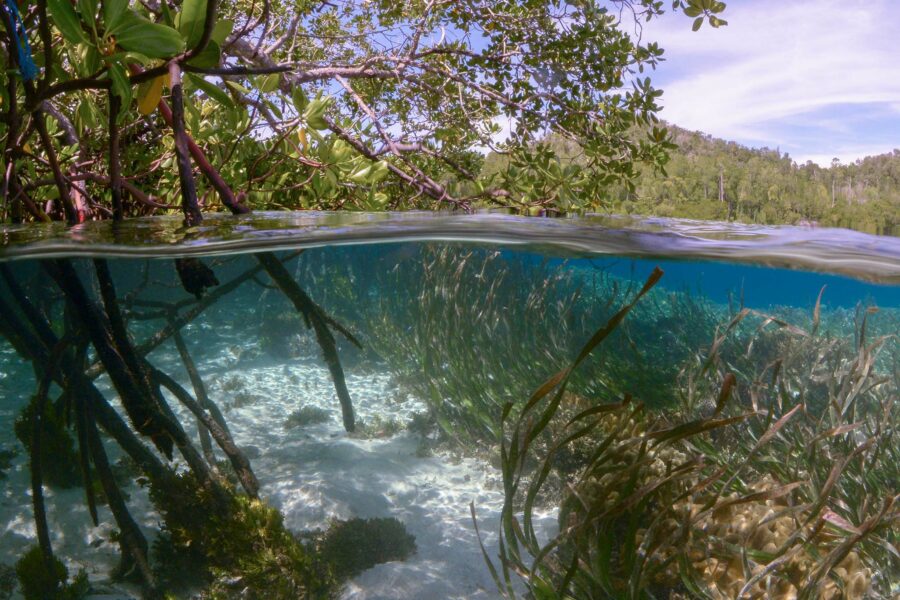
Restoring the ocean’s health is vital to achieving many of the SDGs, as humankind will need the ocean to provide more food, energy, and jobs. Perhaps less well understood – but critical for our survival – is the vital role a healthy ocean will play in SDG 13: tackling climate change
Cities — Global
After nearly a century of believing that engineering solutions could conquer nature to make cities productive and efficient centers of socio-economic development, some urban planners now realize that nature is something to design with, not against. But how do we invite nature back in when cities have been built to keep nature out?
Environment — Global
Human activity is destroying life on Earth on an unprecedented scale. We must urgently and radically re-evaluate nature in our economic thinking and actions, or risk our own species’ survival
Global governance
Recent years have seen the G20 become more factional, with countries competing for national advantage. Indonesia, holder of the G20 presidency for 2022, intends to rally the member countries to deliver a unified, coordinated response to global challenges: a G20 for the SDGs
Climate — Global
All IPCC models to stay within the 1.5ºC limit call for net negative CO2
emissions. Fortunately, the technologies we require can be found in nature