Women, climate change, and the search for accountability
Gender — Global
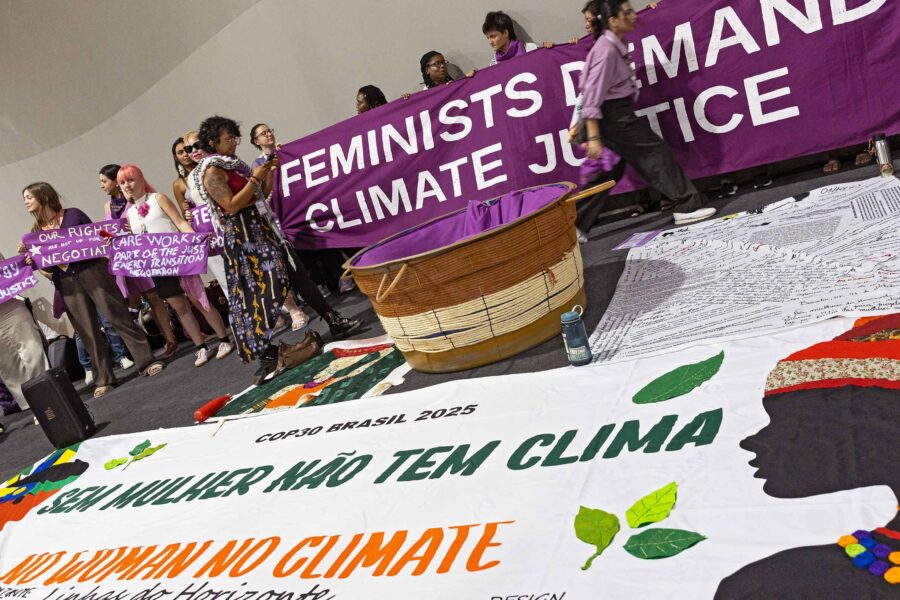
As climate litigation gathers force, women are helping to redefine what accountability looks like – and exposing how far climate policy still is from delivering gender justice

End poverty in all its forms everywhere
By 2030, eradicate extreme poverty for all people everywhere, currently measured as people living on less than $1.25 a day
Proportion of the population living below the international poverty line by sex, age, employment status and geographic location (urban/rural)
By 2030, reduce at least by half the proportion of men, women and children of all ages living in poverty in all its dimensions according to national definitions
Proportion of population living below the national poverty line, by sex and age
Proportion of men, women and children of all ages living in poverty in all its dimensions according to national definitions
Implement nationally appropriate social protection systems and measures for all, including floors, and by 2030 achieve substantial coverage of the poor and the vulnerable
Proportion of population covered by social protection floors/systems, by sex, distinguishing children, unemployed persons, older persons, persons with disabilities, pregnant women, newborns, work-injury victims and the poor and the vulnerable
By 2030, ensure that all men and women, in particular the poor and the vulnerable, have equal rights to economic resources, as well as access to basic services, ownership and control over land and other forms of property, inheritance, natural resources, appropriate new technology and financial services, including microfinance
Proportion of population living in households with access to basic services
Proportion of total adult population with secure tenure rights to land, (a) with legally recognized documentation, and (b) who perceive their rights to land as secure, by sex and type of tenure
By 2030, build the resilience of the poor and those in vulnerable situations and reduce their exposure and vulnerability to climate-related extreme events and other economic, social and environmental shocks and disasters
Number of deaths, missing persons and directly affected persons attributed to disasters per 100,000 population
Direct economic loss attributed to disasters in relation to global gross domestic product (GDP)
Number of countries that adopt and implement national disaster risk reduction strategies in line with the Sendai Framework for Disaster Risk Reduction 2015–2030
Proportion of local governments that adopt and implement local disaster risk reduction strategies in line with national disaster risk reduction strategies
Ensure significant mobilization of resources from a variety of sources, including through enhanced development cooperation, in order to provide adequate and predictable means for developing countries, in particular least developed countries, to implement programmes and policies to end poverty in all its dimensions
Total official development assistance grants from all donors that focus on poverty reduction as a share of the recipient country’s gross national income
Proportion of total government spending on essential services (education, health and social protection)
1.b Create sound policy frameworks at the national, regional and international levels, based on pro-poor and gender-sensitive development strategies, to support accelerated investment in poverty eradication actions
Pro-poor public social spending
Gender — Global
As climate litigation gathers force, women are helping to redefine what accountability looks like – and exposing how far climate policy still is from delivering gender justice
Gender — Global
Motherhood still comes with a pay penalty, and women continue to be paid less for work of equal value – not by accident, but by design. Tackling these injustices means changing how pay is set and progression is measured and rewarded – through transparency, enforcement, and stronger worker protections
Economic development
Europe has not abandoned the Green Deal – its flagship strategy for climate neutrality and shared prosperity – but it risks hollowing it out. As implementation pressures mount, the question is not whether the vision survives on paper, but whether it can still deliver a fair, system-wide transformation aligned with the SDGs
Economic development
“Leave no one behind,” the central tenet of the SDGs, underlines the importance of tackling inequality as countries strive to achieve the Global Goals. Rampant inequality is connected to setbacks in other areas, from democratic backsliding and the weakening rule of law to sluggish action on climate
The ocean is not just a victim of environmental decline – it is a foundation of global development. From climate resilience to food security to poverty reduction, ocean health now stands as a critical barometer of our capacity to achieve the SDGs
Thirty years after the landmark Beijing Declaration, progress on gender equality is stalling – and in some cases reversing. Rekindling its vision demands urgent, united action to confront rising inequality, authoritarianism, and backlash against women’s rights
Economic development — Global
Demographic change is reshaping our world in profound and unequal ways. By planning for population shifts rather than reacting to them, we can seize opportunities to drive progress in areas like education, health, sustainability, and reproductive rights – and build a fairer future for all
Social protection is a powerful – but underused – lever for gender equality and sustainable development. To get the SDGs back on track and close widening global gaps, governments must invest in inclusive systems that support women’s rights and needs at every stage of life
Financing — Europe, Global
Trade has the power to drive sustainable development – but only if the global system is fair. As rising tariffs and unequal rules threaten progress, countries must seize the chance to reimagine trade in support of people and planet
As communities face displacement due to escalating climate impacts, the prevailing attitude to migration in developed nations remains reactionary and inhumane. How can we shift the focus from managing migration to addressing the deep-rooted pressures driving mass movement in the first place?