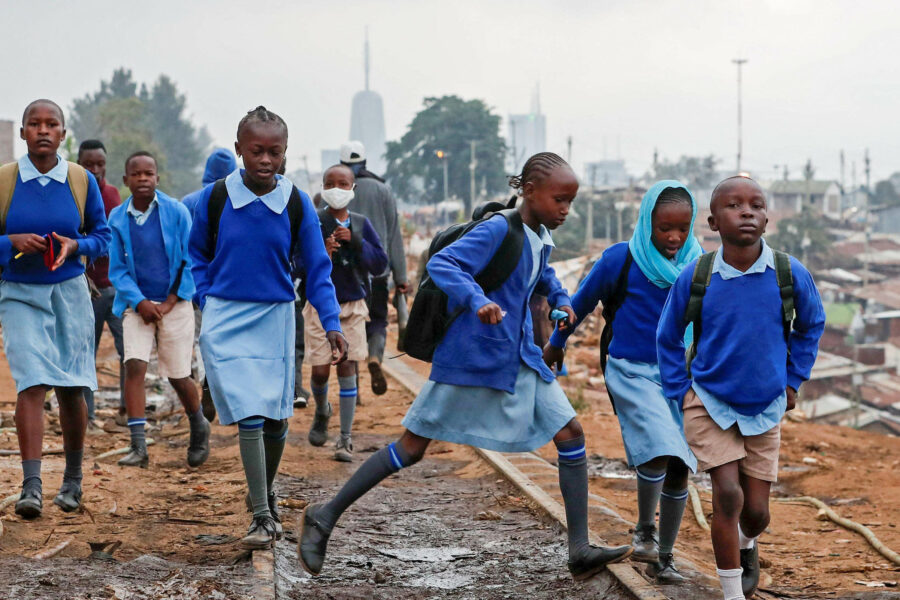
As the climate warms, more people will be forced or will want to move, both within and between countries. How do we ensure that migration is supported, equitable, and beneficial for migrants and for sending and receiving communities?

As the climate warms, more people will be forced or will want to move, both within and between countries. How do we ensure that migration is supported, equitable, and beneficial for migrants and for sending and receiving communities?
As the world’s urban population rises dramatically this century, the sustainability of cities will be make or break for our survival. While the scale of the challenge is huge, many cities are showing how zero-carbon, climate-resilient urban centers are possible
Global
As the climate warms, and as behavior and practices shift to mitigate and adapt, what changes will there be to the nature and location of human settlements?
Middle East and Northern Africa
Dubai Electricity and Water Authority (DEWA) is undertaking a combination of pioneering projects in the UAE’s Hatta region, which exemplify its holistic approach to the SDGs
Europe
The Origin Green program has been driving sustainability across Ireland’s food and drink sector for more than a decade
ESG ratings are imperfect measures of a company’s exposure to environmental, social, and governance risk, and they often ignore the impact that companies have on society. Complete redesign might help, but is that possible?
Off-grid and mini-grid electricity generation can bring immediate benefits across the SDGs. They offer a least-cost approach to electrification, yet investment in them remains limited. What needs to happen to ensure these technologies play their full part in tackling energy poverty?
Our current state of economic development has been built on burning carbon. To achieve the SDGs, or even just retain what we have, that link needs to be broken – ‘decoupled’. The decoupling process has started but will need to be total
Conversations on energy transition tend to focus on renewable generation or the end-user. However, too often, the complex systems that are required to connect the two are neglected. Relying on ‘the market’ to develop solutions risks being too slow and inequitable. Governments need to get their heads round the radical changes that must be made to create resilient, sustainable energy networks – it is down to governments to drive the energy transition forward
All 1.5°C global warming scenarios call for carbon removal. Natural systems provide the most readily available mechanisms, so how can these be boosted to the levels required?