
In the Sahel, peace starts with water
A shrinking Lake Chad and increasingly erratic rains are pushing herders and farmers in the Sahel into conflict over water and land. Lasting peace depends on securing indigenous land rights, strengthening cross-border cooperation, and putting climate finance directly in local hands
Climate — Sub-Saharan Africa
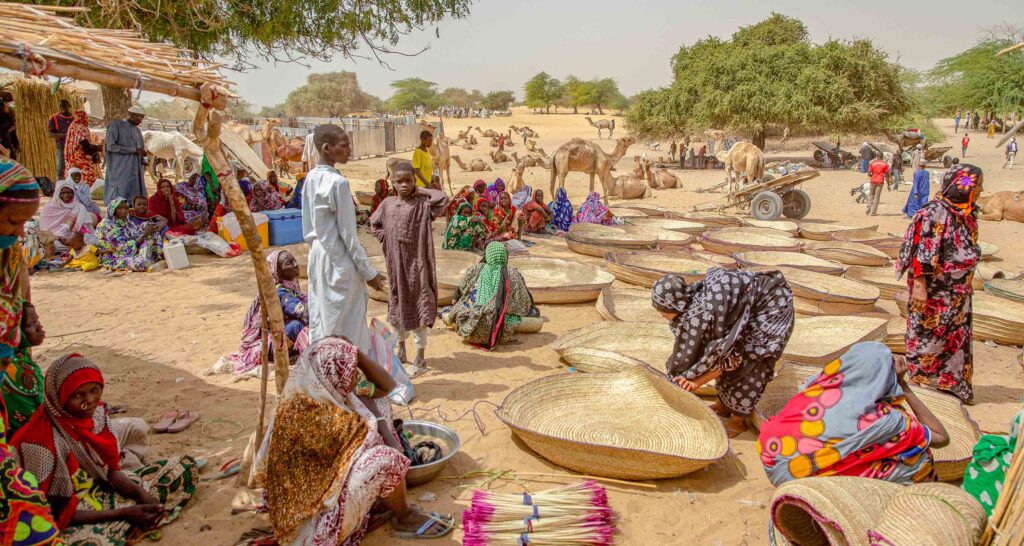

I come from the Mbororo pastoralist people of Chad. For centuries, our way of life has depended on observing our ecosystems and reading the sky. We migrated with the clouds, guided by the blossoming of trees, the direction of seasonal winds, and the migration of birds. We followed water. Our people’s ancestral knowledge is our compass, rooted in the understanding that survival depends entirely on balance.
Today, that delicate equilibrium is collapsing. In the Sahel, climate change is not an abstract mathematical projection or a distant 2050 target. It is an immediate, brutal reality where temperatures regularly surpass 45°C and the life of an entire pastoral family can hinge on a single well.
Nowhere is this unraveling more acute than across the Lake Chad basin. The lake provides fresh water, fisheries, pastures, and agricultural livelihoods for around 40 million people across Chad, Cameroon, Niger, and Nigeria. But Lake Chad has shrunk by about 90% since the 1960s. Rains that once arrived like clockwork have become radically erratic. Months of blistering drought are punctuated by violent, unseasonal flash floods that wash away fragile crops, and entire villages.
When pastures wither months ahead of schedule, herders are forced to alter centuries-old routes and drive their herds south far earlier than usual. They arrive in agrarian belts while crops are still standing in the fields, waiting to be harvested. When thousands of thirsty cattle and desperate farming communities converge around the same water point, the atmosphere turns combustible.
When traditional cattle corridors are privatized, blocked, or allocated to commercial agro-industries without local consent, pastoralists find their mobility choked off. When legal frameworks dismiss customary grazing arrangements or favor outside investors over rural communities, trust in institutions breaks down. In this void of accountability, resource competition easily turns into recurring disputes, fracturing generational coexistence between farmers and herders, and sometimes fishers.
Halting this downward spiral requires confronting comfortable assumptions. Lasting stability in the Sahel cannot be imposed through top-down enforcement or administrative decrees. Bureaucracy cannot make rain fall from the sky, and political declarations cannot restore a dried riverbed. If we are serious about conflict prevention and community resilience, we must build an architecture founded on three practical pillars.
1. Securing land rights for indigenous peoples
For generations, customary governance systems led by traditional chiefs, pastoral leaders, and elders successfully regulated shared access to water and pasture, ensuring the sustainable management of natural resources and supporting peaceful coexistence among communities. Yet modern legal frameworks often criminalize nomadic movement instead of protecting it. National governments must formally recognize and integrate customary land tenure systems into national legislation, while legally demarcating, protecting, and securing transhumance (seasonal livestock migration) corridors to safeguard pastoral mobility and ensure equitable access to essential natural resources.
At the local level, we need participatory approaches that build trust, strengthen dialogue, and prevent conflict before it arises. Through my organization, the Indigenous Women and Peoples Association of Chad (Association des Femmes Peules et Peuples Autochtones du Tchad, or AFPAT), we have demonstrated the transformative power of participatory 2D and 3D mapping.
By bringing together indigenous peoples and local communities, including women, men, and young people from pastoralist and farming groups as well as traditional leaders, around a scaled tactile topographic map of their shared landscape, we enable communities to collectively identify water sources, grazing areas, farming lands, transhumance routes, and sacred sites.
This collective mapping process helps communities recognize their interdependence, build mutual understanding, and address potential tensions before they escalate into disputes. It also provides a foundation for locally agreed, binding conventions that clarify shared rights and responsibilities, protect access to land and natural resources, and support locally led climate adaptation strategies.
2. Strengthening transboundary cooperation for shared ecosystems
Water and pastoral herds do not stop at national borders. Transhumance across the Sahel is inherently cross-border, requiring cooperation among neighboring countries. When individual countries unilaterally close their borders or restrict cross-border movement, they disrupt traditional migration routes, create critical bottlenecks along pastoral corridors, and intensify pressure on already scarce water resources. We therefore need effective regional diplomacy and operational cross-border cooperation to maintain pastoral mobility, ensure equitable access to water and pasture, and prevent resource-based conflicts.
Regional bodies like the Lake Chad Basin Commission (LCBC), the Economic and Monetary Community of Central Africa (CEMAC), and the Economic Community of West African States (ECOWAS) have established regional frameworks for cooperation and shared resource management. However, significant gaps remain in operational financing, cross-border infrastructure, and sustained political backing to make these frameworks effective on the ground.
To bridge these gaps, multilateral partners must provide direct and sustained investment in joint water-basin management and cross-border early-warning systems, treating our shared hydrology not merely as an environmental concern, but as a cornerstone of regional peace, stability, and security.
3. Mobilizing direct, locally led finance for peace and resilience
Multilateral summits repeatedly announce billions of dollars for climate adaptation, yet less than 1% of international climate finance directly reaches Indigenous Peoples and frontline communities. Funding remains trapped in capital cities while the communities on the frontlines of the climate crisis struggle to access the resources they need to lead solutions.
Even well-intended projects can backfire in fragile landscapes if they ignore local realities, customary governance systems, and existing resource-sharing arrangements. Drilling a deep borehole without inclusive community consultation and clear, collectively agreed rules for access and management can turn a potential lifeline into a source of territorial disputes.
Climate finance must therefore be conflict-sensitive from the outset, designed with communities rather than simply for them, and directed toward decentralized, locally led solutions. Programs across the Sahel will deliver lasting results only when local custodians have recognized rights to their territory and the resources, authority, and long-term stake needed to restore and sustainably manage their ecosystems.
The Sustainable Development Goals (SDGs) are profoundly interconnected and indivisible. We cannot achieve zero hunger (SDG 2) or clean water (SDG 6) without decisive climate action (SDG 13), and these goals depend equally on peace, justice, and strong institutions (SDG 16).
In the Sahel, ecological health and social peace are two sides of the same coin. If the world wants climate resilience, sustainable development, and lasting regional stability, it must invest in the indigenous peoples and local communities who have protected our ecosystems for generations. Saving our water is saving our peace.
Related articles
Stop treating finance as the last step in adaptation
Too often, adaptation finance is treated as an exercise that begins only once a plan is finished. Building investment planning into resilience strategies from the start is key to turning plans on paper into bankable projects on the ground
Global urban goals: who asked the planners?
SDG 11, the New Urban Agenda and the International Guidelines on Urban and Territorial Planning all rely on planners to put them into practice. Yet no one has conducted a representative survey of planners, asking whether these frameworks have changed their work, or whether the planning laws they work under even allow what the frameworks call for
Paying before the flood: why adaptation finance must act on forecasts
We can now predict many climate hazards months in advance, yet international finance still flows mainly after the damage is done. Closing that gap means funding preparedness when credible forecasts warn of danger, not only recovery once disaster hits