
A vision for sustainable food
Origin Green sums up the best of what joined-up thinking looks like: uniting food and drink businesses of all sizes in Ireland under a national sustainability programme
Food systems and sustainable agriculture — Europe


Bord Bia (the Irish Food Board) established Origin Green, Ireland’s food and drink sustainability programme, to rally its stakeholders, the Irish food and drink industry, around a common goal: driving sustainable food production. The programme operates on a national scale, uniting government, the private sector and the full supply chain from farmers to food producers and right through to the foodservice and retail sectors. These businesses account for 90 per cent of exports and 70 per cent of domestic retail in Ireland.
We were future-focused in 2012 when this programme was established. Sustainability wasn’t high on the industry’s agenda back then but we knew it would be pivotal to business today, particularly due to the fact that Irish food and drink is exported to 180 markets overseas. Now, 12 years on, the programme has been integral in creating an educated and motived infrastructure of Irish farmers and food businesses committed to positive change and sustainable production across Ireland.
Ireland’s food industry is a major employer, a major contributor to our economy and will play a significant role in meeting the challenge of climate change. We know agriculture is a significant driver of emissions. We take responsibility for that and acknowledge that as a nation we are behind on our targets. So, there is huge pressure on the agriculture industry in Ireland to achieve the 2030 targets set out by the Irish government in its strategy for the industry, called Food Vision.
Origin Green helps with this. It has put in place the infrastructure to support change: the programme collaborates with over 71,000 members of farm schemes and over 300 leading Irish food and drink companies by offering them frameworks coupled with education and knowledge to drive continuous sustainability improvements.
As a member of the United Nations (UN) Global Impact, Bord Bia recognises and promotes sustainable development in the Irish food and drink industry. Origin Green empowers our industry players across the entire supply chain to measure, monitor and drive sustainability improvement across environmental and social sustainability targets aligned to the UN Sustainable Development Goals (SDGs).
Innovative tools
Origin Green has seen many new innovations in recent years to upskill key players across businesses, including AgNav – a new farm sustainability platform specifically for farmers.
AgNav has been developed by Bord Bia, Teagasc, and the Irish Cattle Breeders’ Federation (ICBF), designed to help farmers create customised farm action plans. This innovative tool empowers farmers to monitor and enhance their farming practices. By using AgNav, farmers can now analyse the impact of sustainable changes on their farms and receive expert guidance to develop practical and achievable sustainability plans.
The platform’s key objectives include encouraging and supporting farmers in adopting effective sustainability practices, while utilising comprehensive inter-agency data, research, and resources to customise actions for each farm’s specific needs. AgNav facilitates accurate data capture and analysis, enabling precise measurement of the impact of these initiatives.
Driving progress
At Bord Bia, we are committed to driving progress. The benefits of Origin Green are more environmentally aware farms, an important focus on community and more sustainable food and drink production, which ultimately contributes to sustainable livelihoods. This is what makes Ireland’s food and drink produce the first choice globally; it is trusted as sustainably produced by people who care. We will continue to innovate and develop new programmes and supports to advance this goal.
For more information, visit:
About the sponsor

Headquartered in Dublin, Bord Bia supports the national and international ambitions of Irish food, drink and horticulture businesses.
Origin Green is the Bord Bia sustainability programme. It is the only one in the world which operates at a national level and which includes farmers and primary producers, processors and retailers working together and leading the way to create a better future for all involved.
Featured in:

Summit of the Future edition: Keeping sight of the Goals
COVID and conflict have precipitated back-sliding on SDG progress. The solid gains made in the early years of the SDGs have largely been lost, with only 17 per cent of targets still on track. The SDGs remain the best and only plan to rescue humankind and our planet. At multilateral gatherings, governments have been near unanimous in voicing their support for the Goals; at the upcoming Summit of the Future, those words must be backed up with action.
This edition provides comprehensive analysis of the most persistent challenges we face, and offers viable strategies to resolve them.
Authors include Richard Gowan, Lopa Banerjee, Li Junhua, Carlos Maria Correa, Hana Brixi, Paul Akiwumi, Jemimah Njuki, Stefano Marta, Carla Kraft, Patrick Guillaumont, Silvia Weko and Ana Maria Munoz Boudet.
Publication date: 20 September 2024

Related articles

Stop treating finance as the last step in adaptation
Too often, adaptation finance is treated as an exercise that begins only once a plan is finished. Building investment planning into resilience strategies from the start is key to turning plans on paper into bankable projects on the ground
In the Sahel, peace starts with water
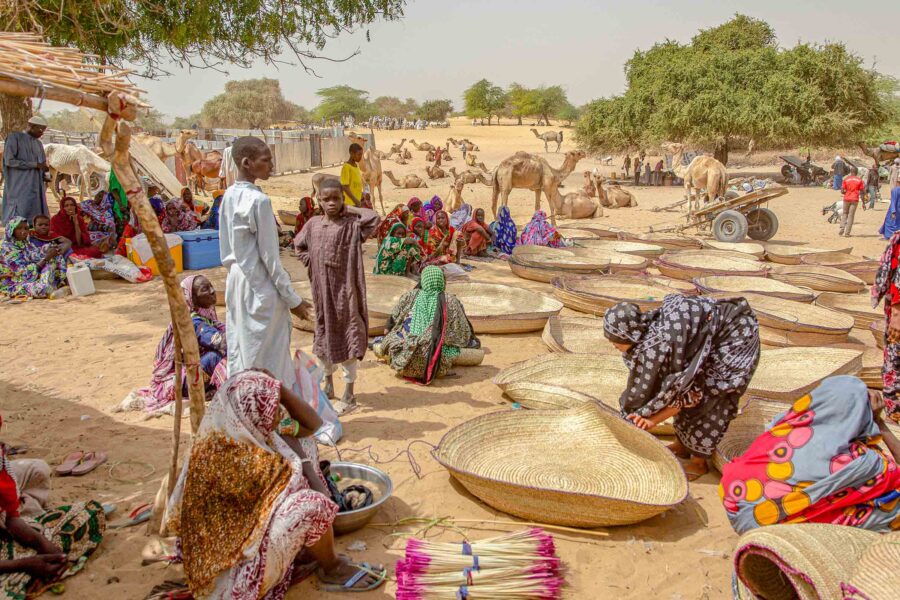
A shrinking Lake Chad and increasingly erratic rains are pushing herders and farmers in the Sahel into conflict over water and land. Lasting peace depends on securing indigenous land rights, strengthening cross-border cooperation, and putting climate finance directly in local hands

Global urban goals: who asked the planners?
SDG 11, the New Urban Agenda and the International Guidelines on Urban and Territorial Planning all rely on planners to put them into practice. Yet no one has conducted a representative survey of planners, asking whether these frameworks have changed their work, or whether the planning laws they work under even allow what the frameworks call for