SDG 9

Icon for Industry, innovation and infrastructure

Industry, innovation and infrastructure

Build resilient infrastructure, promote inclusive and sustainable industrialization and foster innovation

Targets

Indicators

Target

9.1

Develop quality, reliable, sustainable and resilient infrastructure, including regional and transborder infrastructure, to support economic development and human well-being, with a focus on affordable and equitable access for all

Indicators

9.1.1

Proportion of the rural population who live within 2 km of an all-season road 

9.1.2

Passenger and freight volumes, by mode of transport 

Target

9.2

Promote inclusive and sustainable industrialization and, by 2030, significantly raise industry’s share of employment and gross domestic product, in line with national circumstances, and double its share in least developed countries

Indicators

9.2.1

Manufacturing value added as a proportion of GDP and per capita 

9.2.2

Manufacturing employment as a proportion of total employment 

Target

9.3

Increase the access of small-scale industrial and other enterprises, in particular in developing countries, to financial services, including affordable credit, and their integration into value chains and markets

Indicators

9.3.1

Proportion of small-scale industries in total industry value added 

9.3.2

Proportion of small-scale industries with a loan or line of credit 

Target

9.4

By 2030, upgrade infrastructure and retrofit industries to make them sustainable, with increased resource-use efficiency and greater adoption of clean and environmentally sound technologies and industrial processes, with all countries taking action in accordance with their respective capabilities

Indicators

9.4.1

CO2 emission per unit of value added 

Target

9.5

Enhance scientific research, upgrade the technological capabilities of industrial sectors in all countries, in particular developing countries, including, by 2030, encouraging innovation and substantially increasing the number of research and development workers per 1 million people and public and private research and development spending

Indicators

9.5.1

Research and development expenditure as a proportion of GDP 

9.5.2

Researchers (in full-time equivalent) per million inhabitants 

Target

9.a

Facilitate sustainable and resilient infrastructure development in developing countries through enhanced financial, technological and technical support to African countries, least developed countries, landlocked developing countries and small island developing States

Indicators

9.a.1

Total official international support (official development assistance plus other official flows) to infrastructure 

Target

9.b

Support domestic technology development, research and innovation in developing countries, including by ensuring a conducive policy environment for, inter alia, industrial diversification and value addition to commodities

Indicators

9.b.1

Proportion of medium and high-tech industry value added in total value added 

Target

9.c

Significantly increase access to information and communications technology and strive to provide universal and affordable access to the Internet in least developed countries by 2020

Indicators

9.c.1

Proportion of population covered by a mobile network, by technology 

  1. Guiding climate action through Earth observation

    ClimateGlobal

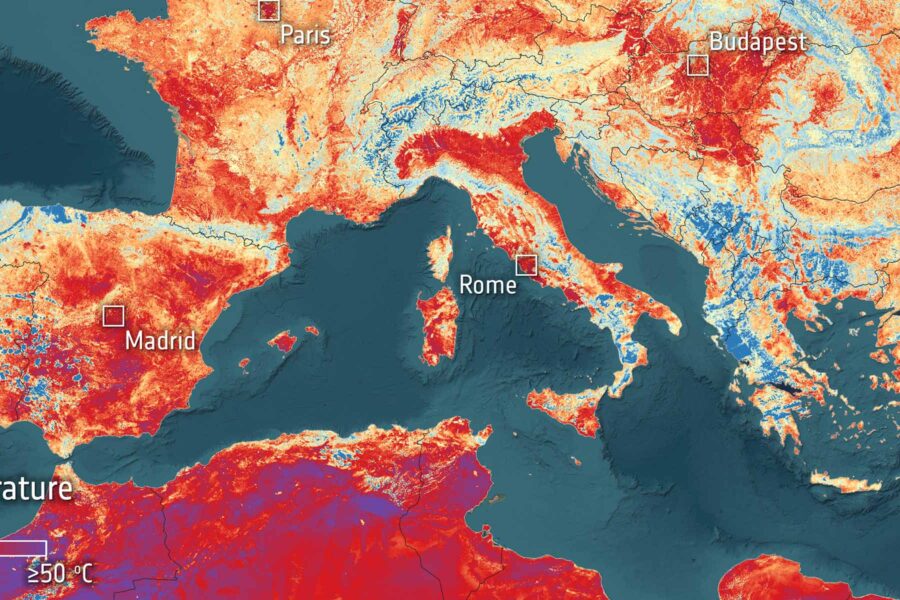
    With their unwavering gaze from above, satellites are an increasingly powerful tool to identify and monitor anthropogenic emissions, right down to pinpointing individual sites. Using this data to inform policy and direct climate action everywhere must be an urgent global priority

  2. Supporting climate action in LDCs

    ClimateGlobal

    Despite their limited means, many of the world’s poorest countries are leading the way in cutting emissions and taking bold action on adaptation. The rest of the world must step up support for LDCs – and follow their example

  3. The false dilemma between economy and planet

    ClimateGlobal

    There is a growing chorus calling for delays to net-zero initiatives, blaming climate action for the current cost of living crisis. In reality, green investment can offer a path out of the economic troubles that have been building since the start of the century

  4. Fixing the global financial system

    FinancingGlobal

    In the words of the UN Secretary-General, developing countries have limited access to the financial resources they need to address the dramatic challenges they face and implement the Sustainable Development Goals (SDGs). The global financial architecture, created for a very different world eight decades ago, needs urgent reform to make it fit for purpose

  5. Why do governments continue to subsidize fossil fuels, undermining their own climate goals?

    EnergyGlobal

    Each year, trillions of dollars are poured into harmful fossil fuel subsidies or tax breaks that undermine our progress in achieving the Sustainable Development Goals (SDGs). Shifting these funds to fuel the clean energy transition would accelerate access to basic energy services, improve public health, and put the world on a safer climate trajectory

  6. Learning from climate finance

    FinancingGlobal

    Progress on implementing the Sustainable Development Goals (SDGs) has been significant but uneven. If we want to accelerate delivery, we need to apply the lessons learned from climate finance