SDG 2

Icon for Zero hunger

Zero hunger

End hunger, achieve food security and improved nutrition and promote sustainable agriculture

Targets

Indicators

Target

2.1

By 2030, end hunger and ensure access by all people, in particular the poor and people in vulnerable situations, including infants, to safe, nutritious and sufficient food all year round

Indicators

2.1.1

Prevalence of undernourishment 

2.1.2

Prevalence of moderate or severe food insecurity in the population, based on the Food Insecurity Experience Scale (FIES) 

Target

2.2

By 2030, end all forms of malnutrition, including achieving, by 2025, the internationally agreed targets on stunting and wasting in children under 5 years of age, and address the nutritional needs of adolescent girls, pregnant and lactating women and older persons

Indicators

2.2.1

Prevalence of stunting (height for age <-2 standard deviation from the median of the World Health Organization (WHO) Child Growth Standards) among children under 5 years of age 

2.2.2

Prevalence of malnutrition (weight for height >+2 or <-2 standard deviation from the median of the WHO Child Growth Standards) among children under 5 years of age, by type (wasting and overweight) 

2.2.3

Prevalence of anaemia in women aged 15 to 49 years, by pregnancy status (percentage) 

Target

2.3

By 2030, double the agricultural productivity and incomes of small-scale food producers, in particular women, indigenous peoples, family farmers, pastoralists and fishers, including through secure and equal access to land, other productive resources and inputs, knowledge, financial services, markets and opportunities for value addition and non-farm employment

Indicators

2.3.1

Volume of production per labour unit by classes of farming/pastoral/forestry enterprise size 

2.3.2

Average income of small-scale food producers, by sex and indigenous status 

Target

2.4

By 2030, ensure sustainable food production systems and implement resilient agricultural practices that increase productivity and production, that help maintain ecosystems, that strengthen capacity for adaptation to climate change, extreme weather, drought, flooding and other disasters and that progressively improve land and soil quality

Indicators

2.4.1

Proportion of agricultural area under productive and sustainable agriculture 

Target

2.5

By 2020, maintain the genetic diversity of seeds, cultivated plants and farmed and domesticated animals and their related wild species, including through soundly managed and diversified seed and plant banks at the national, regional and international levels, and promote access to and fair and equitable sharing of benefits arising from the utilization of genetic resources and associated traditional knowledge, as internationally agreed

Indicators

2.5.1

Number of (a) plant and (b) animal genetic resources for food and agriculture secured in either medium- or long-term conservation facilities 

2.5.2

Proportion of local breeds classified as being at risk of extinction 

Target

2.a

Increase investment, including through enhanced international cooperation, in rural infrastructure, agricultural research and extension services, technology development and plant and livestock gene banks in order to enhance agricultural productive capacity in developing countries, in particular least developed countries

Indicators

2.a.1

The agriculture orientation index for government expenditures 

2.a.2

Total official flows (official development assistance plus other official flows) to the agriculture sector 

Target

2.b

Correct and prevent trade restrictions and distortions in world agricultural markets, including through the parallel elimination of all forms of agricultural export subsidies and all export measures with equivalent effect, in accordance with the mandate of the Doha Development Round

Indicators

2.b.1

Agricultural export subsidies 

Target

2.c

Adopt measures to ensure the proper functioning of food commodity markets and their derivatives and facilitate timely access to market information, including on food reserves, in order to help limit extreme food price volatility

Indicators

2.c.1

Indicator of food price anomalies 

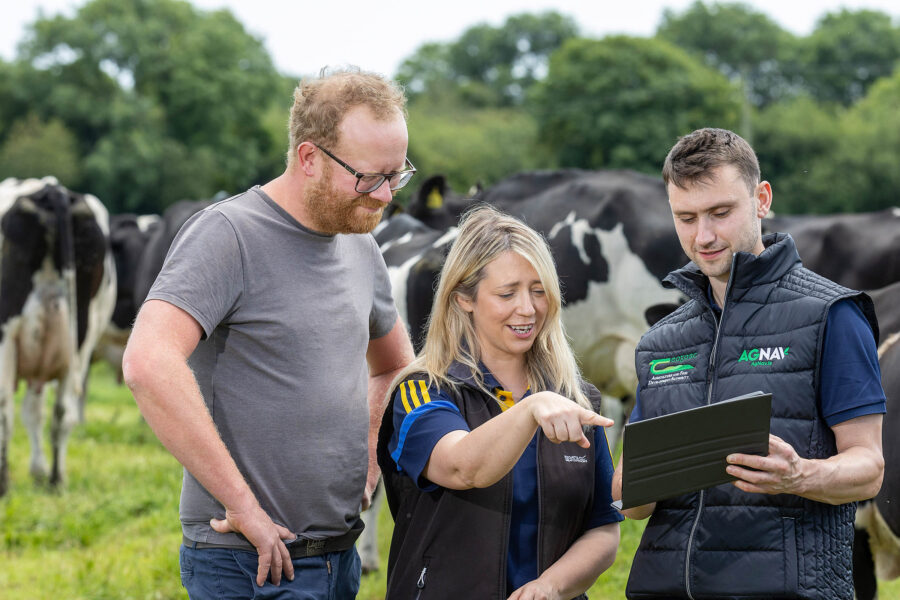
  1. Empowering farmers

    Food systems and sustainable agricultureEurope

    Digital tools are enabling Irish farmers to achieve sustainability goals

  2. A vision for sustainable food 

    Food systems and sustainable agricultureEurope

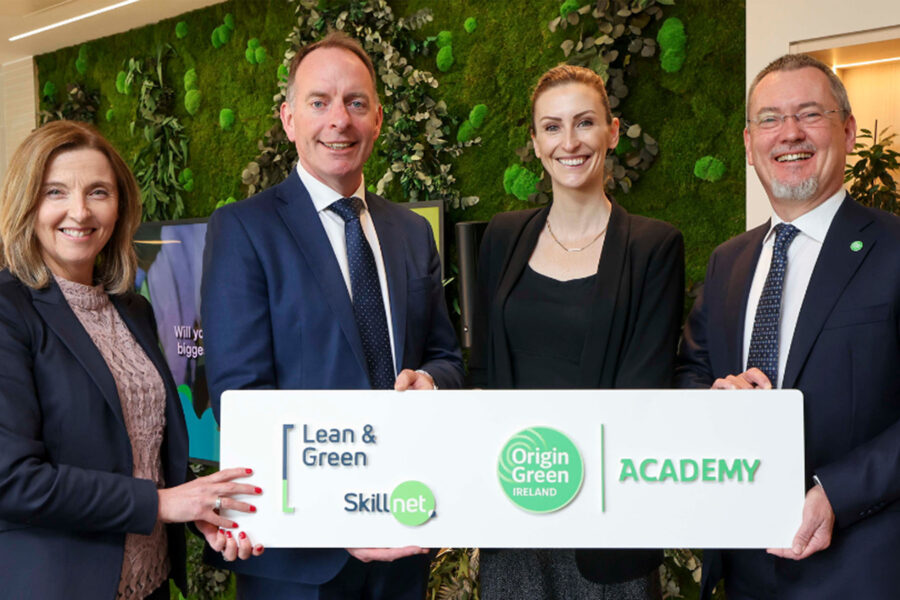
    Origin Green sums up the best of what joined-up thinking looks like: uniting food and drink businesses of all sizes in Ireland under a national sustainability programme

  3. Farming for the future

    Food systems and sustainable agricultureEurope

    Origin Green is creating a template for sustainable food production in Ireland that is science-based and quantifiable

  4. Is the European Green Deal’s vision still intact?

    Economic development

    Europe has not abandoned the Green Deal – its flagship strategy for climate neutrality and shared prosperity – but it risks hollowing it out. As implementation pressures mount, the question is not whether the vision survives on paper, but whether it can still deliver a fair, system-wide transformation aligned with the SDGs