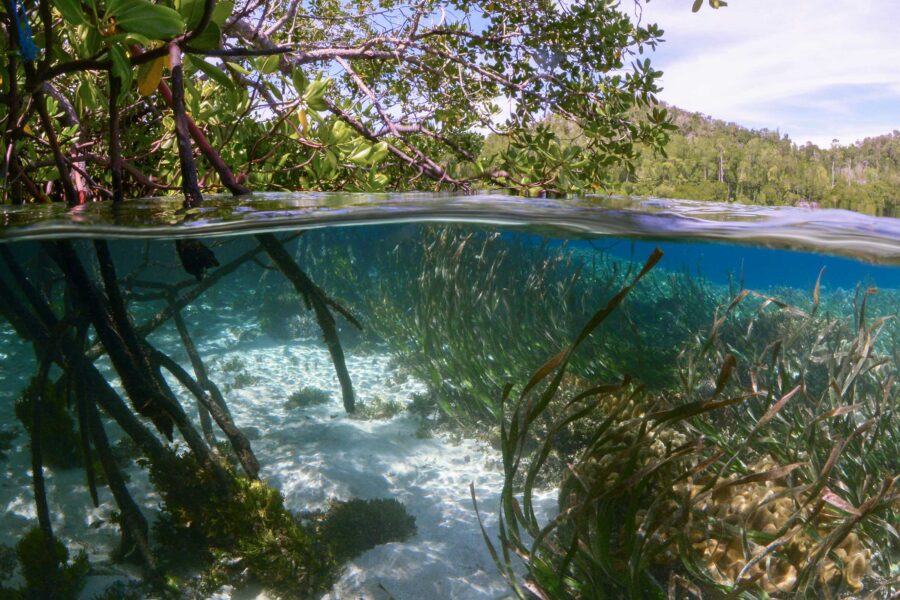
The ocean is not just a victim of environmental decline – it is a foundation of global development. From climate resilience to food security to poverty reduction, ocean health now stands as a critical barometer of our capacity to achieve the SDGs

Achieve gender equality and empower all women and girls
End all forms of discrimination against all women and girls everywhere
Whether or not legal frameworks are in place to promote, enforce and monitor equality and non-discrimination on the basis of sex
Eliminate all forms of violence against all women and girls in the public and private spheres, including trafficking and sexual and other types of exploitation
Proportion of ever-partnered women and girls aged 15 years and older subjected to physical, sexual or psychological violence by a current or former intimate partner in the previous 12 months, by form of violence and by age
Proportion of women and girls aged 15 years and older subjected to sexual violence by persons other than an intimate partner in the previous 12 months, by age and place of occurrence
Eliminate all harmful practices, such as child, early and forced marriage andfemale genital mutilation
Proportion of women aged 20–24 years who were married or in a union before age 15 and before age 18
Proportion of girls and women aged 15–49 years who have undergone female genital mutilation, by age
Recognize and value unpaid care and domestic work through the provision of public services, infrastructure and social protection policies and the promotion of shared responsibility within the household and the family as nationally appropriate
Proportion of time spent on unpaid domestic and care work, by sex, age and location
Ensure women’s full and effective participation and equal opportunities for leadership at all levels of decision-making in political, economic and public life
Proportion of seats held by women in (a) national parliaments and (b) local governments
Proportion of women in managerial positions
Ensure universal access to sexual and reproductive health and reproductive rights as agreed in accordance with the Programme of Action of the International Conference on Population and Development and the Beijing Platform for Action and the outcome documents of their review conferences
Proportion of women aged 15–49 years who make their own informed decisions regarding sexual relations, contraceptive use and reproductive health care
Number of countries with laws and regulations that guarantee full and equal access to women and men aged 15 years and older to sexual and reproductive health care, information and education
Undertake reforms to give women equal rights to economic resources, as well as access to ownership and control over land and other forms of property, financial services, inheritance and natural resources, in accordance with national laws
(a) Proportion of total agricultural population with ownership or secure rights over agricultural land, by sex; and (b) share of women among owners or rights-bearers of agricultural land, by type of tenure
Proportion of countries where the legal framework (including customary law) guarantees women’s equal rights to land ownership and/or control
Enhance the use of enabling technology, in particular information and communications technology, to promote the empowerment of women
Proportion of individuals who own a mobile telephone, by sex
Adopt and strengthen sound policies and enforceable legislation for the promotion of gender equality and the empowerment of all women and girls at all levels
Proportion of countries with systems to track and make public allocations for gender equality and women’s empowerment
The ocean is not just a victim of environmental decline – it is a foundation of global development. From climate resilience to food security to poverty reduction, ocean health now stands as a critical barometer of our capacity to achieve the SDGs
Economic development — Global
Demographic change is reshaping our world in profound and unequal ways. By planning for population shifts rather than reacting to them, we can seize opportunities to drive progress in areas like education, health, sustainability, and reproductive rights – and build a fairer future for all
Peace and security — Global, Middle East and Northern Africa
Civilian protection in armed conflict remains more aspiration than reality, as recent crises expose deep flaws in the international system. To restore credibility, the Responsibility to Protect (R2P) – a global pledge to prevent mass atrocities – must evolve and be backed by bold reform, regional initiative, and political will
As communities face displacement due to escalating climate impacts, the prevailing attitude to migration in developed nations remains reactionary and inhumane. How can we shift the focus from managing migration to addressing the deep-rooted pressures driving mass movement in the first place?
Global governance — Global
The last nine years have seen seismic societal, economic, and political shifts around the world – meaningful progress on the SDGs isn’t among them. We know what needs fixing and in many cases how – the legacy of this generation of leaders will be whether it had the courage and wisdom to act
Gender — Global
Laws and treaties prohibiting gender discrimination have failed to alter the stark fact that, globally, women are still paid significantly less than men for the same work. Achieving gender equality in the workplace requires a transformation – of attitudes, economic structures, and opportunities – to enable women’s economic empowerment
Gender — Global
Women around the world face the brunt of severe hunger, with conflicts exacerbating the inequality. Ending this discrimination requires empowering more women and girls to lead on building peace and food security for all
Gender — Global
Feminist climate justice seeks a world where everyone can flourish on a healthy and sustainable planet, where those in power serve and are accountable to all, particularly marginalized groups such as women and girls. Achieving this will take action on many fronts – to strengthen democracy, human rights, and global collaboration
Climate change means millions more women and girls risk having insufficient food and resources to meet their basic needs. As women bear the brunt of climate impacts, so they must have equity in decision-making on climate solutions
Gender — Global
Around the world, democracy is under threat. As populism, nationalism, and authoritarianism gain traction in more countries, we must redouble efforts on gender equality or risk rolling back on hard-fought gains