Conflicting ideas of peace
Peace and security — Global
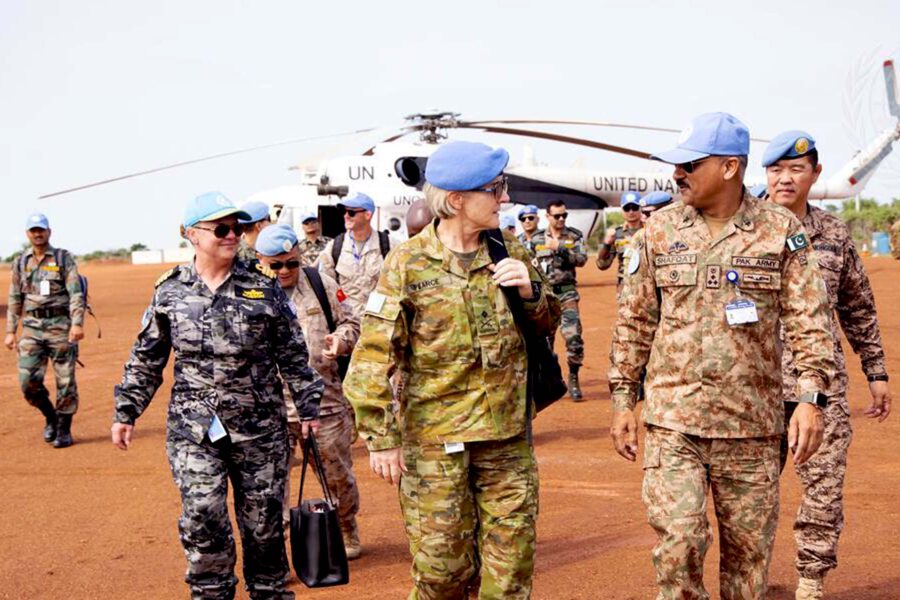
Donald Trump’s vision of the UN as a great-power forum clashes with decades of evolution in global peacebuilding. How can UN members continue to advance peace as envisioned by the SDGs?
Promote peaceful and inclusive societies for sustainable development, provide access to justice for all and build effective, accountable and inclusive institutions at all levels
Significantly reduce all forms of violence and related death rates everywhere
Number of victims of intentional homicide per 100,000 population, by sex and age
Conflict-related deaths per 100,000 population, by sex, age and cause
Proportion of population subjected to (a) physical violence, (b) psychological violence and (c) sexual violence in the previous 12 months
Proportion of population that feel safe walking alone around the area they live after dark
End abuse, exploitation, trafficking and all forms of violence against and torture of children
Proportion of children aged 1–17 years who experienced any physical punishment and/or psychological aggression by caregivers in the past month
Number of victims of human trafficking per 100,000 population, by sex, age and form of exploitation
Proportion of young women and men aged 18–29 years who experienced sexual violence by age 18
Promote the rule of law at the national and international levels and ensure equal access to justice for all
Proportion of victims of violence in the previous 12 months who reported their victimization to competent authorities or other officially recognized conflict resolution mechanisms
Unsentenced detainees as a proportion of overall prison population
Proportion of the population who have experienced a dispute in the past two years and who accessed a formal or informal dispute resolution mechanism, by type of mechanism
By 2030, significantly reduce illicit financial and arms flows, strengthen the recovery and return of stolen assets and combat all forms of organized crime
Total value of inward and outward illicit financial flows (in current United States dollars)
Proportion of seized, found or surrendered arms whose illicit origin or context has been traced or established by a competent authority in line with international instruments
Substantially reduce corruption and bribery in all their forms
Proportion of persons who had at least one contact with a public official and who paid a bribe to a public official, or were asked for a bribe by those public officials, during the previous 12 months
Proportion of businesses that had at least one contact with a public official and that paid a bribe to a public official, or were asked for a bribe by those public officials during the previous 12 months
Develop effective, accountable and transparent institutions at all levels
Primary government expenditures as a proportion of original approved budget, by sector (or by budget codes or similar)
Proportion of population satisfied with their last experience of public services
Ensure responsive, inclusive, participatory and representative decision- making at all levels
Proportions of positions in national and local institutions, including (a) the legislatures; (b) the public service; and (c) the judiciary, compared to national distributions, by sex, age, persons with disabilities and population groups
Proportion of population who believe decision-making is inclusive and responsive, by sex, age, disability and population group
Broaden and strengthen the participation of developing countries in the institutions of global governance
Proportion of members and voting rights of developing countries in international organizations
By 2030, provide legal identity for all, including birth registration
Proportion of children under 5 years of age whose births have been registered with a civil authority, by age
Ensure public access to information and protect fundamental freedoms, in accordance with national legislation and international agreements
Number of verified cases of killing, kidnapping, enforced disappearance, arbitrary detention and torture of journalists, associated media personnel, trade unionists and human rights advocates in the previous 12 months
Number of countries that adopt and implement constitutional, statutory and/or policy guarantees for public access to information
Strengthen relevant national institutions, including through international cooperation, for building capacity at all levels, in particular in developing countries, to prevent violence and combat terrorism and crime
Existence of independent national human rights institutions in compliance with the Paris Principles
Promote and enforce non-discriminatory laws and policies for sustainable development
Proportion of population reporting having personally felt discriminated against or harassed in the previous 12 months on the basis of a ground of discrimination prohibited under international human rights law
Peace and security — Global
Donald Trump’s vision of the UN as a great-power forum clashes with decades of evolution in global peacebuilding. How can UN members continue to advance peace as envisioned by the SDGs?
Peace and security — Global
Achieving the SDGs in fragile, violent, and/or corrupt states represents a daunting challenge – but not an impossible one. Success calls for a tailored, multi-pronged approach that addresses the fundamental interplay between poverty and conflict
Gender — Middle East and Northern Africa, Sub-Saharan Africa
The Gambia outlawed female genital mutilation (FGM) in 2015. This year, an attempt to relegalize it almost succeeded. Why are these types of abuse so persistent and how can they be eradicated?
Global governance — Global, US and Canada
The UN and the USA need each other. A failure to recognize the benefits that the USA receives has led to a push to defund the UN – the consequences would be detrimental to everyone
Global governance — Global
The UN is under attack from virtually every quarter. What might an effective, reformed UN look like, one that remains a central player in addressing the world’s most pressing issues?
Gender — Global
Education can be a powerful force for shifting unequal gender norms, but schools do not transform them automatically. Embedding gender equality in education systems at scale – and defending that work against growing backlash – requires sustained political commitment, institutional reform, and public support
Gender — Global
The case for a woman Secretary-General is not just about symbolism. More representative leadership would strengthen the UN’s legitimacy, improve decision-making, and better equip the institution for an era of compounding global crises
Gender — Global, Sub-Saharan Africa
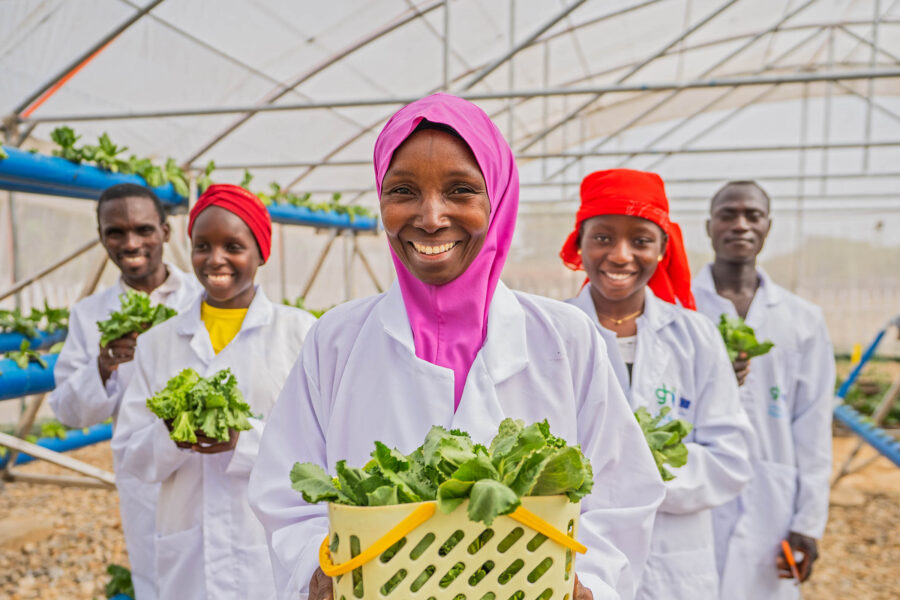
When climate solutions fit local realities, they can restore ecosystems, strengthen food security, reduce vulnerability for women and expand their economic agency
Economic development
Europe has not abandoned the Green Deal – its flagship strategy for climate neutrality and shared prosperity – but it risks hollowing it out. As implementation pressures mount, the question is not whether the vision survives on paper, but whether it can still deliver a fair, system-wide transformation aligned with the SDGs
Climate — Global
Climate change dominates global attention, but the destruction of nature is quietly setting up its own economic shockwave. With COP30 spotlighting the rising economic costs of nature loss, the case for treating it as an urgent financial and development priority has never been clearer