
Biodiversity: The canary in the mine
Human activity is destroying life on Earth on an unprecedented scale. We must urgently and radically re-evaluate nature in our economic thinking and actions, or risk our own species’ survival
Environment — Global
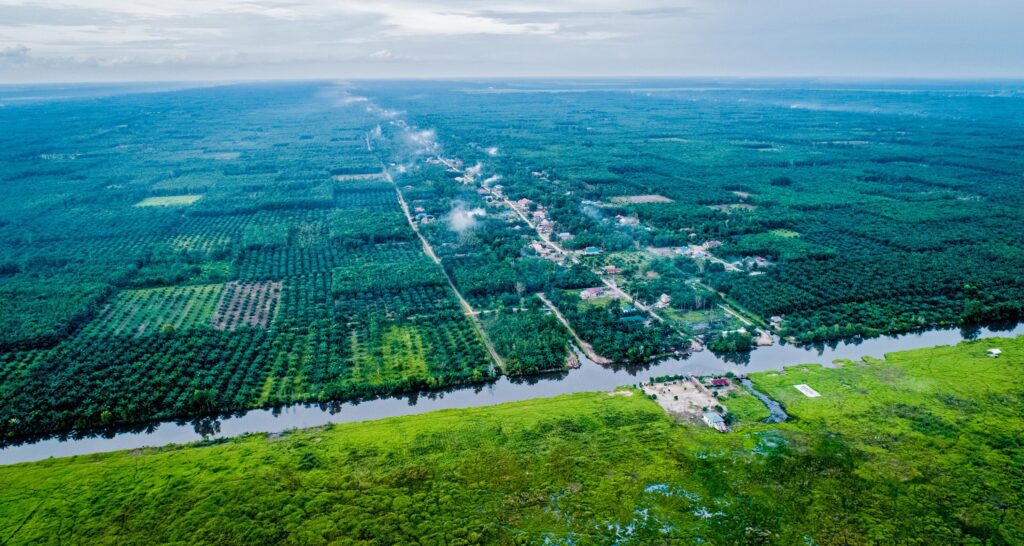

Sixty years ago, American biologist Rachel Carson witnessed the devastation wrought by pesticide use and wrote, “[M]an is a part of nature, and his war against nature is inevitably a war against himself.” But she could hardly have imagined the unprecedented decline of nature we are seeing today. The oncoming global collapse of the systems that supply our food, water, and clean air, of which biodiversity is the foundation, threatens to undermine human health, security, and general well-being. At least one million plant and animal species – one eighth of all species on the planet – are threatened with extinction. Scientists say that the biodiversity crisis is likely to be just as devastating to humanity as the climate crisis.
The public is familiar with these catastrophic headlines, and yet no country has yet acted, or even pledged to act, with anything resembling the urgency necessary to slow what scientists have termed a biological annihilation. Humanity is already feeling the ravages of climate change in the form of increasingly frequent and severe weather events: drought-induced famine in Madagascar, deadly floods in Germany and Belgium, and melting permafrost that has forced communities across the Arctic to relocate. But nature’s decline is quiet. Most people do not notice a parking lot where there was once a pond, or silence where there once was birdsong. And so, the biodiversity crisis remains hidden in climate change’s shadow.
Yet both the climate and biodiversity crises are driven by global systems that value profit over people, and the destruction of nature over its protection. The top four causes of the biodiversity crisis, according to the Intergovernmental Science-Policy Platform on Biodiversity (IPBES)’s 2019 report, are habitat destruction, over-exploiting species, climate change, and pollution – all a function of a global economy built on an insatiable appetite for consumption. To truly address the joint climate and biodiversity crises we must ask: how can humanity continue to grow our standard of living without destroying ourselves?
So far, institutions have thrown their weight behind policy tools like conservation and public finance to address the biodiversity crisis in the short term. Still, conservation lags far behind where it should be: only about 15% of land and 7% of ocean are protected globally, and less than 1% of the high seas are protected. However, 50 countries have pledged to protect 30% of all lands and waters by 2030. While 30% may not ultimately be enough, it is a clear and unifying target that is likely to gain further traction during the upcoming 15th Convention on Biodiversity Conference of the Parties in Kunming, China.
Public finance shows promise but, to date, donor countries have not come close to showing the level of ambition that is needed. Estimates suggest that global biodiversity finance amounted to between USD 78 and 91 billion in 2020, less than 15% of the USD 632 billion spent on climate – which itself is not close to enough. Most of this funding has come from governments. The corporations who have driven biodiversity loss – and made themselves wealthy at the expense of local communities and the natural systems they rely on – have paid or pledged little.
Addressing the biodiversity crisis in isolation and pretending it can be solved simply with more money and more protections, without transformative global behavioral and economic change forcing a close look at what we value and how we value it, will lead to failure. Look no further than the 2014 accord to cut deforestation in half by 2020 and end it entirely by 2030. Five years after that pledge, a group of experts estimated that the area of global forests destroyed had actually increased by 40%. While the recent declaration in Glasgow to end deforestation by 2030 includes previously absent, forest-rich countries like Brazil, Russia, and China, it still lacks any means of enforcement for signatories that continue exploitative activities. It allows countries and corporations to escape any and all culpability for destroying nature on the cheap, often leaving the poorest people across the globe to shoulder the burden of biodiversity loss.
If we truly want to address the biodiversity crisis – and it is imperative – then institutions must change how they measure success to fully capture nature’s value. The UK-commissioned Dasgupta Review on the economics of biodiversity found that humanity has collectively mismanaged its “global portfolio” of natural assets. Current demands far exceed nature’s capacity to supply the “goods and services” we all rely on. Nature is our most precious asset, and reflecting its true worth in the market will require a profound shift in human behaviors, government priorities, and public and private accountability – the kind of shift that the Sustainable Development Goals (SDGs) were intended to measure and create.
A renewed commitment to the SDGs is, therefore, a critical approach to thinking bigger. The SDGs were developed to provide a framework for connecting 17 cross-cutting, intransigent global problems. For example, healthy ecosystems (SDGs 14 and 15) provide ecosystem-critical services that make up the foundation for global food security and nutrition (SDG 2), clean water (SDG 6), and sustainable economic activities (SDGs 1 and 8). Recognizing the territorial rights to and sustainable management of resources by indigenous peoples and local communities often improves biodiversity outcomes, while also reducing inequalities among countries and social groups (SDGs 5 and 10).
The SDGs are big and complex, matching the scale of the challenges we face. They set audacious goals to end extreme poverty through a people-centered, planet-sensitive, universal strategy of sustainable development. By recommitting to achieving them, we can unlock the large-scale, interconnected, and creative solutions we need. Humanity has wiped out 60% of all individual animals – birds, mammals, reptiles, and fish – since 1970. We are only just barely starting to feel the impacts of this crisis, including a disruptive multi-year global pandemic likely spurred by biodiversity loss. We have a choice. We can accept our own destruction alongside nature, or we can act now.
Related articles
Stop treating finance as the last step in adaptation
Too often, adaptation finance is treated as an exercise that begins only once a plan is finished. Building investment planning into resilience strategies from the start is key to turning plans on paper into bankable projects on the ground
In the Sahel, peace starts with water
A shrinking Lake Chad and increasingly erratic rains are pushing herders and farmers in the Sahel into conflict over water and land. Lasting peace depends on securing indigenous land rights, strengthening cross-border cooperation, and putting climate finance directly in local hands
Global urban goals: who asked the planners?
SDG 11, the New Urban Agenda and the International Guidelines on Urban and Territorial Planning all rely on planners to put them into practice. Yet no one has conducted a representative survey of planners, asking whether these frameworks have changed their work, or whether the planning laws they work under even allow what the frameworks call for