
A G20 for the global good
Recent years have seen the G20 become more factional, with countries competing for national advantage. Indonesia, holder of the G20 presidency for 2022, intends to rally the member countries to deliver a unified, coordinated response to global challenges: a G20 for the SDGs
Global governance
Author

Cherie Nursalim
Special Advisor on Climate, Government of Indonesia, International Chamber of Commerce and Giti Group Vice Chairman
The fragility of the human race, our economy and society, was brutally exposed by the COVID pandemic. It became easier for the wider public to comprehend threats that previously appeared too distant or too extreme to imagine. In most countries, there was an increased awareness of the threat of catastrophic climate change and a heightened desire for urgent action. Political leaders reflected these sentiments in the run-up to the major global summits in 2021. Ahead of COP26, which was billed as the last chance to avoid a climate crisis, there appeared to be a political consensus to do whatever was needed. However, when the crunch came, countries resorted to old patterns of behavior, treating the situation as a zero-sum game. Future security and prosperity were sacrificed for short-term gain or simply to defer difficult decisions.
There has been time to reflect on the missed opportunities of 2021. As a group, the G20 is responsible for most of the anthropological threats to the planet; it also has the power and means to fix them, and to lead humanity on to a sustainable path. Indonesia’s ambition is to bind its G20 partners to this cause.
Leading a global recovery
Just as Indonesia has led the world by reducing the rate of deforestation for four years in a row, it hopes now to be able to lead and encourage radical, transformative, collaborative action at the G20 2022 summit. As the world tentatively emerges from the economic and societal ravages of the last three years, Indonesia’s theme for its G20 presidency in Bali is “Recover Together, Recover Stronger”. The focus is on three issues: health, green, and digital. Indonesia will test the resolve of the G20 in tackling these issues that will determine our path forward – whether we can all share in a recovery and embark on a sustainable future course. The case for global leadership and meaningful collective action by the G20 has never been more compelling. The pandemic has displayed in stark terms that the world is more connected than ever. The urgent task for the G20 is to ensure that there is a just and affordable transition to a sustainable development path for growth and job creation in our economies.
Indonesia is keenly aware that it must be a voice for the developing world, including the Association of Southeast Asian Nations (ASEAN) and Africa. The Archipelagic Island States (AIS) hold a special place in the Indonesian agenda. As an archipelago of over 17,000 islands, Indonesia understands many of the small island issues. As chair of the 47-member AIS, it will use its position to further the importance of climate action for the island states and ensure that they are a focus of multilateral institutions, including the forthcoming global Blended Finance and Innovation Alliance (BFA), to be launched in Bali alongside the G20 Leaders’ Summit.
Better blending to scale finance
The BFA’s priority will be to ensure there is adequate official and private finance for climate adjustment, and that platforms for effective finance delivery are in place. Essential too will be ramping up proposals around blended finance, such as those provided by the G20 Eminent Persons Group on Global Financial Governance. These will be critical to ensuring that price incentives, including for carbon, are guiding the private sector and harnessing technological innovation so that all can secure a decarbonized future. The BFA will scale up investment mobilization, capacity building, policy research, sharing practices, enterprise action labs, and will be a multilateral that is open to a wide membership from both the region and beyond.
The BFA will build on Indonesia’s strong track record on blended finance working with global partners, which includes initiatives such as the SDG Indonesia One Green Infrastructure fund, a successful first country blended finance platform. Private finance will be key to Indonesia moving forward on its energy transition (for example, Indonesia has committed to cease construction of fossil fuel-fired energy generation plants in 2023). Indonesia is working in partnership with the US Special Envoy on Climate, John Kerry, on championing energy transition and launched the Tri Hita Karana Blended Billion for Planetary Health initiative with support of Monetary Authority of Singapore, OECD, SDSN, ICC et al. Indonesia will align the Business 20 (the official G20 dialogue forum with the global business community), the World Economic Forum, and philanthropic partners including the Global Alliance of Foundations, The Rockefeller Foundation, Jeff Bezos, Gates, Bloomberg, Global and Asia Philanthropy on the road to the Bali G20 leaders meeting. The goal is to generate USD50 billion for climate and Sustainable Development Goal investments, building on the 2018 Tri Hita Karana Forum which raised USD 10 billion around the IMF World Bank Annual Meetings in Bali.
Indonesia aspires to be a Natural Capital Communities Carbon (NCCC) “superpower.” Indonesia’s carbon pricing instrument will be designed to incentivize the generation and sale of natural capital or nature-based carbon credit as an eligible offset to emissions or a carbon tax. The market infrastructure for the national carbon pricing policy will be established with the longer-term aspiration of linking to other national carbon markets, allowing for regional or international carbon market transactions. It would involve having a regionally aligned climate reduction plan and a platform to enable trading emission permits in the region with the longer-term objective of eventually enabling links across cap-and-trade systems in the region.
Supercharging innovation, knowledge, and social mobility
President Jokowi kicked off G20 preparations with the launch of the New Era Bali Economic Roadmap in Kura Kura Bali. the Tri Hita Karana Center for Future Knowledge (TFK) will be the policymaking body that will attract value-creation industries and entrepreneurial solutions for sustainable development. By harnessing the power of big data, it will enable collaborative action in areas such as poverty eradication, health, education, scientific innovation, research and development, climate, forests, and oceans. It will foster an innovation ecosystem that attracts talents, technology, and entrepreneurship from a wide range of partners – government, academia, civil society, and business – across the archipelago, maritime continent, and global community. Kura Kura Bali is excited to launch Tsinghua Southeast Asia Center and further collaboration with MIT, Columbia, Harvard, Oxford, Tokyo University et al in its United in Diversity Campus.
Our human capital agenda around skills, education, and health must be shaped by defining pathways for our citizens to realize opportunities and promote social mobility. Transformation of our labor forces is an integral part of the just and affordable transition. The risk, if not a likelihood, of a digital divide both within our economies and across the globe calls for collective action on skills and human capital development more broadly. The multilateral development banks need to step up and deliver in this space, especially in the least developed economies, if we are to avoid a growing digital divide.
A shared purpose
The pandemic will not be over for any country until it is over for all countries. While some nations are managing vaccination of their populations better than others, the end for many, if not all, is certainly not in sight. Without multilateral action, the global economic recovery cannot realize its potential and, worse, risks leaving many behind. It is clear that the pandemic exposed serious vulnerabilities in the global response. The challenges in securing rapid and equitable vaccine distribution and the shortcomings in national health systems are readily evident.
Ensuring good governance of the widening network of global connections is at the heart of the critical choices we face together as an international community. At this critical G20 Summit, Indonesia will underscore that this policy agenda is shared; the agenda is not addressed until it is tackled for every country. This is the nature of the global challenge we face today. Addressing it is the only way that we can secure a just and affordable transition to a sustainable future for all.
A new economic roadmap for Bali and beyond
In December 2021, President Joko Widodo graced the Three Mountains in Kura Kura Bali to kick off preparations for Indonesia’s G20 presidency with the official launch of the New Era Bali Kerthi Economic Roadmap, with Indonesia’s Ministry of National Development Planning and the Bali Government. No longer will Bali be known as “just” a tourism destination. Bali will nurture global and local enterprises in health and knowledge, the green and blue economy, sustainable and blended finance, integrative infrastructure, and quality tourism. Bali will be the symbol of the future as we travel the road to the G20 leaders’ summit. Indonesia will create a cross-ministerial future knowledge taskforce, with support from the World Bank, on a blueprint to prototype value creation for “better business, better world” in Bali.
Kura Kura Bali Indonesia is the UN SDSN Southeast Asia regional base launched by the former President of Indonesia and Minister Mari Pangestu in the 2018 Tri Hita Karana Forum on Sustainable Development. UN SDSN SEA will have its premises ready to be formally inaugurated around the G20 Leaders’ meeting in late 2022. The headquarters will be located at the United in Diversity Campus, along with Tsinghua Southeast Asia Center, U School and MIT IDEAS Asia Pacific, Global Blended Finance and Innovation Institute and Tri Hita Karana Center of Future Knowledge. (“Tri Hita Karana” is the traditional Balinese philosophy of the “three ways to happiness” – through harmony with people, planet and spirit – and is aligned with the UN Sustainable Development Goals.)
Related articles
Stop treating finance as the last step in adaptation
Too often, adaptation finance is treated as an exercise that begins only once a plan is finished. Building investment planning into resilience strategies from the start is key to turning plans on paper into bankable projects on the ground
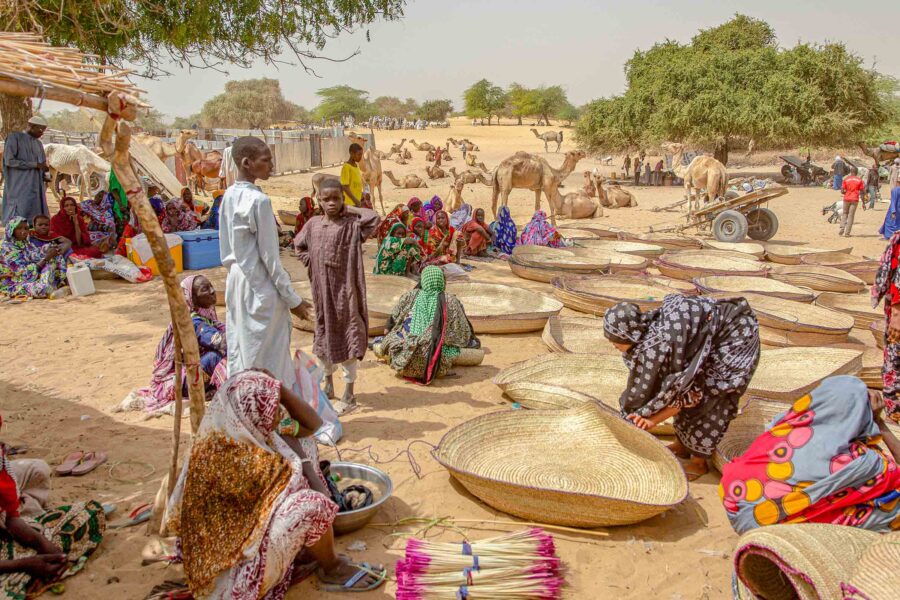
In the Sahel, peace starts with water
A shrinking Lake Chad and increasingly erratic rains are pushing herders and farmers in the Sahel into conflict over water and land. Lasting peace depends on securing indigenous land rights, strengthening cross-border cooperation, and putting climate finance directly in local hands
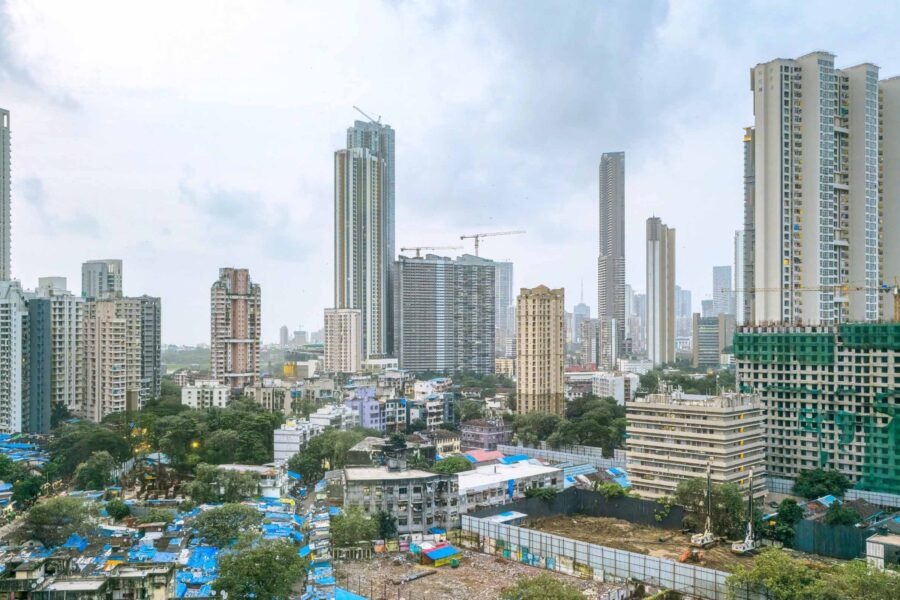
Global urban goals: who asked the planners?
SDG 11, the New Urban Agenda and the International Guidelines on Urban and Territorial Planning all rely on planners to put them into practice. Yet no one has conducted a representative survey of planners, asking whether these frameworks have changed their work, or whether the planning laws they work under even allow what the frameworks call for