
Data and statistics are key to climate action
Without accurate data on emissions, we cannot take actions to curb them – countries must do more on monitoring and reporting
Climate — Global
Author

Grayson Fuller
Senior Manager, SDG Index, Data, and Statistics, Sustainable Development Solutions Network (SDSN)
As global thought leaders devise solutions to tackle the climate crisis, whether they be technological, political, or ecological, these solutions must all have one thing in common – a solid founding on data and statistics.
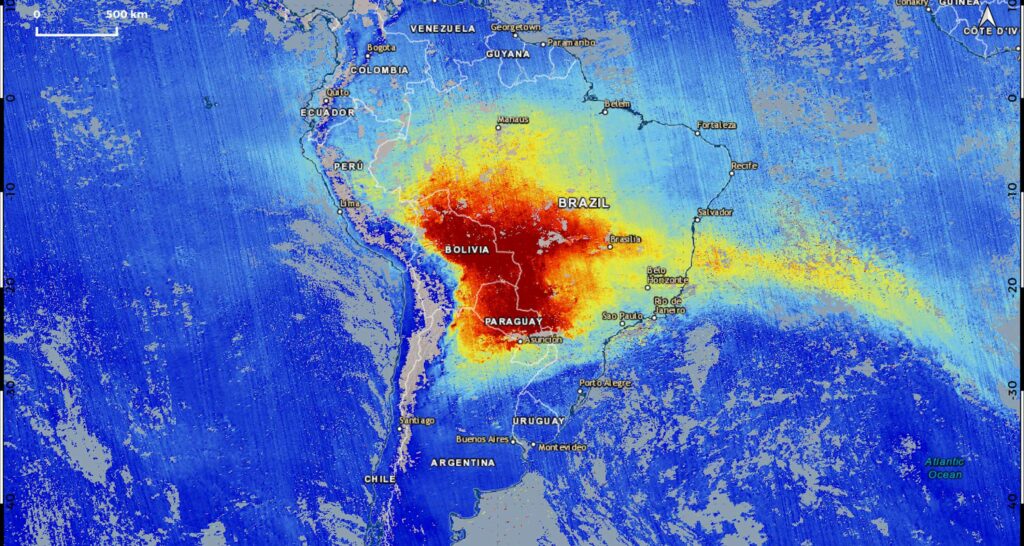
While great progress has been made in measuring and tracking key emissions, we need further, faster action. There are a variety of techniques for estimating such data, such as remote sensing technology, models based on energy use and emissions factors, and on-site measurements that are modeled to larger territories.
However, many countries do not regularly submit inventory data to the UN Framework Convention on Climate Change (UNFCCC) and the way data is reported is not always standardized – the methods countries use to estimate emissions may not match the UNFCCC reporting guidelines for national agencies tasked with inventorying emissions. Eurostat, the statistical service of the EU Commission, is not able to provide harmonized estimates of phosphorus and nitrogen emissions in agricultural land for European countries because not all countries report on the same sources of emissions or the same types of land. It is essential that all countries continue to invest in their capacity not only to monitor emissions but to report them in a harmonized and standardized way.
In addition to territorial emissions, countries must make urgent progress in monitoring their consumption-based emissions, or what the United Nations Sustainable Development Solutions Network (SDSN) refers to as “spillover effects” in our annual Sustainable Development Report. While many European countries do indeed show declining CO2 emissions in their territory, this decline does not account for emissions outsourced to developing countries that manufacture European imports. There are initiatives at universities and research centers to quantify and monitor these impacts, notably using multi-region input–output databases, but their resources are limited given the scale and urgency of the problem.
Finally, it is important not only to have robust data, but also precise targets against which countries can benchmark these data. Having clear, time-bound, quantitative targets for indicators of environmental harms allows countries to:
- determine if their rate of progress is sufficient
- identify where their greatest priorities lie
While extensive modeling work had yielded some estimates for per capita targets of CO2 emission equivalents for different warming scenarios, we lack clear scientific consensus on targets for other drivers of climate change.
If we cannot accurately measure harms to the environment, it will not be possible for countries to take decisive action to improve.

Related articles

Stop treating finance as the last step in adaptation
Too often, adaptation finance is treated as an exercise that begins only once a plan is finished. Building investment planning into resilience strategies from the start is key to turning plans on paper into bankable projects on the ground

In the Sahel, peace starts with water
A shrinking Lake Chad and increasingly erratic rains are pushing herders and farmers in the Sahel into conflict over water and land. Lasting peace depends on securing indigenous land rights, strengthening cross-border cooperation, and putting climate finance directly in local hands

Global urban goals: who asked the planners?
SDG 11, the New Urban Agenda and the International Guidelines on Urban and Territorial Planning all rely on planners to put them into practice. Yet no one has conducted a representative survey of planners, asking whether these frameworks have changed their work, or whether the planning laws they work under even allow what the frameworks call for