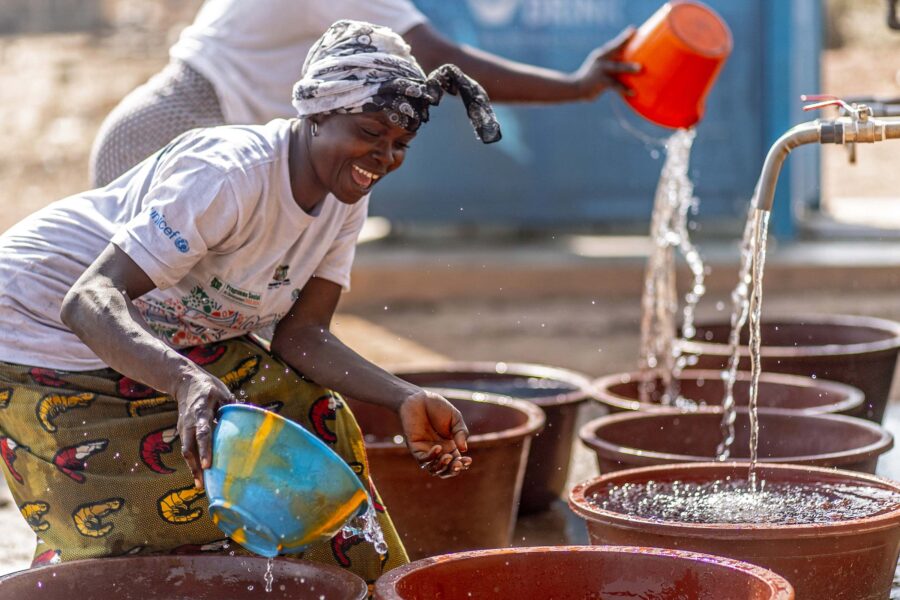
Empowering women during humanitarian crises
As conflicts grow more protracted, climate shocks intensify, and aid budgets shrink, gender equality cannot be treated as optional. Women’s leadership and rights must be central to effective humanitarian action
Gender — Global
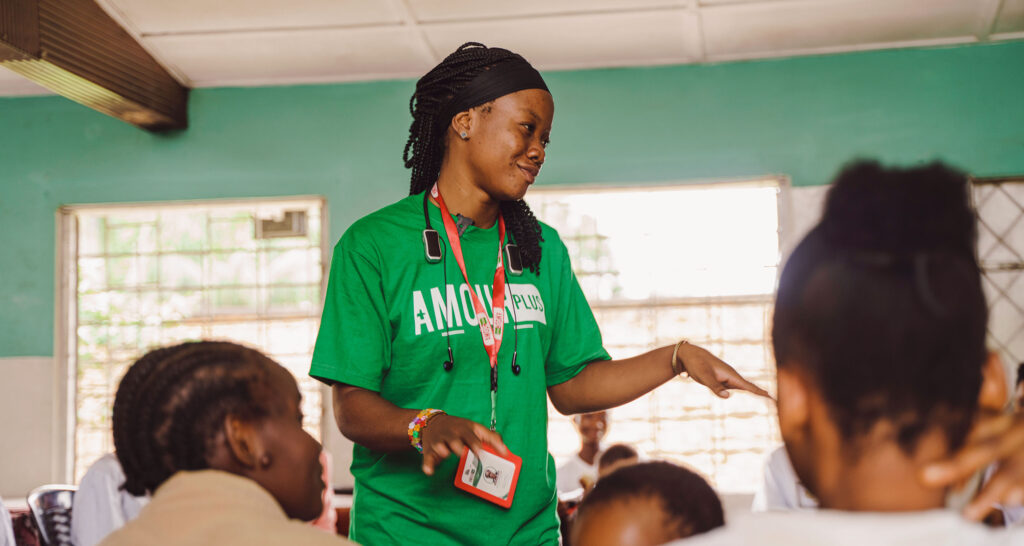

As 2026 began, amid proliferating armed conflicts and the escalating climate crisis around the world, more than 239 million people were identified as being in urgent need of humanitarian assistance and protection. Conflicts are not only becoming more protracted – they are also growing deadlier, as international humanitarian and human rights law is blatantly disregarded and attacks on civilian infrastructure become more frequent. Today’s global crises are also interlinked: three in four people who are forcibly displaced live in countries facing high-to-extreme exposure to climate-related hazards and weather-related disasters, according to a UNHCR report on extreme weather and repeated displacement.
Crises are not gender-neutral. Women and girls are disproportionately affected due to pre-existing gender inequalities and discriminatory social norms, which limit their access to humanitarian aid, services, resources, and decision-making power.
It is not surprising that the 30-year review of progress on the landmark Beijing Declaration and Platform of Action found that progress for women and girls is slowest in conflict and crisis-affected countries. The review raised the alarm about how ongoing trends may further thwart progress. The data is stark:
- Women and girls in extremely fragile contexts are 7.7 times more likely to live in households below the poverty line of USD 2.15 per day than those in non-fragile contexts.
- Under a worst-case climate scenario, up to 158.3 million additional women and girls could be pushed into poverty by 2050 as a direct result of climate change, surpassing the number of men and boys by 16 million.
- The number of food-insecure women and girls could rise by as much as 236 million, compared with an additional 131 million men and boys.
- The average incidence of child marriage in conflict-affected countries is 14.4 percentage points higher than in non-conflict settings.
- More than a third of maternal deaths occurred in 48 fragile and conflict-affected countries.
- Sexual violence in conflict zones has risen sharply in recent years, while impunity for these violations has remained the norm.
- Girls’ educational attainment continues to lag in conflict-affected countries.
Behind these numbers are women and girls who have lost their lives, had their safety and health shattered, their rights eroded, their dignity compromised, and their potential squandered. From Gaza and Sudan to Haiti, Lebanon, and elsewhere, the gendered impacts are both immediate and long term, affecting individuals and societies. They are also not contained within borders. For example, according to a UN Women gender alert on the military escalation in the Middle East, rising food and fuel prices and supply disruptions risk deepening food insecurity and livelihood erosion and increasing unpaid care burdens for women and girls across the Arab region, Asia-Pacific, Africa, and beyond.
A humanitarian system under pressure
The unfolding tragedy of escalating and protracted conflicts and crises and growing humanitarian needs is taking place against a backdrop of several important global trends.
First, recent years have seen a rising backlash against gender equality taking place within the wider context of democratic erosion and shrinking civic space in various countries and regions. This is influencing government policies as well as mainstream opinions and attitudes – and threatening hard-won gains for women and girls.
Second, the world is experiencing a severe contraction of international aid precisely when it is needed the most. Recent data from the Organisation for Economic Co-operation and Development shows that international aid fell in 2025 by 23.1% in real terms compared with 2024, representing the largest annual drop in the history of official development assistance. This brings aid back to 2015 levels – the year the 2030 Agenda for Sustainable Development began.
As the Global Humanitarian Overview 2025 lays bare, the massive cuts to aid have forced the humanitarian system to do the “cruel math of doing less with less” and “hyper-prioritize” assistance toward those assessed to be in the direst need. The Humanitarian Reset, launched through the Inter-Agency Standing Committee (IASC) in March 2025, aims to make the system faster, lighter, more accountable, and more impactful.
Against this backdrop, the international community needs to take bold and urgent action based on ample evidence of what works and rooted in existing commitments to gender equality and women’s rights.
Put gender equality at the center of the reset
First, gender equality needs to be a cornerstone of the ongoing Humanitarian Reset and not seen as a peripheral issue. In the drive for efficiency, simplification, and focus on strictly defined and hyper-prioritized life-saving assistance, there is a risk that implementation of the IASC’s commitments to gender equality may fall short. As funding contracts and established universal norms are under attack, now is the time to double down and prioritize interventions led by women and in support of their lives, dignity, and rights. Under the reset, there is a commitment that the humanitarian system will “defend” norms and principles, including on gender equality. The reset’s outcomes will depend on how consistently and concretely this is done at different levels – globally and in countries.
A critical pillar is to recognize women’s vital and rich contributions in crisis-affected settings and enable their full and equal participation and leadership in decision-making processes. Women and girls are not passive victims or mere recipients of aid – they are responders on the front lines and are shaping the outcomes of crises, as community leaders and organizers, primary caregivers, educators, economic contributors, and peacebuilders. There is plenty of evidence that their leadership is a precondition for effective humanitarian responses, as well as for addressing the root causes of conflicts and for building sustainable recovery and peace.
And yet we are far from achieving longstanding commitments to women’s participation and leadership as per the Sustainable Development Goals and the Women, Peace and Security agenda. All too often, participation remains tokenistic and women may have seats but no real influence over decisions made. Whether in internationally led mediation processes, in country-level humanitarian teams and cluster coordination groups, in funding allocation advisory boards, or in other decision-making forums – women need to be equally present and heard, and their perspectives recognized and heeded. They need to be able to exercise this fundamental right safely and without negative repercussions.
Fund women-led and women’s rights organizations
Second, women-led and women’s rights organizations working in conflict and crisis-affected countries need urgent funding. They were already underfunded and overstretched prior to recent funding cuts. UN Women’s report, At a breaking point, warns that these cuts have placed enormous additional strain on their vital work and even their very existence.
Both the quantity and the quality of funding matter. Funding needs to be flexible, multi-year, and reflective of the holistic and transformative nature of their work, which is not only life-saving and life-sustaining but also often encompasses longer-term development, peace, democracy building, human rights, and gender-equality objectives. Both funding and broader political support need to take into account the significant, often overlooked, risks faced in crisis settings by women, girls, gender-diverse leaders, and human rights defenders.
Work across the humanitarian–development–peace nexus
Finally, it is critical that humanitarian, development, and peace actors work more closely and effectively together to address the complex challenges of today’s protracted and multifaceted crises. Meeting immediate needs should go hand in hand with building community resilience to disasters, strengthening governance systems, and addressing the root causes of conflict. Gender equality and the empowerment of women and girls need to be embedded throughout this nexus and its various components – from defining collective gender outcomes, to conducting joint gender analysis and assessments, to harmonizing funding streams with gender markers and ambitious targets for funding projects and interventions that address women’s specific needs, advance gender equality, or empower women.
The stakes could not be higher. As the international community navigates an era of shrinking resources, eroding norms, and multiplying crises, the choices made now will determine whether women and girls are left further behind or emerge as the architects of more just and resilient societies. Delivering on commitments to gender equality in crisis settings is not a matter of idealism – it is a prerequisite for effective, sustainable, and principled responses. The evidence is clear and the commitments exist. The world cannot afford the cost of inaction.
Featured in:
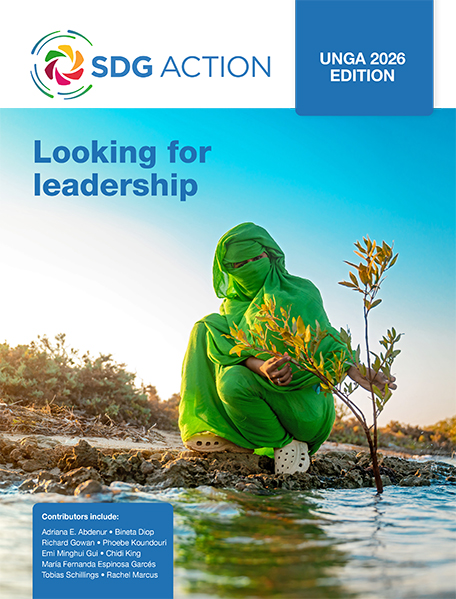
UNGA 2026 edition: Looking for leadership
As the established global powers have retreated from development, no one has stepped up to fill their place: not the Global South, not the middle powers, not a loosely assembled BRICS. The agenda that has guided development since 2015 is losing the cohesion it once had, just as the political appetite for it fades.
Yet across this edition, practitioners keep building a coherent, evidence-based case for a fairer, safer, sustainable world. Their work supplies the thought leadership that politics has not – and it will provide the framework for success when real political will returns.
Authors include Adriana E. Abdenur, Bineta Diop, Richard Gowan, Phoebe Koundouri, Emi Minghui Gui, Chidi King, María Fernanda Espinosa Garcés, Tobias Schillings and Rachel Marcus.
Publication date: 15 September 2026
Related articles
Employment that empowers women
Work can liberate women and transform societies, but employment alone is not enough. As digital, green, and demographic transitions reshape labor markets, the challenge is to ensure that every woman has access to decent work, rights, security, and opportunity