Building peaceful and inclusive societies requires more than ending violence. It means confronting the corruption that diverts public resources away from health, education and poverty reduction (SDG 1), closing the gap between men and women in access to justice and protection from violence (SDG 5), and tackling the inequalities within and between countries that leave whole populations without a voice in the decisions that shape their lives (SDG 10).
Conflict is both a cause and a consequence of the failures SDG 16 targets. Weak institutions and impunity create the conditions in which violence takes root, while war itself destroys the courts, police and civil registries a functioning society depends on. This is also why conflict is now the single largest driver of acute hunger worldwide: peaceful, accountable institutions (SDG 16) and food security (SDG 2) rise and fall together, particularly across the fragile, conflict-affected states furthest from the 2030 targets.
Current progress
Progress on SDG 16 remains uneven, with encouraging declines in some forms of violence set against a still-heavy toll from conflict and corruption. The global intentional homicide rate fell from 5.9 per 100,000 people in 2015 to 5.1 in 2024, with Latin America and the Caribbean recording the highest regional rate at 19.3, followed by sub-Saharan Africa at 11.7, far above the 0.9 recorded in Eastern and South-Eastern Asia; the female homicide rate declined at only half the pace of the male rate.
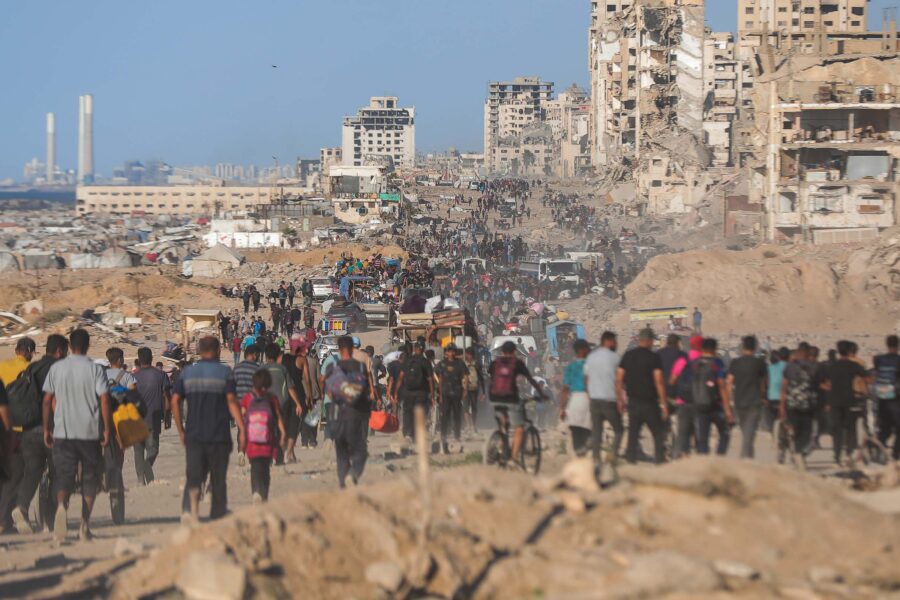
Conflict-related civilian deaths fell 23 percent in 2025 to 37,163, down from a record 48,011 in 2024, ending three consecutive years of increases; one in five killed were children and one in four were female, with Gaza alone accounting for 70 percent of child deaths and 60 percent of female deaths recorded in conflicts globally. Forced displacement worldwide — driven by persecution, conflict, violence, human rights violations and other events seriously disturbing public order, not conflict alone — reached 117 million people by June 2025.
Human rights defenders, journalists and trade unionists remain at risk: 5,307 were killed between 2015 and 2024 — roughly one every ten hours in 2024 alone — with killings up 61 percent on the previous decade. Bribery rates remain three times higher in low-income countries than in high-income countries. The full picture of official indicators is tracked by the UN Statistics Division in its annual SDG progress report.
Key events and resources
The two most relevant tracking mechanisms for SDG 16 are periodic rather than fixed annual reports: UNODC’s Global Study on Homicide, last published in 2023 and covering trends in intentional homicide and violent crime worldwide, and the Secretary-General’s report on the protection of civilians in armed conflict, submitted to the Security Council annually and covering civilian casualties, displacement and attacks on humanitarian access.
The primary intergovernmental forum for the goal’s peace and security dimensions is the UN Security Council’s annual Open Debate on the Protection of Civilians in Armed Conflict, typically held in May; anti-corruption governance is reviewed separately at the biennial Conference of the States Parties to the UN Convention against Corruption (UNCAC), most recently CoSP11 in Doha in December 2025. SDG 16 progress overall is also reviewed annually at the High-Level Political Forum (HLPF) each July in New York.