The cost of motherhood and the gender pay gap
Motherhood still comes with a pay penalty, and women continue to be paid less for work of equal value – not by accident, but by design. Tackling these injustices means changing how pay is set and progression is measured and rewarded – through transparency, enforcement, and stronger worker protections
Gender — Global
Author

Jocelyn Chu
Programme Specialist in Economic Empowerment, UN Women
The many catchphrases about women and work – “lean in,” “have it all,” “girlboss” – suggest that success at paid work and in life depends on women doing more, stretching further, and balancing better to juggle unpaid care and domestic work, and paid work. That is, women are expected to log extra hours after bedtime or even breastfeed while voting in parliaments. But these catchphrases are built on a flawed premise: that it’s simply up to women to “lean in” if they want to “have it all” – and to succeed as spouses, mothers, workers, and employers.
The reality is that the systems shaping our economies undervalue women’s work, whether in the home or at the office. This is not about isolated stories of missed promotions. The evidence is consistent. Across all countries and regions, women remain more likely than men to be in more insecure, lower-paid work and to perform two and half times more unpaid care and domestic work than men.
Globally, the gender pay gap remains at 20%, and this gap widens for those facing multiple and intersecting forms of discrimination. This is not accidental – it is structural. Across countries and sectors, women are paid less for the same work, and the gap widens after marriage and motherhood.
For the Equal Pay International Coalition (EPIC), co-led by the International Labour Organization (ILO), the Organisation for Economic Co-operation and Development (OECD), and UN Women, the gender pay gap is not a trivial labor market imbalance; it is a structural inequality that characterizes all economies, a gendered inequality that undermines labor rights and sustainable development.
Indeed, achieving equal pay for work of equal value is affirmed in international labor standards, notably ILO Convention C100 and in Target 8.5 of the Sustainable Development Goals (SDGs). Lower wages for women mean higher poverty rates, weaker social protection coverage – such as through pensions – and greater financial insecurity, particularly during crises or conflicts. The gender pay gap threatens multiple SDGs, including ending poverty (SDG 1), gender equality (SDG 5), decent work (SDG 8), and reducing inequality (SDG 10). Closing the gender pay gap is thus central to realizing the promise of the 2030 Agenda and women’s economic justice and rights.
Unequal pay: an enduring inequality
Nevertheless, structural change for women and the world of work is possible. ILO Convention C190 on violence and harassment in the world of work – adopted in 2019 – has become the fastest-ratified ILO convention of the past decade. It has led to significant changes in national legislation and policies in the 2020s, such as the prohibition of sexual harassment in the workplace. At the same time, national legislation has expanded maternity and paternity leave. In fact, the gender pay gap itself has slightly decreased – although mainly in high-income countries. Yet significant and stubborn pay inequality remains, even in high-income countries and even when analyses are adjusted for age, education, and experience.
Why is this? Segregation across sectors is one reason. Agriculture, education, healthcare, and care services, for instance, have higher shares of women workers than better-paid fields like science, technology, engineering, and math (STEM), finance, and construction. The gender pay gap is also reflected in who is recruited into secure, well-paid jobs, and who remains on precarious contracts or in the informal economy. In fact, ILO data from 2023 finds that in most countries, women outnumber men in informal employment. Meanwhile, occupational segregation influences those who are hired for lower wage, “feminized” jobs, like administrative assistants, versus more technical or managerial and higher-paid roles that are usually filled by men. Sticky floors – women’s concentration in low-paid, low-mobility jobs with little chance of advancement – keep women’s wages low. Meanwhile, glass ceilings – the invisible barriers that prevent women from reaching senior and leadership positions – block women’s advancement.
Indeed, most of the gender pay gap in 20 OECD countries is due to pay differences within firms, stemming from unequal tasks and responsibilities, and discrimination. Gendered differences exist between who is promoted into management and who is assumed to be “not quite ready;” between whose time is assumed to be limitless for work demands and whose time is constrained. Claudia Goldin, a Harvard University professor and winner of the Nobel Prize in Economics in 2023, posits that “greedy jobs” that require inflexible, longer hours are higher paid – and largely filled by men.
The price of having children
The disproportionate share of men in “greedy jobs” is not surprising. Working women’s unpaid care and domestic work responsibilities, especially the care of children, constrain their prospects and limit their economic mobility.
Having children does not somehow make women less skilled or less motivated. Most economies still operate on the assumption that someone in the household will provide unpaid care – feeding, bathing, supervising homework, tending to elderly parents – and that this someone is a woman. Once children arrive, women are more likely to reduce hours, move to part‑time work, or step out of the labor force altogether. In other words, they suffer a motherhood penalty: the financial demotion women take when they have children. Employers, in turn, may deem mothers as less committed or having less “leadership material,” whereas men are rewarded. Fatherhood frequently coincides with higher pay, termed the “fatherhood premium,” as employers choose to see parenthood for men as a sign of stability and dedication.
No one solution
The gender pay gap results from inequalities entrenched in economic and social systems. So, to address it, we need multiple, holistic, and interconnected approaches.
Take pay transparency, popularized by the European Union Pay Transparency Directive, which mandates that its member states pass binding regulations, such as the right for workers to request pay data. Pay transparency, combined with robust job evaluation methods, forces organizations to confront uncomfortable remuneration differences between employees performing work of equal value. Recommended legal reform also includes placing the onus on the employer to prove that pay scales reflect equal pay for work of equal value – rather than having workers bear the burden of needing to prove pay discrimination in court.
Or consider parental leave for both parents. When maternity leave entitlements are not matched with parental leave for fathers, it bolsters the expectation that women will step back and men will step up at work. Designing leave that is non‑transferable for both parents may shift norms so that men spend more time caring and women are more likely to return earlier to full-time work. Likewise, instead of urging women to “lean in,” governments and employers should cultivate and mandate supportive organizational workplace cultures, including flexible and family-oriented working arrangements.
Raising minimum wages has also proven to be effective in narrowing the gender pay gap, as women are often concentrated in lower-paying roles. Strengthening the role of collective bargaining through unions is similarly beneficial by reducing the scope for discretionary pay-setting that can reproduce gender bias. Collective bargaining can also be a powerful vehicle for negotiating family-friendly policies, including protections for part-time or care workers, who are disproportionately women. Unions can also amplify individual workers’ bargaining power, making it easier to challenge pay discrimination without fear of retaliation.
Whether or not we make these structural shifts will answer an important question: do we see care as a private, domestic matter to be quietly shouldered by women with high costs for their wellbeing and economic participation, or essential for any functioning household, society, and economy? If the latter, this requires not only women, but everyone – from governments to employers to fathers – to step up, and in multiple ways. Indeed, the gender pay gap and the motherhood penalty are not inevitable. They are the predictable outcomes of discriminatory norms and institutions that we have created – and that we can collectively rebuild.

Related articles

Why the UN needs women’s leadership
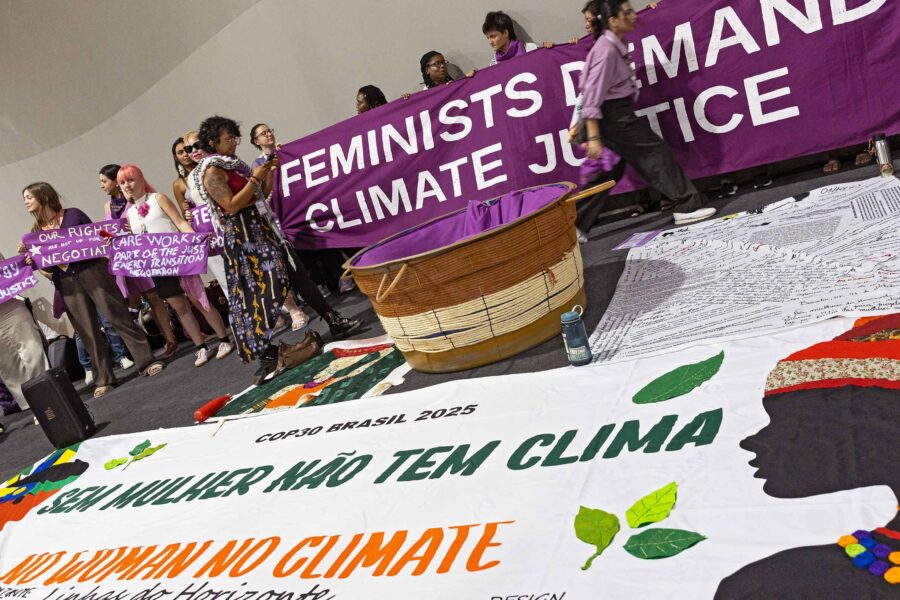
The case for a woman Secretary-General is not just about symbolism. More representative leadership would strengthen the UN’s legitimacy, improve decision-making, and better equip the institution for an era of compounding global crises