Is the European Green Deal’s vision still intact?
Europe has not abandoned the Green Deal – its flagship strategy for climate neutrality and shared prosperity – but it risks hollowing it out. As implementation pressures mount, the question is not whether the vision survives on paper, but whether it can still deliver a fair, system-wide transformation aligned with the SDGs
Economic development
Authors

Phoebe Koundouri
Professor, Athens University of Economics and Business and University of Cambridge; Co-Chair, UN Global Sustainable Development Report 2027; Founder and Director, AE4RIA Research Centers

Angelos Alamanos
Independent Researcher

Georgios Feretzakis
Researcher, SDU, ATHENA Research Center, Athens; UN SDSN Global Climate Hub; ReSEES, Athens University of Economics and Business; AE4RIA

Angelos Plataniotis
Economist, SDU, ATHENA Research Center, Athens; UN SDSN Global Climate Hub; ReSEES, Athens University of Economics and Business; AE4RIA
Ioannis Arampatzidis
Researcher, ReSEES.AE4RIA, Athens University of Economics and Business; SDU.AE4RIA, ATHENA Research Center; UN SDSN Global Climate Hub
Europe enters 2026 with a familiar question. Has the vision of the European Green Deal (EGD) been eroded by overlapping crises, political backlash, geopolitical unrest, and competing priorities? The honest answer is that the vision is still there, but it’s at risk of being narrowed. And a narrowed EGD – limited to decarbonization targets, industrial policy, and compliance checklists – is not likely to survive the decade.
The EGD was conceived as a growth strategy for a climate-neutral and socially fair European Union by 2050, spanning energy, industry, agriculture, transport, biodiversity, finance, and innovation. But today’s pressures are real: energy security concerns, inflation, geopolitical instability, and tighter fiscal space all push decision-makers toward quick wins and visible results.
The danger is not that Europe abandons the EGD completely. The greater risk is that Europe keeps the name while quietly shrinking the promise, shifting from a societal transformation to a mainly technical transition.
The warning light: Europe is aligning the Green Deal with some SDGs while neglecting others
A recent assessment of 74 EGD policy documents (spanning 2019 to 2023), using machine-learning text-mining validated by human review, offers a clear diagnostic: Green Deal policies align strongly with four of the Sustainable Development Goals (SDGs):
- SDG 7 (clean energy)
- SDG 12 (responsible consumption and production)
- SDG 13 (climate action)
- SDG 17 (partnerships)
However, they underrepresent SDGs tied to:
- social foundations
- poverty and inequality
- hunger
- health
- education
- decent work
- peace
- strong institutions
(Koundouri, P. and others, Assessing the sustainability of the European Green Deal and its interlinkages with the SDGs.)
This matters because sustainability is more than just cutting emissions. Sustainability has three parts: environmental stability, economic resilience, and social cohesion. When policy attention concentrates on energy decarbonization and industrial transformation while leaving the social SDGs structurally thinner, a political and moral gap opens. And that gap becomes a legitimacy problem, especially when households experience rising costs, employment uncertainty, or uneven regional impacts.
In the article linked above, Koundouri and others highlight that, even when the EGD is viewed through the Six Transformations lens, “Health, Wellbeing, and Demography” remains the least represented transformation in EGD policies. This connects to a broader point made in the Global Sustainable Development Report 2023, which emphasizes that siloed approaches are a poor fit for the SDGs, because progress depends on transformations that cut across sectors, institutions, and time horizons.
Put simply, the EGD remains strongest where it began – namely, energy and emissions – and weakest where public trust is won or lost – namely, daily wellbeing, fairness, and social protection.
The vision is intact, but needs a more concrete operating system
If the diagnosis is clear, so is the opportunity. The Green Deal can still be Europe’s most credible pathway to climate neutrality and shared prosperity. But that will only happen if Europe treats the EGD as a full-spectrum sustainable development project aligned with the SDGs, rather than assuming that decarbonization will automatically deliver social progress.
This is where implementation infrastructure becomes as important as ambition. Europe has strategies. What it lacks is an operational, integrated delivery system – an operating system that can connect goals to locally tailored pathways, quantify trade-offs across sectors, and keep adjusting as conditions change.
The global context should be a warning. Only 17% of SDG targets are on track worldwide, with many progressing too slowly and a significant share stalled or regressing (SDGs Report 2024). Europe is not immune to that implementation gap. So, the key question for the year ahead is not simply whether the Green Deal is intact on paper, but whether Europe can build the capability to implement it as a systems transformation – and demonstrate, transparently, that it is fair.
A practical route forward: the Global Climate Hub’s holistic approach
The United Nations Sustainable Development Solutions Network (SDSN)’s Global Climate Hub is designed as precisely this kind of operational capability: an interdisciplinary initiative that combines AI-ready data infrastructure, linked sectoral models, stakeholder co-design, and open-access digital tools to build implementable sustainability pathways from national to global scales (Alamanos, A., The Global Climate Hub and Koundouri, P. and others, Innovating for sustainability: The Global Climate Hub).
Crucially for the European debate, the SDSN Global Climate Hub is not a standalone project. It sits within the wider SDSN ecosystem and is designed to connect research, policy, and practice around shared tools and pathways. It offers a model Europe can draw on: coordinated, evidence-led, and transparent enough to earn public trust (Koundouri, P. and others, An integrated assessment of the European National Commitments for climate neutrality). For the EGD, this matters because it is practical, not just a blueprint.
First: integration that matches reality
The SDSN Global Climate Hub’s approach emphasizes system-dynamics – cross-sectoral modeling that links major natural and infrastructure systems (water, land-use, food, energy, transport, marine systems) rather than treating them as separate policy silos. That linkage matters because Green Deal choices interact: renewables compete with land; water stress shapes productivity; and shifts in production and trade patterns affect competitiveness. Policy that ignores those interdependencies produces elegant plans that fail in practice (Koundouri, P. and others, Assessing national climate-neutrality plans through a modelling nexus lens: the case of Greece).
Second: legitimacy through participation
The Global Climate Hub’s approach places stakeholder engagement and co-design at the center of pathway development. This is because the ability to implement solutions depends on whether policies reflect lived constraints and perceived fairness. Engagement surfaces institutional bottlenecks, local acceptance issues, and distributional effects (which models alone can miss), while building a sense of shared ownership.
Third: measurement that goes beyond GDP
A core element of the Global Climate Hub’s approach is the integration of socio-economic narratives, welfare distribution, and valuation of externalities into decision support. In this way, sustainability choices reflect the true costs and benefits of natural and social capital. This matters for the EDG because many of its benefits – such as clean air, resilience, ecosystem restoration, and risk reduction – are systematically undervalued in conventional economic decision-making.
Fourth: open and usable decision support
The Global Climate Hub’s design includes digital infrastructure for data harmonization, model coupling, results visualization, and (eventually) “digital twins” (dynamic digital representations of real-world systems). This means that exploring scenarios becomes transparent, iterative, and usable by policymakers and stakeholders. For the EDG, that kind of operational layer can reduce fragmentation, improve transparency, and accelerate learning across EU member states.
The year ahead: three priorities
If Europe wants the Green Deal’s vision to remain intact, three concrete shifts should define this year’s narrative and policy practice.
1. Reframe success as SDG-consistent delivery, not only emissions delivery
The EGD’s climate core must remain strong. But it must be paired with credible performance on underrepresented social SDGs (poverty, inequality, health, education, decent work, and strong institutions), because these are the foundations of durable consent.
2. Move from policy stacks to integrated pathways
Europe does not lack policies; it lacks integration. The evidence already shows heavy concentration on specific SDGs and recurring gaps in social sustainability. An integrated systems approach offers a practical way to quantify synergies and trade-offs, design coherent packages, and course-correct over time.
3. Protect the social contract with transparent distributional analysis and just transition design
An EGD that is perceived as unfair will not endure. Fairness is not an add-on – it is part of the political technology of transformation. Embedding distributional outcomes into modeling, finance design, and participatory governance is how Europe keeps the “deal” in the Green Deal.
So, is the EGD still intact?
The short answer is yes – its vision is still intact in purpose and architecture. But it is not self-sustaining. It will remain intact only if Europe refuses to let the project collapse into a narrow decarbonization agenda. Instead, the EU must upgrade the EGD into a full sustainability transformation aligned with the SDGs – and with integrated modeling, open digital tools, and social legitimacy built into the design.
Featured in:
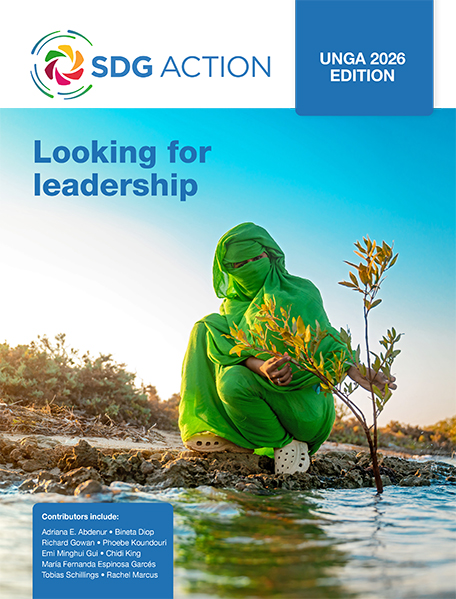
UNGA 2026 edition: Looking for leadership
As the established global powers have retreated from development, no one has stepped up to fill their place: not the Global South, not the middle powers, not a loosely assembled BRICS. The agenda that has guided development since 2015 is losing the cohesion it once had, just as the political appetite for it fades.
Yet across this edition, practitioners keep building a coherent, evidence-based case for a fairer, safer, sustainable world. Their work supplies the thought leadership that politics has not – and it will provide the framework for success when real political will returns.
Authors include Adriana E. Abdenur, Bineta Diop, Richard Gowan, Phoebe Koundouri, Emi Minghui Gui, Chidi King, María Fernanda Espinosa Garcés, Tobias Schillings and Rachel Marcus.
Publication date: 15 September 2026
Related articles
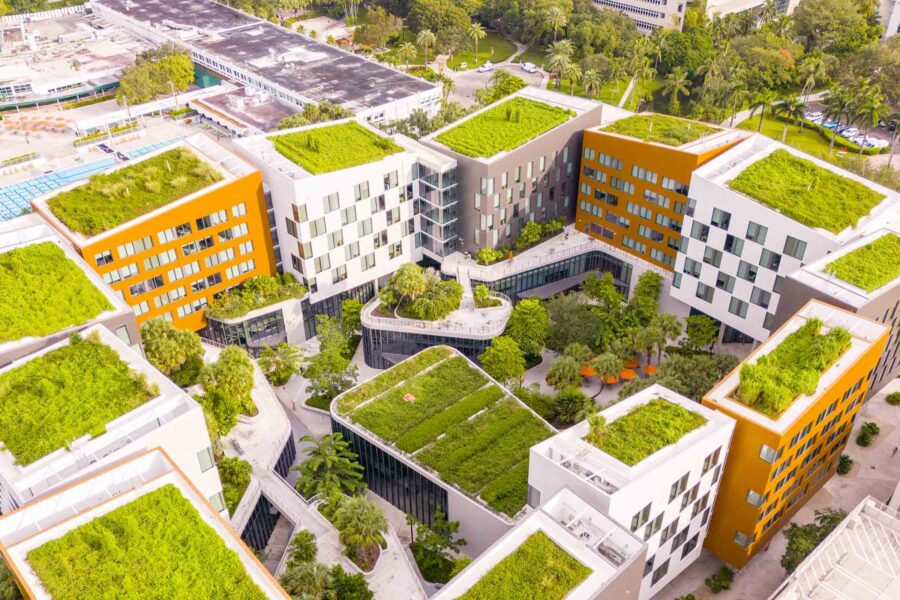
Valuing urban resilience
Cities face difficult choices about how to invest in resilience as climate
pressures intensify. Valuing health, ecosystems, social inclusion, and reliable services alongside financial costs can help them choose fairer, more effective ways to adapt to climate change